Living with Essential Tremor can feel frustrating, unpredictable, and exhausting. Simple tasks—holding a cup, writing a note, using a phone—can suddenly become difficult. For many people, the first step is medication. But not everyone tolerates tremor medications well. Side effects like fatigue, dizziness, or low blood pressure often lead people to search for Essential Tremor natural treatment options that feel safer and more sustainable.
If you’re looking for drug-free ways to reduce hand tremors naturally, you’re not alone. Thousands of people every month search for answers on lifestyle changes, supplements, home remedies, and non-invasive tools that can help manage tremor symptoms without adding new medications.
The good news: while Essential Tremor cannot be cured naturally—or medically—many evidence-supported natural approaches can meaningfully reduce tremor severity, improve hand control, and make daily activities easier. These strategies work best when used thoughtfully, consistently, and in coordination with a healthcare provider.
This guide breaks down the most effective natural remedies for Essential Tremor, what science actually supports, what to be cautious about, and how modern assistive technology fits into a drug-free tremor management plan.
Understanding Essential Tremor and Why Natural Treatment Matters
Essential Tremor (ET) is one of the most common movement disorders in the world, affecting an estimated 7 million people in the United States alone (National Institute of Neurological Disorders and Stroke). It is a neurological condition characterized by involuntary, rhythmic shaking—most commonly in the hands and arms, but sometimes affecting the head or voice.
Why do many people seek natural treatment options
From a clinical perspective, medications such as propranolol or primidone are often prescribed first. While effective for some, real-world experience shows that:
-
Up to 50% of patients discontinue tremor medications due to side effects
-
Medication effectiveness may decrease over time
-
Some individuals cannot take beta-blockers due to heart or respiratory conditions
As a result, patients, caregivers, and even clinicians increasingly explore natural, non-invasive approaches to help manage tremors without escalating medication use.
What “natural treatment” actually means (and doesn’t)
A critical point of trust:
There is no natural cure for Essential Tremor. Any source claiming otherwise is misleading.
However, natural treatment refers to non-pharmaceutical strategies that help reduce tremor severity, frequency, or functional impact. These approaches often focus on:
-
Nervous system regulation
-
Muscle control and coordination
-
Trigger avoidance
-
Mechanical tremor reduction
When used together, they can significantly improve day-to-day function for many people.
Lifestyle Changes That Reduce Hand Tremors Naturally
One of the most evidence-supported areas of Essential Tremor natural treatment involves lifestyle modification. These changes target known tremor triggers and nervous system overstimulation.
Reducing caffeine and stimulants
Caffeine is one of the most consistently documented tremor triggers. It stimulates the central nervous system and can amplify tremor amplitude even in small amounts.
Clinical experience shows that many people notice improvement within days of reducing or eliminating:
-
Coffee (including decaf, which still contains caffeine)
-
Energy drinks
-
Certain teas
-
Pre-workout supplements
Neurologists routinely recommend caffeine reduction as a first-line, non-drug intervention.
Improving sleep quality
Sleep deprivation increases tremor severity by impairing motor control and nervous system regulation. Studies show that poor sleep can worsen tremors even in people without neurological conditions.
Helpful sleep strategies include:
-
Maintaining consistent sleep and wake times
-
Creating a low-stimulation bedtime routine
-
Avoiding screens and stimulants before bed
Better sleep does not eliminate tremors—but many patients report noticeably steadier hands when well-rested.
Managing stress and nervous system activation
Stress does not cause Essential Tremor, but it can significantly worsen symptoms. Heightened adrenaline levels increase muscle activation and tremor amplitude.
Evidence-based stress-management approaches include:
-
Structured breathing exercises
-
Progressive muscle relaxation
-
Biofeedback techniques
These methods are frequently recommended in neurology and occupational therapy settings because they help regulate the autonomic nervous system without medication.
Trust note: Stress reduction does not replace medical care, but it can reduce tremor “spikes” during daily activities like eating or writing.
Physical and Occupational Therapy for Tremor Control
Among the most overlooked natural remedies for Essential Tremor is structured physical and occupational therapy. These interventions are grounded in biomechanics and motor learning—not alternative medicine.
How occupational therapy helps Essential Tremor
Occupational therapists (OTs) specialize in helping people perform daily tasks despite physical limitations. For Essential Tremor, OTs may focus on:
-
Improving grip stability
-
Teaching joint-stabilizing techniques
-
Modifying movement patterns
-
Recommending adaptive tools
Clinical experience shows that small adjustments in hand positioning and task execution can significantly reduce tremor impact.
Strengthening vs. stabilization
Contrary to common belief, simply strengthening muscles does not eliminate tremors. Instead, therapy focuses on:
-
Isometric stabilization (holding muscles steady without movement)
-
Proximal muscle control (shoulders and forearms)
-
Reducing compensatory tension
These techniques improve motor efficiency, which can reduce visible shaking during functional tasks.
Real-world outcomes
While therapy does not stop tremors entirely, multiple studies show that patients often experience:
-
Improved handwriting legibility
-
Greater control during eating
-
Less fatigue from compensatory gripping
Supplements and Vitamins: What Actually Helps (and What Doesn’t)

Searches for supplements for tremors are common—but this area requires caution and transparency.
Vitamin deficiencies linked to tremors
Certain vitamin deficiencies can cause or worsen tremors, even though they do not cause Essential Tremor itself.
Clinically relevant deficiencies include:
|
Nutrient |
Role in the Nervous System |
Notes |
|
Vitamin B12 |
Nerve signal transmission |
Deficiency can cause tremor and neuropathy |
|
Vitamin B1 (Thiamine) |
Muscle and nerve function |
Low levels may worsen movement symptoms |
|
Magnesium |
Muscle relaxation, nerve signaling |
Deficiency may contribute to muscle excitability |
If blood tests confirm a deficiency, supplementation under medical supervision may reduce tremor severity.
Magnesium and Essential Tremor
Magnesium plays a role in muscle relaxation and nerve conduction. While research specific to Essential Tremor is limited, some patients report mild symptom improvement.
Dietary sources include:
-
Leafy greens
-
Nuts and seeds
-
Whole grains
Supplement use should be discussed with a healthcare provider, especially for people with kidney conditions.
Herbal supplements: proceed carefully
Some herbal remedies—such as passionflower or skullcap—are frequently mentioned online. However:
-
Evidence is largely anecdotal
-
Dosage and purity vary widely
-
Potential drug interactions exist
A Korean herbal medicine study reported 69.6% of participants experienced symptom improvement, but the study size and methodology limit generalization.
Trust statement: No supplement has been proven to reliably treat Essential Tremor. Supplements may complement care—but should never replace medical guidance.
Home Remedies and Daily Strategies That Make a Difference
Many people searching for home remedies for tremors are really seeking practical ways to make daily life easier. While these strategies don’t alter the neurological cause, they can reduce functional impact.
Weighted and stabilizing techniques
Adding gentle resistance can reduce tremor amplitude during tasks.
Examples include:
-
Heavier utensils
-
Weighted pens
-
Stabilizing wrist supports
These tools work by increasing inertia, making rapid tremor movements less pronounced.
Task-specific adaptations
Small changes can lead to meaningful improvements:
-
Using lidded cups instead of open mugs
-
Resting elbows during meals
Occupational therapists often help patients identify these adjustments based on individual tremor patterns.
Consistency matters
The most successful natural approaches are:
-
Used daily
-
Adjusted based on symptom patterns
-
Combined rather than relied on individually
This layered approach reflects best practices in tremor management.
Wearable Technology: A Modern Drug-Free Option
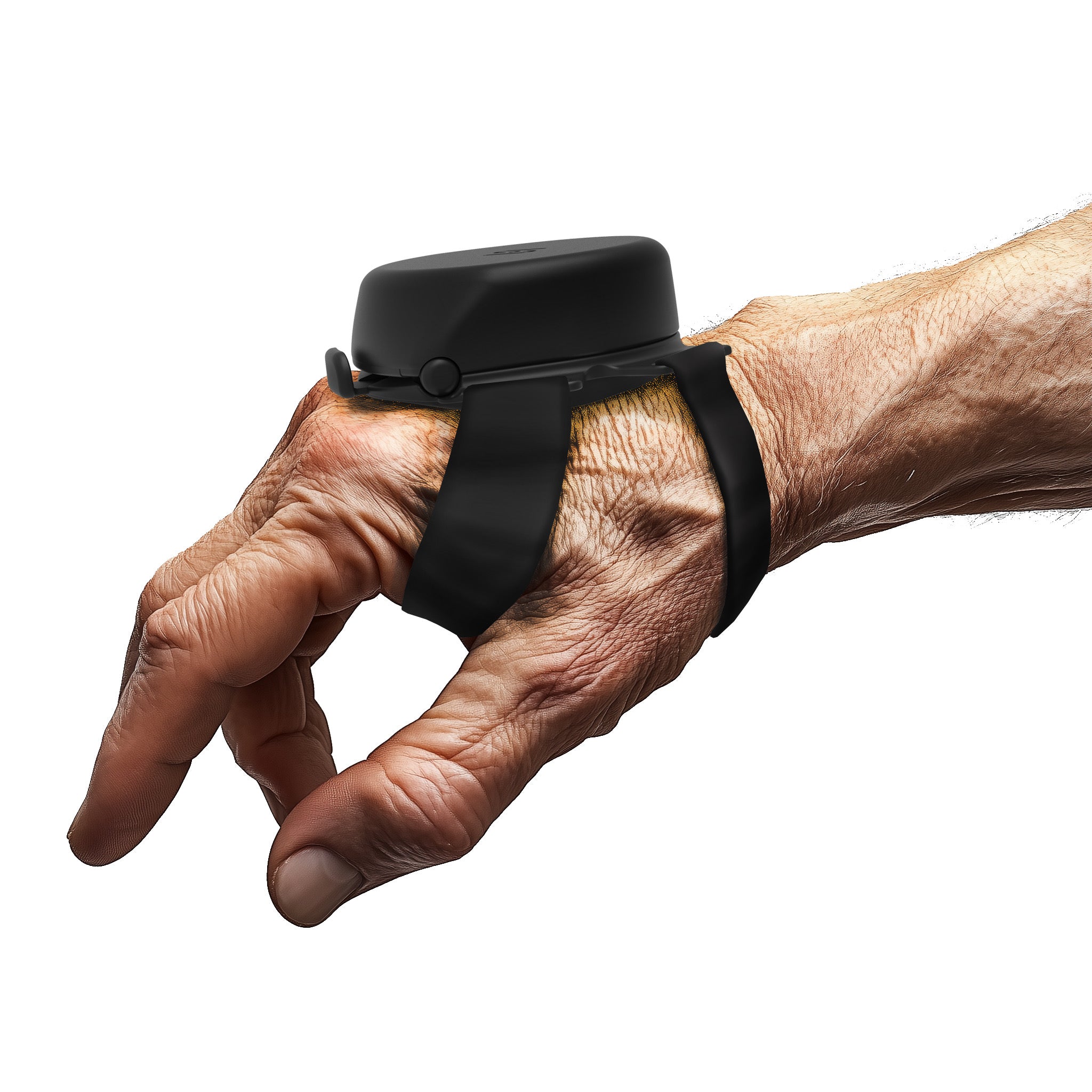
One of the most promising advances in Essential Tremor natural treatment is wearable assistive technology. These devices reduce tremor mechanically—without medication, surgery, or electrical stimulation.
How wearable tremor-reduction devices work
Unlike braces that restrict movement, modern devices are designed to:
-
Automatically respond to tremor frequency
-
Reduce shaking without limiting voluntary motion
-
Function passively, without batteries
This category has gained interest among neurologists and therapists seeking non-invasive solutions.
Why clinicians consider wearables part of conservative care
Wearable tremor devices are often recommended when:
-
Medications are poorly tolerated
-
Tremors interfere with daily tasks
-
Patients want a non-drug option
They fit within a risk-minimized treatment approach, especially for early to moderate tremor severity.
A Practical Example: The Steadi-3 Anti-Tremor Glove
For individuals seeking a drug-free, non-invasive option, the Steadi-3 anti-tremor glove represents a clinically informed approach to tremor management.
Developed by engineers with over 15 years of experience in vibration mechanics and hand tremor research, the Steadi-3 uses magnetic vibration absorber technology to reduce involuntary hand movement in real time—without batteries, electrical stimulation, or medication.
Unlike weighted gloves that can cause fatigue, the Steadi-3 is:
-
Lightweight (290 grams)
-
Automatically responsive to tremor intensity
-
Designed to preserve voluntary movement
Key features and benefits
-
Non-invasive and drug-free
-
FDA-registered Class I medical device
-
Battery-free design
-
Universal adjustable sizing
-
Suitable for Essential Tremor and Parkinson’s Disease
Users commonly report improved control during activities like eating, writing, and using handheld devices—without adding medication side effects.
Importantly, the Steadi-3 is positioned as a management tool, not a cure, and includes a 30-day risk-free trial to support informed decision-making.
Integrating Natural Treatment Safely and Effectively
The most successful tremor management plans are personalized and transparent. Natural approaches work best when:
-
Coordinated with a healthcare provider
-
Adjusted based on individual triggers
-
Combined rather than isolated
Clinicians increasingly recognize the value of conservative, drug-free strategies—especially for patients early in their Essential Tremor journey or those sensitive to medications.
Ethical note: Any natural treatment should be discussed with a healthcare professional, particularly if symptoms change or worsen.
Final Takeaway
Searching for Essential Tremor natural treatment reflects a desire for safe, sustainable symptom management. While no natural cure exists, a thoughtful combination of lifestyle changes, therapy, nutritional support, and modern wearable technology can significantly improve daily function—without adding medication burden.
If you or someone you care for is navigating Essential Tremor, start with evidence-based strategies, seek professional guidance, and choose solutions that prioritize safety, transparency, and real-world usability.