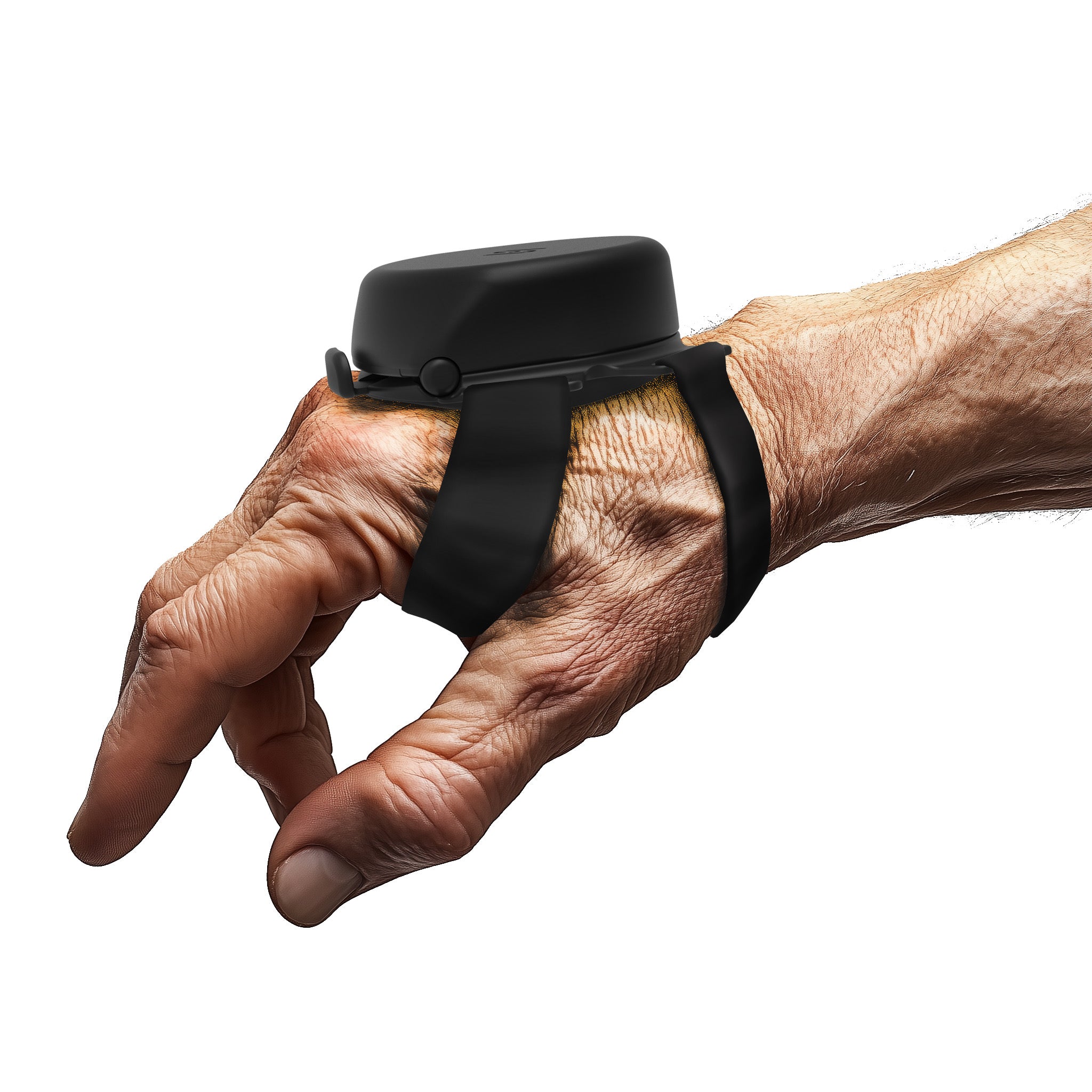
If you live with Essential Tremor, you’ve likely been told that propranolol for tremors is the “standard” first step. For many people, it helps. For others, the side effects, limited effectiveness, or daily medication burden raise new concerns. At the same time, a growing number of people are researching alternatives like an Essential Tremor glove or hand tremor device—and wondering how these options really compare.
This comparison matters because Essential Tremor is not one-size-fits-all. Tremor severity, lifestyle demands, co-existing medical conditions, and personal tolerance for medication all influence what works best. According to clinical literature, propranolol reduces tremor amplitude by roughly 50–70% in many patients, yet rarely eliminates tremor entirely. Newer tremor-reducing gloves, by contrast, claim higher tremor suppression through mechanical stabilization rather than neurological action.
So which option makes more sense for you—or your loved one?
In this guide, we’ll compare propranolol vs tremor gloves across effectiveness, side effects, cost, lifestyle fit, and real-world use, so you can have a more informed conversation with your healthcare provider.
Understanding Propranolol for Essential Tremor
Propranolol for tremors is widely considered the first-line medication for people diagnosed with Essential Tremor. In fact, propranolol is currently the only FDA-approved medication specifically indicated for Essential Tremor, making it one of the most commonly prescribed treatments in neurology clinics. It belongs to a class of drugs known as non-selective beta-blockers, which means it affects beta-adrenergic receptors throughout the body rather than targeting a single system.
In the context of propranolol Essential Tremor treatment, the medication works by reducing peripheral beta-adrenergic activity. This dampens excessive muscle activation in the hands and arms, leading to a measurable decrease in tremor amplitude. Importantly, propranolol does not cure Essential Tremor or stop tremors entirely—it helps reduce their severity, particularly during sustained postures or gross motor movements.
How Propranolol Works for Tremors
From a neurological standpoint, Essential Tremor is associated with abnormal oscillatory activity within motor control pathways, especially those involving the cerebellum and its connections. Propranolol for tremors does not correct these central neurological signals. Instead, it works at the peripheral level, blocking beta-adrenergic receptors that influence muscle spindle sensitivity and muscle contraction.
By limiting this peripheral stimulation, propranolol can reduce the visible shaking of the hands and arms. This explains why propranolol is often more effective for postural and action tremors than for tasks requiring precise fine motor control.
What Clinical Studies Show
Clinical research on propranolol Essential Tremor treatment has been consistent over several decades:
-
Average tremor reduction: Approximately 50–70%
-
Best response: High-amplitude, low-frequency tremors
-
Less effective for: Fine motor activities such as writing, buttoning clothes, or using utensils
These findings help explain why some patients experience meaningful improvement, while others continue to struggle with task-specific tremor despite medication.
Real-World Experience With Propranolol for Essential Tremor
In real-world clinical practice, neurologists typically prescribe propranolol for tremors using a gradual titration approach. Patients often start at a low dose to assess tolerance, with the dose increased slowly to balance tremor reduction against side effects.
Some individuals report noticeable improvement within days or weeks, particularly for larger movements like holding a cup or keeping the hands steady at rest. Others, however, experience only modest benefit or discontinue the medication altogether.
Insights from caregiver interviews and Essential Tremor advocacy communities reveal a recurring pattern:
“The tremor is better—but not gone—and I don’t always feel like myself on it.”
This sentiment reflects an important clinical reality: while propranolol Essential Tremor treatment can be helpful, its effectiveness varies widely from person to person.
Key Limitations of Propranolol for Tremors
Despite its role as a first-line therapy, propranolol has several important limitations that patients and caregivers should understand:
-
Does not stop tremors completely
Even at optimal doses, most patients experience partial—not total—tremor reduction. -
Effectiveness may decline over time
Some individuals notice diminishing benefits, requiring dose adjustments or additional interventions. -
Not suitable for all patients
Propranolol is contraindicated for people with asthma, certain heart rhythm disorders, low blood pressure, or other medical conditions.
Because of these factors, many people with Essential Tremor eventually explore complementary or alternative options—such as assistive devices—to manage tremors during specific daily activities.
Side Effects and Safety: Medication vs. Tremor Gloves
When comparing a medication to a device, systemic impact becomes a major differentiator.
Propranolol Side Effects
Because propranolol affects the cardiovascular and respiratory systems, side effects are common and well-documented in medical literature:
|
Common Side Effects |
Why They Occur |
|
Fatigue |
Reduced heart rate and blood pressure |
|
Dizziness |
Lowered cardiac output |
|
Cold hands/feet |
Peripheral vasoconstriction |
|
Slow heartbeat |
Beta-blockade |
|
Low blood pressure |
Systemic vascular effects |
Propranolol is contraindicated for individuals with:
-
Asthma or COPD
-
Certain heart rhythm disorders
-
Uncontrolled diabetes
-
Low baseline blood pressure
These restrictions often exclude older adults or patients with multiple conditions—precisely the population most affected by Essential Tremor.
Tremor Gloves: Safety Profile
A tremor-reducing glove works externally, meaning:
-
No interaction with the nervous system
-
No cardiovascular effects
-
No medication interactions
Most tremor gloves, including Steadi-3, are FDA-registered Class I medical devices, indicating they are recognized as safe and low-risk.
From a safety standpoint:
-
No systemic side effects
-
Can be worn only when needed
-
Suitable for long-term daily use
For many patients, this distinction alone is a deciding factor.
Effectiveness: How Much Tremor Reduction Can You Expect?
Effectiveness is often the most important question, and also the most misunderstood.
Propranolol Effectiveness
Based on decades of research:
-
Average tremor reduction: ~50%
-
Rarely restores fine motor control
-
Less effective for action-based tasks (writing, eating)
Patients often describe improvement as “noticeable but limited.”
Tremor Glove Effectiveness
Modern hand tremor devices use mechanical or vibration-based stabilization, technology adapted from industrial vibration-dampening systems (similar principles are used in earthquake-resistant buildings).
Reported outcomes from device manufacturers and user studies indicate:
-
80–85% tremor reduction for many users
-
Strong improvement in task-specific activities
-
Immediate effect upon wearing the device
Because the glove stabilizes the hand mechanically, it directly addresses the visible symptom during use.
Important Transparency Note
Unlike propranolol, tremor gloves are not required to undergo large-scale randomized drug trials. Reported effectiveness is based on engineering validation, user studies, and real-world feedback. This makes it especially important to choose a reputable, transparent manufacturer.
Lifestyle Fit: Daily Medication vs. On-Demand Device
Effectiveness on paper doesn’t always translate to effectiveness in daily life.
Living With Propranolol
Propranolol requires:
-
Daily dosing
-
Careful timing around activities
-
Ongoing prescription management
-
Monitoring for side effects
Some patients report adjusting their day around medication schedules or avoiding dose increases due to fatigue or dizziness.
Living With a Tremor Glove
A tremor glove is:
-
Worn only when needed
-
Immediately effective
-
Removable at any time
Patients often use it for:
-
Eating and drinking
-
Writing or signing documents
-
Grooming tasks
-
Cooking and food preparation
From an occupational therapy perspective, task-specific support often aligns better with real-world needs than continuous systemic treatment.
Cost Comparison: Ongoing Medication vs. One-Time Device
Cost is not just about price, it’s about long-term value.
Propranolol Costs
While propranolol is inexpensive per month, costs accumulate:
-
Monthly prescriptions
-
Physician visits
-
Potential additional medications to manage side effects
Over years or decades, total cost can be substantial.
Tremor Glove Costs
A high-quality Essential Tremor glove typically involves:
-
One-time upfront cost
-
Minimal maintenance (strap replacement every ~6 months)
-
No prescription renewals
Some gloves, including Steadi-3, are FSA/HSA eligible with a Letter of Medical Necessity, which can significantly offset out-of-pocket expenses.
Can You Use Propranolol and a Tremor Glove Together?
Yes, and many patients do.
From a clinical standpoint, this combination makes sense:
-
Propranolol addresses neurological tremor drivers
-
Tremor gloves stabilize the hand mechanically during tasks
Neurologists and occupational therapists often recommend layered approaches, especially when tremor interferes with specific activities rather than all-day function.
As always, medication changes should be discussed with your healthcare provider.
Where the Steadi-3 Tremor Glove Fits In
For individuals exploring a tremor-reducing glove, the Steadi-3 Anti-Tremor Glove is one of the most established options available.
Steadi-3 is a battery-free, non-invasive, FDA-registered Class I medical device designed to reduce hand tremors using magnetic vibration absorber technology. Unlike electronic wearables, it automatically adapts to tremor intensity without calibration or charging.
Key Features
-
Instant tremor reduction upon wearing
-
Lightweight (290 grams)
-
Universal adjustable fit
-
No batteries, motors, or electronics
-
FDA-registered Class I medical device
-
Eligible for FSA/HSA reimbursement (with documentation)
Practical Benefits for Daily Life
Users report improved stability during:
-
Eating and drinking
-
Writing and signing
-
Using utensils and tools
-
Everyday household tasks
Importantly, Steadi-3 does not replace medical care. It complements it—offering a mechanical solution for moments when tremor interferes most.
Making the Right Choice for Essential Tremor
There is no single “best” option for everyone with Essential Tremor.
-
Propranolol may be appropriate if you tolerate it well and experience a meaningful reduction without side effects.
-
A tremor-reducing glove may be a better fit if medication isn’t effective, isn’t tolerated, or doesn’t address task-specific challenges.
-
Many people benefit from using both together.
The most important step is informed decision-making—grounded in evidence, personal experience, and professional guidance.
If you’re considering a tremor glove, choose a product with transparent claims, medical device registration, and real-world user feedback. And if you’re on medication, never adjust dosing without consulting your healthcare provider.
Conclusion: Choosing the Right Path Forward for Essential Tremor
When comparing propranolol vs. a tremor glove, there is no universal answer—only the option that best fits your health profile, lifestyle, and daily needs. Propranolol remains an important, FDA-approved treatment for Essential Tremor and can meaningfully reduce tremor intensity for some individuals. However, its systemic effects, medical contraindications, and limited impact on fine motor tasks mean it isn’t the right solution for everyone.
Tremor gloves offer a different approach. By addressing tremors mechanically rather than neurologically, a tremor-reducing glove can provide immediate, task-specific stability without the side effects associated with medication. For many people, especially those who struggle most during activities like eating, writing, or cooking, this on-demand support can make daily life more manageable.
Importantly, these options are not mutually exclusive. Many individuals with Essential Tremor use medication and assistive devices together as part of a broader management plan developed with their healthcare provider.
If tremors are interfering with your independence or daily routines, the next step isn’t choosing a “better” solution—it’s choosing a more informed one. Talk with your neurologist or occupational therapist, review the benefits and limitations of each option, and consider how tools like a tremor glove may fit into your overall care plan. Thoughtful, personalized decisions are often what lead to the most meaningful improvements in everyday life.