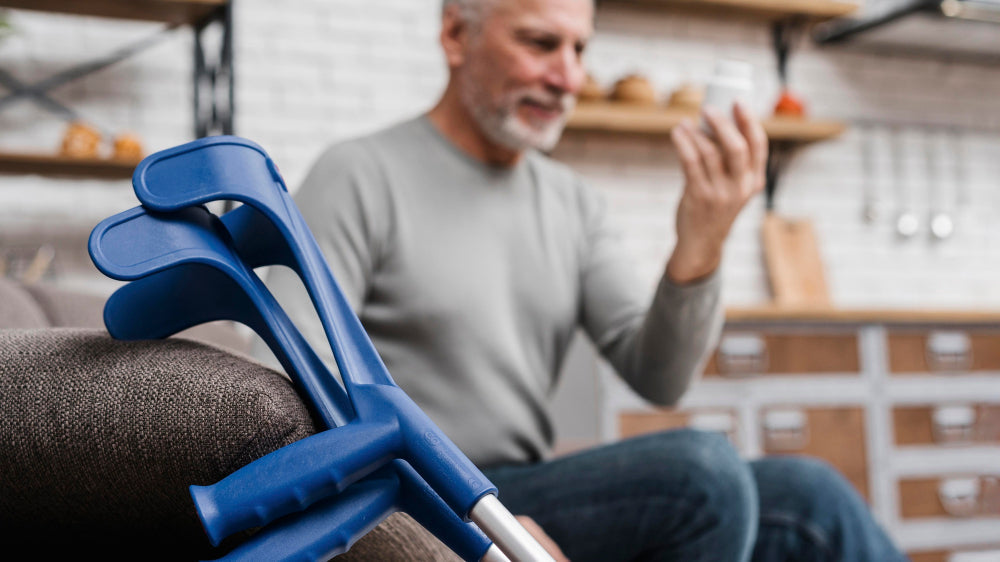
Mealtime should be one of the most ordinary parts of the day. For people living with Parkinson's Disease, it often becomes one of the hardest. Tremor, grip weakness, and reduced coordination turn the simple act of eating into a task that requires sustained effort, concentration, and sometimes assistance from another person.
The right adaptive kitchen tools change that equation. This guide covers the full range of Parkinson's eating utensils, adaptive tableware, and kitchen preparation tools available today, including how they work, which tremor severity each is best suited for, and how to build a complete mealtime system. Whether you are a patient looking for practical solutions or a caregiver setting up a kitchen for someone you love, you will find specific, actionable guidance here.

Why Standard Kitchen Utensils Don't Work When You Have Parkinson's Tremor
Before jumping to solutions, it helps to understand exactly what is happening mechanically. Not all Parkinson's motor symptoms affect eating the same way, and knowing the difference shapes every tool decision.
Parkinson's Disease produces two distinct types of movement problems at the table. Resting tremor occurs when the hand is still and typically improves when a person reaches for something. Action tremor, also called postural or kinetic tremor, occurs during intentional movement and is the primary reason eating becomes difficult. When someone lifts a spoon toward their mouth, the tremor activates. The spoon shakes. The food spills. The effort to stabilize only increases the tremor amplitude.
Bradykinesia, which is slowed voluntary movement, and rigidity, which is increased muscle stiffness, compound the problem. Grip strength decreases. Transitions between movements, like scooping and lifting, become slower and less coordinated. A person may be able to hold a utensil but not maintain a consistent grip through the full motion of eating.
Standard utensils make all of this worse. Thin handles require precise finger positioning that reduced dexterity cannot reliably maintain. Lightweight utensils provide no dampening effect on hand movement. Wide, shallow bowls on spoons make spillage nearly inevitable when hand control is inconsistent.
The consequences extend beyond the physical. Struggling through meals is exhausting. Many Parkinson's patients begin avoiding social eating, eating less than they need, or accepting dependence on a caregiver for assistance they could otherwise manage alone. An occupational therapist who specializes in Parkinson's care will tell you that the right adaptive eating utensils for tremors do not just reduce spills. They restore the confidence and dignity that meal struggles erode over time.
Weighted Silverware and Utensils for Tremors
Weighted silverware for tremors is the most widely recommended starting point for Parkinson's patients experiencing mealtime difficulty. The principle is straightforward: added mass in the utensil handle dampens oscillations from involuntary hand movements, making it easier to hold the utensil steady during the scoop-to-mouth motion.
Most weighted utensil sets add roughly half a pound to each piece. That additional weight provides proprioceptive feedback, meaning the hand receives clearer sensory information about its position in space. This feedback helps the nervous system make small corrective adjustments that reduce visible shaking. It does not eliminate tremor, but it meaningfully reduces the amplitude during intentional movement.
Weighted silverware works best for patients with mild to moderate tremor who still have adequate grip strength. If grip strength is significantly reduced, the extra weight can actually accelerate fatigue and make eating harder over the course of a meal. In that case, grip support becomes a higher priority than weight, and the handle design matters as much as the added mass.
When selecting weighted silverware for tremors, consider purchasing a full set rather than individual pieces to ensure grip consistency across utensils. Many patients start with a spoon and fork, adding a knife once they have confirmed that the weight level works for them. Sets in the $20 to $50 range are widely available from medical supply retailers and online retailers.
Built-Up Handle Utensils vs. Standard Weighted Utensils
Built-up handle utensils solve a different problem than standard weighted handles. Where weighted handles address tremor amplitude, built-up handles address grip weakness and reduced finger dexterity. The thick, often foam- or rubber-covered grip requires less precise finger positioning to hold securely, reducing the mental and physical effort required to maintain a grip throughout a full meal.
Built-up handles can be combined with added weight for patients experiencing both tremor and grip weakness. Many occupational therapists recommend them as a first step because they are inexpensive, available in standard utensil styles, and easy to integrate into existing tableware without requiring a complete change in setup.
Patients and caregivers can also create built-up handles at home using foam pipe insulation from a hardware store. Cut a length of foam to fit the handle, slit it lengthwise, and press it over the existing utensil handle. This approach costs almost nothing and allows experimentation with handle thickness before committing to a commercial product. It is a practical suggestion that many occupational therapists recommend for initial trials.
Stabilizing Spoons and Active Tremor-Cancellation Technology
For patients with moderate-to-severe tremor, passive weight alone may not provide sufficient stabilization. Active tremor-cancellation technology represents the most sophisticated category of stabilizing utensils for Parkinson's, and the difference between how these devices work and how weighted utensils work is significant.
Active stabilization devices contain sensors that detect tremor in real time and generate a counter-movement to keep the utensil level. Instead of adding mass to passively dampen movement, they respond dynamically to the specific tremor pattern of the individual hand. The result is a spoon bowl that remains relatively stable even when the handle is moving.
Liftware Steady is the most clinically studied device in this category. It uses motion sensors and a motorized gimbal platform to keep the spoon or fork attachment level as the hand moves. The device accommodates interchangeable attachments, including a spoon, fork, and soup spoon, making it adaptable to different meal types.
Clinical research from occupational therapy settings has found that Parkinson's patients showed meaningful improvement in eating independence when using Liftware Steady, and published research comparing adaptive feeding utensils found that participants preferred it alongside weighted spoons with standard handles over other options. The device requires charging between uses, which is worth considering for patients who rely on it for multiple daily meals.
The GYENNO Parkinson Spoon and Fork uses an intelligent algorithm to analyze and counteract tremor, with a claimed offset rate of up to 85% of involuntary hand movement. It is made from food-safe medical-grade materials, is rechargeable via USB, and is available in spoon and fork configurations. It has gained significant attention among Parkinson's caregivers and patients as a more affordable alternative to Liftware Steady in some markets.
Gyroscopic spoon technology, which uses a spinning gyroscope rather than a motorized gimbal, operates on a different physical principle. The rotating mass inside the device creates angular momentum that resists changes in orientation. It is a passive-active hybrid that requires no sensors or motors but provides more stabilization than weight alone.
Price ranges for active stabilization technology typically fall between $100 and $300, depending on the device and configuration. The investment is justified for patients whose tremor severity makes weighted or swivel utensils insufficient and who are motivated to maintain independent eating. Before purchasing, however, a trial through an occupational therapist or a state Assistive Technology Act lending program is strongly recommended.
Spoon for Tremors: How to Choose Between Weighted, Swivel, and Stabilizing
The choice of utensil type correlates most closely with tremor severity, though personal preference also plays a meaningful role.
For mild tremor, where standard utensils are becoming unreliable, but meals are still largely manageable, weighted silverware is usually the right starting point. The cost is low, the transition is easy, and many patients find significant improvement without needing more advanced technology.
For moderate tremor, where weighted utensils help but do not fully resolve the problem, swivel utensils or entry-level active stabilization devices are the next step. Swivel options are more affordable; active stabilization provides more correction at a higher price point.
For moderate to severe tremor, or for patients whose tremor severity has progressed past what passive tools can address, active stabilization technology combined with hand-level stabilization provides the most comprehensive solution.
Personal preference matters and should not be underestimated. Some patients find the feel of electronic stabilizing devices distracting or the devices' weight uncomfortable. An evaluation with an occupational therapist before committing to any expensive utensil purchase is the most reliable path to a good outcome.
Swivel Utensils and Self-Leveling Spoons
Swivel utensils occupy a practical middle ground between weighted silverware and active stabilization technology. A swivel mechanism at the joint between the handle and the bowl allows the bowl to pivot freely, compensating for wrist rotation and hand tilt during the eating motion.
When a hand with a tremor rotates slightly while lifting a spoon, the standard utensil rotates with it, causing the contents to spill. A swivel utensil allows the bowl to pivot back to level independently, keeping food in place through the motion. This mechanism specifically helps with the rotational component of hand tremor and is most effective for patients whose tremor primarily involves wrist rotation rather than the full amplitude oscillation that weighted handles address.
The main limitation of swivel utensils is that they reduce the rotational consequences of tremor but do not reduce tremor itself. For patients with significant tremor amplitude, the swiveling bowl compensates for some movement but not all. In these cases, a swivel utensil may be useful for soups and cereals, while a weighted fork is better for drier foods that require more controlled scooping.
Swivel utensils are widely available from medical supply retailers and online vendors, with most options priced between $15 and $40. They require no charging, no maintenance, and no learning curve beyond the initial adjustment to the feel of the pivoting mechanism.
Adaptive Plates, Bowls, and Cups for Parkinson's Patients
Adaptive eating utensils for tremors work best when paired with tableware designed for the same challenges. A stabilizing spoon used with a standard flat plate loses much of its advantage if food slides off the plate edge before it can be scooped.
Scoop plates have a raised inner edge on one or both sides, allowing food to be pushed against a wall and scooped onto the utensil. This design eliminates the need for precise bilateral coordination between a fork and a knife and allows most meal foods to be managed one-handed. Plate guards serve the same purpose as an add-on attachment and can be fitted to standard plates, which is useful for patients who want to continue using their existing dinnerware.
Non-slip mats made from Dycem or similar high-grip materials prevent plates and bowls from sliding during the eating motion. This solves a frustrating secondary problem where the act of scooping food pushes the plate across the table. Suction-base plates and bowls anchor directly to the table surface for even more stability, though they require a smooth surface to work effectively.
Drinking vessels present their own challenges. Two-handled mugs distribute the grip across both hands, reducing the tremor-induced instability that affects one-handed lifting. Spill-resistant cups with weighted bases and narrow openings reduce the risk of spills for patients who prefer not to use a lid or straw. For hot liquids, insulated mugs with lids and handles combine spill resistance with heat safety.
Color-contrast dinnerware is worth noting for Parkinson's patients with some degree of cognitive involvement. Red plates and high-contrast tableware are supported by evidence for use in dementia care settings to improve appetite and food intake by making food visually distinct from the plate. For patients with Parkinson's disease dementia, this is a practical, low-cost addition to the adaptive kitchen setup.
Putting together a complete mealtime system means treating utensils, plates, and cups as a coordinated kit rather than individual purchases. A weighted fork and spoon set, a scoop plate with a Dycem mat underneath, and a two-handled mug provide far more independence than any single piece alone.
Adaptive Cooking and Meal Prep Tools for Parkinson's
Eating is only half of the kitchen challenge. Preparing meals involves a different set of motor demands: cutting, peeling, pouring, opening containers, and managing heat. Most competing guides stop at the table. Extending adaptive principles into the kitchen itself gives Parkinson's patients and caregivers a complete picture.
Adaptive cutting boards are among the most impactful cooking aids for Parkinson's. The best designs include food spikes or corner guards that hold food securely in place for one-handed cutting, raised edges that prevent food from sliding off the surface, and suction feet that anchor the board to the counter during use. Combined with a rocker knife, which cuts through food with a rolling motion rather than a sawing one, they enable safe one-handed food preparation for most common ingredients.
Electric kitchen tools eliminate the fine motor demands of their manual equivalents. Electric can openers require only the ability to press a button and position the can. Electric vegetable peelers reduce the grip and coordination required for peeling. Food processors and blenders handle chopping, slicing, and pureeing tasks that would otherwise require sustained knife control. The investment in electric tools pays off in both safety and energy conservation, which matters on days when Parkinson's symptoms are more pronounced.
Kettle tippers allow a full electric kettle to be tilted and poured from a fixed stand without lifting, eliminating a significant burn risk. Pot stands with suction bases provide a stable platform that prevents pots from sliding on the stovetop during stirring. Jar and bottle openers with soft rubber grips and mechanical assistance remove one of the most frustrating fine motor demands in the kitchen.
Kitchen organization is an adaptive tool in itself. Storing frequently used items at counter height eliminates the reaching and balance challenges of overhead or below-counter storage. A seated workstation, meaning a sturdy stool or chair at counter height, allows patients to prepare meals without the balance demands of standing. This simple change extends kitchen independence substantially for patients with balance and fatigue issues.
Timing is worth planning around as well. Parkinson's medication cycles create predictable windows of better motor function. Scheduling cooking tasks during medication "on" periods, when symptoms are best controlled, makes the kitchen safer and less fatiguing.
Kitchen Safety Tips for Cooking With Parkinson's Tremor
Switching to an induction cooktop significantly reduces the risk of burns because the surface does not generate heat directly. Only the pan heats up, meaning contact with the cooktop surface outside the cooking zone does not cause burns.
Using timers and automated shut-offs for the oven and stove provides a safety backstop for patients who may lose track of time or leave the kitchen during cooking. Many modern smart plug adapters allow automatic shut-off to be programmed even for older appliances.
Preparing all ingredients before cooking begins, the mise en place approach used in professional kitchens, means that once cooking starts, the focus is on a single task rather than the combined demands of chopping, measuring, and managing heat simultaneously. Batch cooking on high-functioning days and freezing individual portions extend the benefits of those productive sessions throughout the week.
How Steadiwear Supports Independent Eating for Parkinson's Patients
Every adaptive utensil for tremors described in this guide works at the tool level. A stabilizing spoon stabilizes the spoon. A scoop plate compensates for what the spoon misses. A swivel mechanism corrects for wrist rotation. Each solution addresses one specific point of failure in the chain between hand and food.
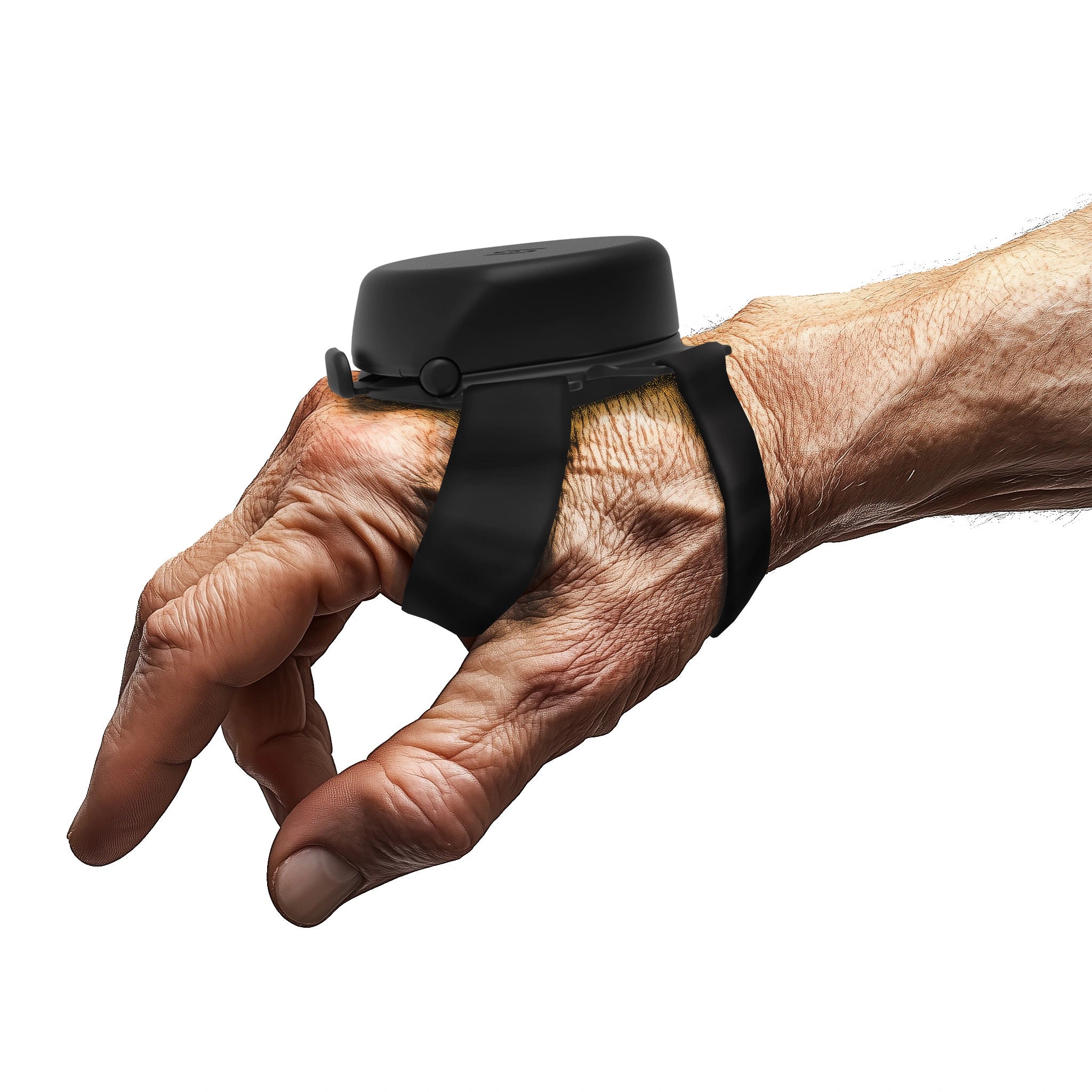
The Steadi-3 Tremor Glove from Steadiwear works at the source of the challenge: the hand itself. By using patented magnetic dampening technology to reduce involuntary hand movement in real time, it stabilizes whatever the hand is holding. That means a standard fork, a coffee cup, a pen, or a glass of water benefits from the same stabilization effect without requiring a specialized version of every item in the kitchen.
This distinction matters practically. A patient using the Steadi-3 can sit down to a meal with standard dinnerware, use whichever utensils the occasion calls for, and experience meaningful tremor reduction through the meal without managing a collection of specialized pieces. For patients who find adaptive utensils stigmatizing in social settings, or who want to eat at a restaurant or a family dinner without drawing attention to their condition, the Steadi-3 allows that normalcy.
The Steadi-3 is battery-free, weighs 290 grams, and is designed for daily wear during activities rather than clinical use only. It requires no charging between meals and no maintenance beyond standard cleaning. These practical characteristics matter to patients managing already demanding daily routines.
The most effective mealtime setup for moderate-to-significant Parkinson's tremor combines hand-level stabilization with complementary tableware. The Steadi-3 reduces the tremor. A scoop plate and a non-slip mat reduce the demands on plate management. A two-handled cup handles beverages. Together, the system addresses the full mealtime picture in a way that no single tool can.
An occupational therapist can assess how to integrate the Steadi-3 into a broader adaptive eating strategy, identifying which tasks benefit most from hand stabilization and which are better addressed by tableware or utensil modifications.
How to Choose the Right Adaptive Utensils by Tremor Severity
Most guides list adaptive utensils as if all patients face the same challenge. They do not. The right utensils for Parkinson's patients depend on where in the progression of the condition a person currently is, which symptoms are most dominant, and how much grip strength remains.
For patients with mild tremor and preserved grip strength, weighted silverware for tremors is the appropriate starting point. The added mass provides enough dampening for most meals, the transition from standard utensils is minimal, and the cost is low. Built-up handles can be added if finger dexterity is also beginning to be affected.
For patients with moderate tremor, when weighted utensils help but spillage still occurs consistently, two options are worth evaluating. Swivel utensils address the rotational component of tremor at a low price point. Active stabilization devices such as Liftware Steady address a broader range of tremor movement at a higher investment. An occupational therapist evaluation at this point will clarify which approach matches the patient's specific tremor pattern.
For patients with severe tremor or advanced weakness, active stabilization technology, combined with a hand-stabilizing wearable and a fully adaptive tableware system, provides the most comprehensive solution. At this stage, no single utensil category is sufficient on its own. The approach becomes systemic.
Signs that a current utensil setup is no longer working include persistent spillage despite using adapted utensils, increased fatigue during meals, reduced food intake due to difficulty using utensils, and growing reluctance to eat in social settings. Each of these signals the need for reassessment. An occupational therapist can evaluate the current setup against current symptom severity and recommend specific changes rather than a full overhaul.
A Caregiver's Guide to Setting Up an Adaptive Kitchen
Caregivers are often the ones researching adaptive eating utensils for tremors, making purchasing decisions, and setting up the kitchen environment. Yet most guides are written as if the patient is the sole reader. This section is for caregivers directly.
Step 1: Observe before purchasing. Spend a few meals watching specifically for which tasks create the most difficulty. Is it scooping food onto the utensil? Lifting without spilling? Gripping the handle through the full motion? Opening containers? Pouring liquids? The answer shapes which tools to prioritize. A simple checklist noting which specific moments cause struggle or frustration is more useful than a general sense that mealtimes are hard.
Step 2: Start with the essentials. The minimum effective adaptive kitchen kit is a weighted utensil set, a scoop plate, a Dycem non-slip mat, and a two-handled cup. These four items address the most common mealtime challenges, cost under $100 combined, and create an immediate improvement in most cases. Introduce them gradually rather than all at once to allow adaptation.
Step 3: Reorganize for accessibility. Move frequently used items to the counter height. Create a seated preparation area if standing balance is a concern. Switch to electric kitchen tools for opening, peeling, and chopping. These changes reduce the daily effort required to maintain kitchen independence without requiring new skills or devices.
Step 4: Introduce advanced tools as symptoms progress. Active stabilizing utensils and wearable hand-stabilization technology become increasingly relevant as tremor severity increases. Watch for the signs mentioned above and respond with a reassessment rather than waiting for a significant functional decline.
Step 5: Schedule a home evaluation with an occupational therapist. An OT home visit assesses the specific kitchen layout, identifies safety risks, and recommends modifications tailored to the individual. It is the single most efficient investment in a well-designed adaptive kitchen setup.
The emotional dimension of introducing adaptive tools matters. Many Parkinson's patients resist adaptive equipment because accepting it feels like an acknowledgment of loss. The framing caregivers use affects how tools are received. Presenting weighted utensils as something that makes meals easier rather than as something necessitated by inability tends to reduce resistance. Involving the patient in the selection process, where possible, preserves their sense of agency. The goal of adaptive equipment is independence. That goal is more likely to be achieved when the patient feels ownership over the solution.
Conclusion
The kitchen does not have to be the room where Parkinson's Disease makes itself most felt. With the right tools in the right places, it can be a room where independence holds — where you prepare and eat meals with confidence rather than frustration.
Start where the impact is highest. A weighted utensil set, a scoop plate, a non-slip mat, and a two-handled mug address the most common mealtime challenges at a modest cost. Add adaptive cooking tools as tasks become harder. Reorganize the kitchen for seated work and counter-height access. Introduce advanced tools, including active tremor stabilization, as tremor severity increases.
The goal is not a perfect kitchen. It is a kitchen that keeps up with you, adapted thoughtfully over time so that independence in this central room remains within reach for as long as possible.
An occupational therapist can translate the categories in this guide into specific recommendations matched to your symptom profile and your kitchen layout.