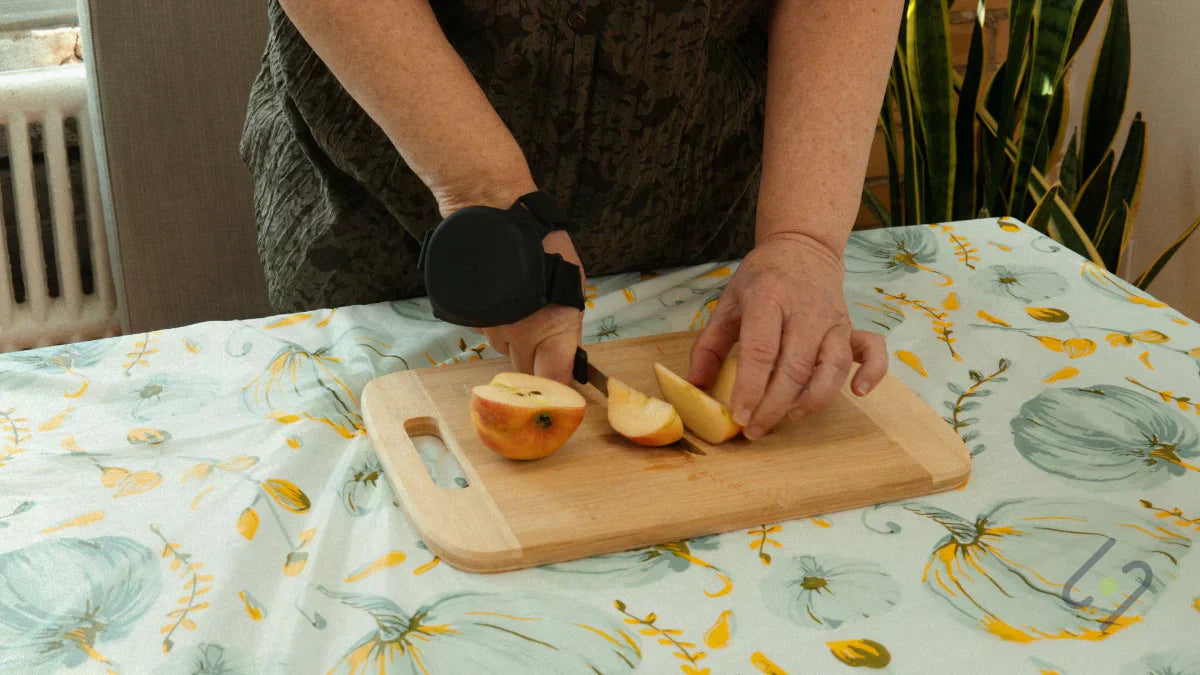
If you have searched for anti-tremor gloves, you have probably noticed that the market includes several very different types of devices, each claiming to reduce hand shaking. Some use added weight. Some use spinning gyroscopes. Some use electrical pulses. Some use no power at all. They are all called tremor gloves, but they work through completely different physical and neurological mechanisms.
Understanding those mechanisms matters before purchasing. A device optimized for one type of tremor may do very little for another. The right technology depends on your specific tremor profile, your daily tasks, and your tolerance for weight, battery management, and cost. This guide explains the science behind each major category of anti-tremor technology in plain language, compares the clinical evidence behind each, and provides a practical framework for matching technology type to tremor type.

What Are Tremor Gloves and Who Are They For?
A tremor glove is a wearable device designed to reduce involuntary hand shaking during daily tasks. The category includes a wide range of products, from simple weighted orthotic gloves to sophisticated electronic stabilization systems, all united by the goal of making it easier to eat, write, drink, and perform other fine-motor activities despite involuntary hand movements.
The primary audiences are people with Essential Tremor and people with Parkinson's Disease. Essential tremor is the most common movement disorder, affecting an estimated 10 million Americans. Parkinson's Disease affects roughly one million Americans and is associated with its own distinct tremor patterns. Other conditions, including multiple sclerosis, and certain medications can also cause tremors that wearable devices may help manage.
Medication remains the first-line treatment for both conditions, but it does not fully control tremor for a significant portion of patients. Surgical options like deep brain stimulation are effective but carry risk and are not appropriate for all patients. Task-specific adaptive tools like weighted utensils help at mealtimes but do nothing for writing, grooming, or other activities. Wearable anti-tremor gloves address this gap by providing a portable, continuous form of tremor support that accompanies the person throughout daily activities.
The range of technologies now available means that "tremor glove" encompasses devices that operate on fundamentally different principles. Understanding how each one works is the foundation for choosing the right one.
The Science of Tremor: Why Your Hands Shake
To understand how any tremor device intervenes, it helps to know what tremor actually is at both neurological and mechanical levels.
Tremor is rhythmic, involuntary muscle movement caused by oscillating signals in the nervous system. The brain circuits responsible for coordinating movement, particularly the cerebello-thalamo-cortical circuit, become dysregulated, generating repetitive signals that cause shaking. Different conditions disrupt this circuit in different ways, which is why tremors from different conditions have different characteristics.
Essential Tremor and Parkinson's tremor are the two most clinically distinct types. Essential tremor is primarily an action tremor, meaning it occurs during voluntary movement. When a person with essential tremor reaches for a glass of water, the shaking activates and intensifies during the reach. At rest, the tremor often diminishes or disappears. Essential tremor typically oscillates at 4 to 12 Hz.
Parkinson's tremor is classically a resting tremor, meaning it occurs when the hand is at rest and typically improves with voluntary movement. It usually oscillates at 3 to 7 Hz. Parkinson's patients may also develop action tremor over time, which complicates device selection.
This distinction matters enormously for device selection. A device tuned to counteract movement during voluntary tasks will interact differently with an action tremor than a resting tremor. A device that stimulates nerves to disrupt tremor circuits may target the neurological pathway more directly for certain tremor types than a purely mechanical approach.
Tremor also varies in amplitude, direction, and consistency across time of day, medication cycles, fatigue level, and emotional state. This is why a one-size-fits-all approach to tremor suppression does not work. The right device must match the physical characteristics of the individual's tremor, not just the diagnosis.
Weighted Gloves for Tremors: How Added Mass Dampens Shaking
Weighted gloves for tremors are the simplest and most widely available category of anti-tremor wearable. The underlying principle is physics: added weight increases the hand's inertia, requiring more force to move it. Because tremor is an involuntary, low-force oscillation, increasing the hand's resistance to movement reduces the visible amplitude of the shake.
Strategic weight placement on the dorsal surface of the hand, meaning the back of the hand rather than the palm, targets the axis of tremor movement without restricting the grip or the voluntary movements required for daily tasks. Some weighted glove systems, including Readi-Steadi, allow the total weight to be adjusted by adding or removing individual weight discs. This customization matters because the optimal weight varies by individual tremor severity and hand size.
There is a second mechanism at work alongside simple inertia. Additional weight on the hand may enhance proprioceptive feedback, the brain's awareness of where the hand is in space. Proprioception is partially disrupted in tremor conditions, and adding weight to improve feedback may help the brain's motor control systems make better micro-corrections during voluntary movement. This proprioceptive effect is less well-established than the inertial effect, but it is a plausible secondary mechanism supported by occupational therapy research.
Weighted gloves for tremors are most effective for patients with mild-to-moderate action tremor who retain adequate grip strength. They are appropriate as a first-step device for essential tremor in particular, given their low cost, ease of use, and lack of any charging or maintenance requirements.
The primary limitation is fatigue. Extended wear of a weighted glove imposes a continuous load on the wrist and forearm, which can be tiring over a full day of use, particularly for patients whose grip or upper-limb strength is already reduced. For patients with significant weakness alongside tremor, the weight burden may outweigh the stabilization benefit, especially late in the day.
Built-Up Handle Utensils vs. Standard Weighted Utensils
Weighted glove systems that extend to utensil handles offer a choice between built-up handle designs and standard weighted handles. Built-up handles, which are thicker and often cushioned, primarily help patients with reduced grip strength and dexterity by requiring less precise finger positioning. Standard weighted handles address tremor amplitude through mass.
Patients whose primary challenge is tremor amplitude with preserved grip strength typically benefit most from standard weighted handles. Patients who also have dexterity or grip reduction, which is common in Parkinson's Disease, tend to do better with built-up designs. Many occupational therapists recommend starting with built-up foam additions to existing utensils using inexpensive pipe insulation before committing to a commercial product, as this allows experimentation with handle thickness at minimal cost.
Tuned Mass Damper Technology: Engineering Principles Applied to Tremor
The tuned mass damper, or TMD, is a structural engineering concept that has been in use for decades in skyscrapers, bridges, and aerospace applications. When a building sways due to wind or an earthquake, a large suspended mass inside the structure swings in the opposite direction, counteracting the movement and reducing oscillation. The Taipei 101 tower contains a 660-ton TMD pendulum for exactly this purpose.
The application of this principle to a wearable tremor device is more recent and represents a fundamentally different approach from weighted gloves. While weighted gloves increase the hand's passive resistance to movement, a tuned mass damper actively counteracts tremor by generating a counterforce in the opposite direction. The device contains a mass that oscillates out of phase with the tremor, absorbing and canceling the shaking energy rather than simply adding inertia.
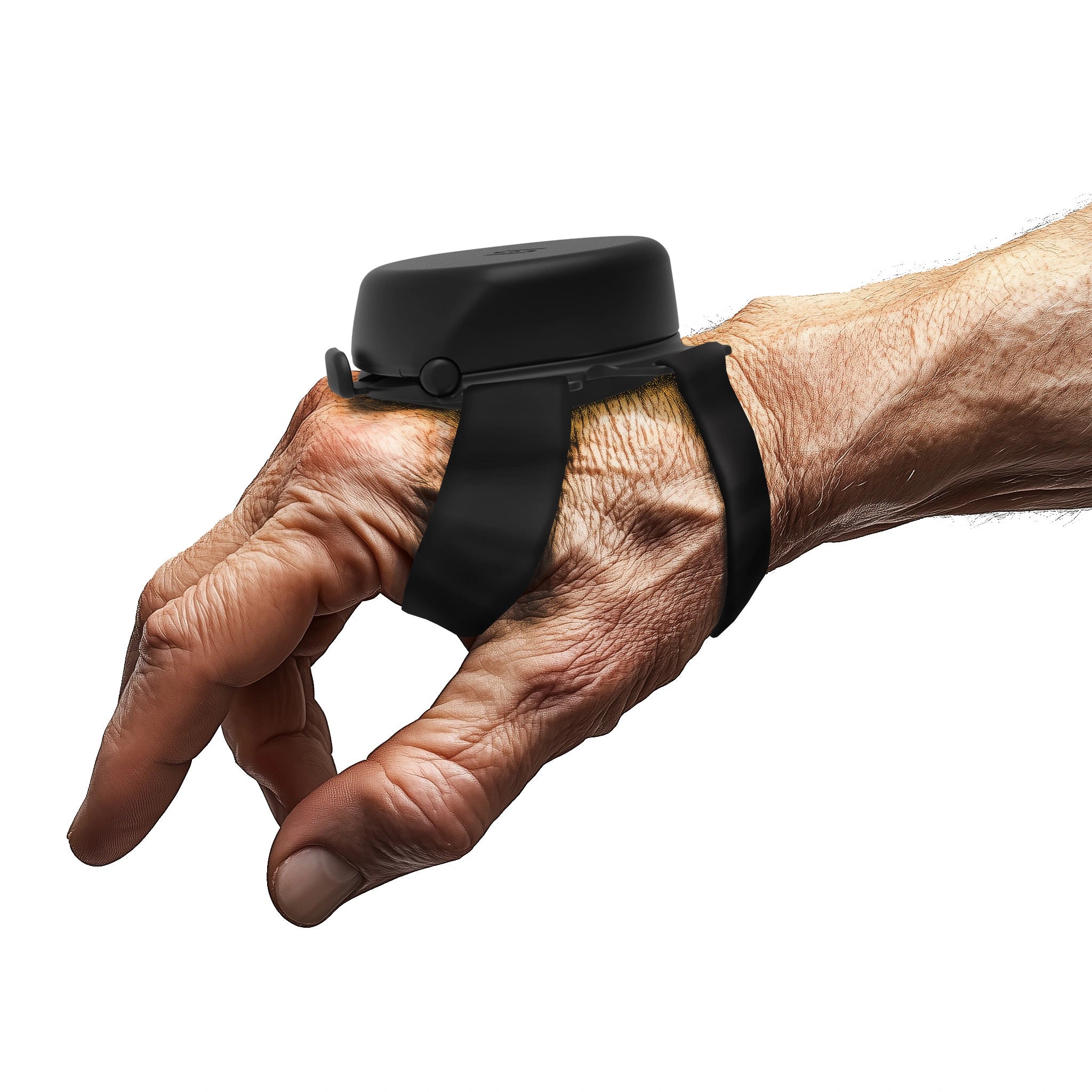
Steadiwear's Steadi-3 implements this principle using a magnetic vibration absorber. A weighted disc inside the device is surrounded by a ring of magnets that repel it. When the hand trembles in one direction, the disc is repelled in the opposite direction, generating a counterforce. Because the disc floats on magnetic repulsion rather than springs or mechanical linkages, the response is frictionless and nearly instantaneous. There are no motors, no battery, and no electronics. The device responds automatically and continuously to whatever tremor pattern is present.
Tremelo, produced by Five Microns, uses a spring-based TMD approach in a wearable sleeve format. Springs connect counterbalance weights that oscillate in response to hand movement, providing a passive counterforce through mechanical rather than magnetic means.
The key advantage of the TMD approach, particularly its magnetic implementation, is that the system automatically adapts to changes in tremor intensity. Tremor varies minute to minute depending on fatigue, stress, and medication cycles. A device that responds mechanically to any present movement does not require adjustment or manual calibration. It works differently when the tremor is mild and differently when it is more severe, tracking the actual tremor pattern in real time.
How Magnetic Vibration Absorbers Differ from Spring-Based Dampers
Magnetic vibration absorbers and spring-based dampers both implement the tuned mass damper principle, but the physics of the two systems differ in ways that affect performance.
Spring-based systems must be mechanically tuned to a target frequency range. A spring with a given stiffness resonates most effectively at a specific frequency, and a tremor that falls outside that range receives less counteraction. This is a meaningful limitation because tremor frequency varies across individuals and across time within the same individual.
Magnetic systems like the Steadi-3 provide a near-frictionless, instantaneous response across a broader range of tremor frequencies because the magnetic repulsive force adjusts continuously with the disc's actual displacement, rather than relying on a fixed spring constant. The result is a system that responds effectively across the full range of essential- and Parkinson 's-tremor frequencies without requiring mechanical tuning.
Spring-based systems are also subject to mechanical wear over time, whereas a magnetic system with no moving parts in contact has no equivalent wear mechanism.
Gyroscopic Stabilization: How the GyroGlove Counteracts Tremor
The gyroscopic approach to tremor stabilization draws on physics principles that have been applied in aerospace navigation, marine stabilization, and racing vehicle stability systems. A spinning mass resists changes to its orientation due to angular momentum, a property known as gyroscopic precession. A spinning top resists falling over. A bicycle wheel resists tipping. These same forces can be applied to resist the unwanted orientation changes that tremor produces in the hand.
The GyroGlove, produced by GyroGear, embeds miniature gyroscopes that spin at speeds of up to 10,000 rotations per minute. When tremor tries to rotate or tilt the hand and wrist, the spinning gyroscopes generate counteracting torques that resist the movement. The effect is described by GyroGear as reducing tremor amplitude by 85 to 90 percent in their internal testing, and the device received recognition at CES 2024 in three categories.
The GyroGlove is particularly relevant for tremor that involves pronation and supination, meaning rotation of the wrist, which is a common component of both essential tremor and Parkinson's tremor during eating and writing tasks.
The practical limitations of gyroscopic stabilization are worth considering. The device requires a battery and provides approximately 4 hours of continuous operation per charge, which is a meaningful constraint for all-day wearers. The spinning gyroscopes produce an audible whir during operation that some users find distracting. The device adds bulk to the hand and wrist. And at its current price point, it is among the higher-cost options in the wearable tremor technology category. Independent clinical validation data for the GyroGlove's efficacy claims have not yet been published in peer-reviewed literature.
Functional Electrical Stimulation Gloves: Nerve-Level Tremor Suppression
Functional electrical stimulation, or FES, represents the most medically sophisticated category of anti-tremor wearable. Rather than working at the mechanical level of the hand and wrist, FES devices address tremor at the neurological level by delivering electrical pulses that interact directly with the nervous system.
Two distinct FES approaches appear in tremor management. The first involves stimulating muscles to contract in the opposite direction of the tremor, using electrical signals timed to counteract the tremor-producing muscle activity. The second, used by Cala Trio from Cala Health, involves stimulating sensory nerves in the wrist that connect to the thalamus, the brain region whose abnormal activity drives essential tremor. By delivering precisely timed electrical pulses to these sensory nerves, Cala Trio disrupts the pathological oscillation in the thalamus, providing tremor relief that persists for hours after the stimulation session ends. This is fundamentally different from a mechanical device that only works while worn.
Cala Trio has the strongest published clinical evidence base in the wearable tremor category. A clinical validation study involving 205 patients with essential tremor showed a statistically significant improvement in tremor control. The device is FDA-cleared for essential tremor, a higher regulatory designation than FDA registration, and requires a physician's prescription for access.
Research-stage FES gloves targeting Parkinson's tremor have also demonstrated results. One published study involving 30 Parkinson's patients found significant improvement in tremor control compared with a sham group, suggesting that nerve-level electrical stimulation may be applicable to Parkinson's tremor as well as essential tremor.
The limitations of FES approaches are clinically relevant. They require battery power and periodic recharging. Some patients experience muscle fatigue or tingling sensations from the electrical stimulation. They are contraindicated for patients with implanted electrical devices, including deep brain stimulation systems, cardiac pacemakers, and cochlear implants. And effectiveness varies across individuals, as not every patient's tremor circuit responds equally to peripheral nerve stimulation.
How Steadiwear's Steadi-3 Uses Anti-Tremor Technology to Restore Daily Independence
The Steadi-3 Tremor Glove applies tuned mass damper technology in a wearable form factor developed specifically for hand tremor management. The intellectual foundation came from CEO Mark Elias's background in vibration mechanics and building stabilization engineering. The same principles that prevent skyscrapers from swaying dangerously in high winds, when applied at the scale of a wearable hand device, produce the Steadi-3's magnetic vibration-absorber mechanism.
The device contains a weighted disc that floats within a magnetic field created by surrounding magnets. When the hand trembles, the disc is repelled in the opposite direction of the movement, generating a continuous counterforce. Because the system is purely mechanical, with no electronics, motors, or battery, it requires no charging, produces no sound, and cannot run out of power during use. It responds instantly to whatever tremor the hand produces, automatically calibrating to the frequency and amplitude of each individual's tremor pattern without any setup or adjustment.
Clinical testing of the Steadi-3 found that 84% of participants showed improved tremor control compared to no device. In blinded assessments where neurologists evaluated participants without knowing whether they were using the device or a placebo, participants showed a 70% improvement in tremor control with the Steadi-3. The Steadi-3 is an FDA-registered Class I medical device, indicating it has met the safety and labeling requirements for wearable medical devices. The device is also FSA- and HSA-eligible.
Real-world use cases reported by Steadi-3 users include writing by hand again, eating without spilling, applying makeup independently, cooking, and managing other fine-motor tasks that had become impossible or required caregiver assistance. The device weighs 290 grams and is designed for all-day wear rather than task-specific use, which distinguishes it from devices optimized for clinical or limited-duration sessions.
The Steadi-3 fits most effectively as part of a broader tremor management strategy. Medication remains the primary treatment for both essential tremor and Parkinson's tremor. Physical and occupational therapy build the compensatory skills and adaptive strategies that support daily function. The Steadi-3 addresses the gap between what medication controls and what remains disruptive to daily life, working alongside other tools rather than replacing them.
Comparing Anti-Tremor Glove Technologies: Which Approach Fits Your Tremor?
No single anti-tremor glove technology is best for all patients. The right device depends on tremor type, tremor severity, lifestyle factors, and practical tolerances for battery management, device bulk, and cost. Here is a practical framework.
Mild action tremor with preserved grip strength: Weighted gloves for tremors are the logical starting point. They are the most affordable option, require no power source, and provide meaningful improvement for the majority of mild essential tremor cases. If proprioceptive enhancement is needed alongside weight, built-up handle additions can be layered in.
Moderate-to-severe action tremor: TMD-based devices like the Steadi-3 and gyroscopic devices like the GyroGlove provide more active counterforce than simple weight. The Steadi-3 has the advantage of battery-free operation and published clinical evidence of efficacy. The GyroGlove provides gyroscopic counterforce that may be particularly effective for rotational tremor components but requires battery management and produces audible noise during operation.
Resting tremor (Parkinson's Disease): FES approaches targeting the neurological pathways that drive tremor may be more effective for the resting component of Parkinson's tremor than purely mechanical devices. Cala Trio's sensory nerve stimulation approach addresses the thalamic oscillation that generates Parkinson's tremor at its neurological source. TMD and weighted devices remain applicable for daily tasks in which action tremor is the primary challenge.
Mixed tremor or advanced progression: A combination approach, using a wearable mechanical device for daily task support alongside medication optimization and occupational therapy, typically produces better outcomes than any single device alone.
Key questions to bring to your neurologist or occupational therapist before purchasing: What type of tremor do you have, resting, action, or both? What is the primary frequency range of your tremor, if it has been assessed? Which daily tasks are most affected? What is your tolerance for battery-dependent devices? Do you have any implanted electrical devices that would contraindicate FES? An OT evaluation is the most efficient path to a well-matched device recommendation.
What the Research Says: Clinical Evidence Behind Tremor Gloves
Patients and caregivers making device decisions deserve to understand not just what each device claims, but what the clinical evidence actually shows. The evidence landscape for wearable tremor devices is still developing, but meaningful data exists across several categories.
Weighted gloves have limited formal clinical trial data. Their efficacy is primarily supported by evidence from occupational therapy practice and the well-established physics of inertial resistance. They are widely recommended by OTs but have not been the subject of large randomized controlled trials.
TMD-based devices (Steadi-3) have been evaluated in controlled studies. The published findings show that 84% of participants demonstrated improved tremor control compared with no device, and a 70% improvement over placebo in a blinded neurologist assessment. This represents meaningful controlled evidence in a category where independent clinical data is relatively rare.
Gyroscopic devices (GyroGlove) report manufacturer-claimed 85-90% tremor reduction in internal testing. No independent peer-reviewed clinical study has been published to date to validate these figures through external evaluation.
FES devices (Cala Trio) have the strongest published clinical evidence base in this category. The device was validated in a study of 205 patients with essential tremor, with statistically significant results, and it holds FDA clearance, which requires a higher level of evidence than FDA registration. Cala Trio requires a physician's prescription for access.
FES research-stage devices targeting Parkinson's tremor have demonstrated significant improvement over sham conditions in published studies, with one study showing meaningful tremor reduction in a 30-patient Parkinson's cohort.
Understanding the distinction between regulatory designations is important for evaluating claims. FDA clearance (as held by Cala Trio) means the FDA has reviewed clinical evidence and determined the device is substantially equivalent to a predicate device with proven safety and efficacy. FDA registration (as held by Steadi-3) means the device manufacturer is registered with the FDA and the device meets Class I safety and labeling requirements. Neither designation guarantees efficacy for a specific patient, but they represent meaningfully different levels of regulatory review. "Clinically tested" without a specific study citation is a marketing phrase that patients and caregivers should evaluate critically.
The overall evidence landscape for wearable tremor devices remains in its early stages compared with that for pharmaceutical treatments. The evidence that does exist is promising across several technology categories. Patients should discuss specific devices and the evidence supporting them with their neurologist or movement disorder specialist before making a purchase decision.
Conclusion
The anti-tremor glove category has moved well beyond simple weighted wristbands. Magnetic vibration absorbers, gyroscopic stabilization, and transcutaneous electrical nerve stimulation each represent distinct engineering and neurological approaches to a single problem: reducing the involuntary hand movement that makes daily tasks difficult.
None of them is right for everyone. The mechanism underlying mild essential tremor with preserved grip strength differs from that underlying a moderate Parkinson's action tremor. Understanding the physics behind each category — what it does, how it does it, and where its limits are — is what makes it possible to choose with confidence rather than guessing.
If the tuned mass damper approach resonates with you, the Steadi-3 puts that technology into a battery-free, clinically evaluated form designed for all-day daily use. Explore the science and clinical evidence in more detail on the Steadi-3 technology page, and bring this guide to your next appointment with your neurologist or occupational therapist as a starting point for the conversation.
Key Takeaways: Choosing the Right Anti Tremor Glove for Your Tremor
Understanding how an anti tremor glove works makes device selection clearer, but the best choice still depends on tremor type, severity, and the tasks most affected. Anti tremor glove technology and other wearable tremor devices are management tools, not treatments. There is currently no cure for Essential Tremor or Parkinson's Disease. Consulting a neurologist or occupational therapist before selecting a device is recommended. The Steadi-3 Plus is an FDA-registered Class I medical device using passive magnetic stabilization, requiring no batteries and no prescription.