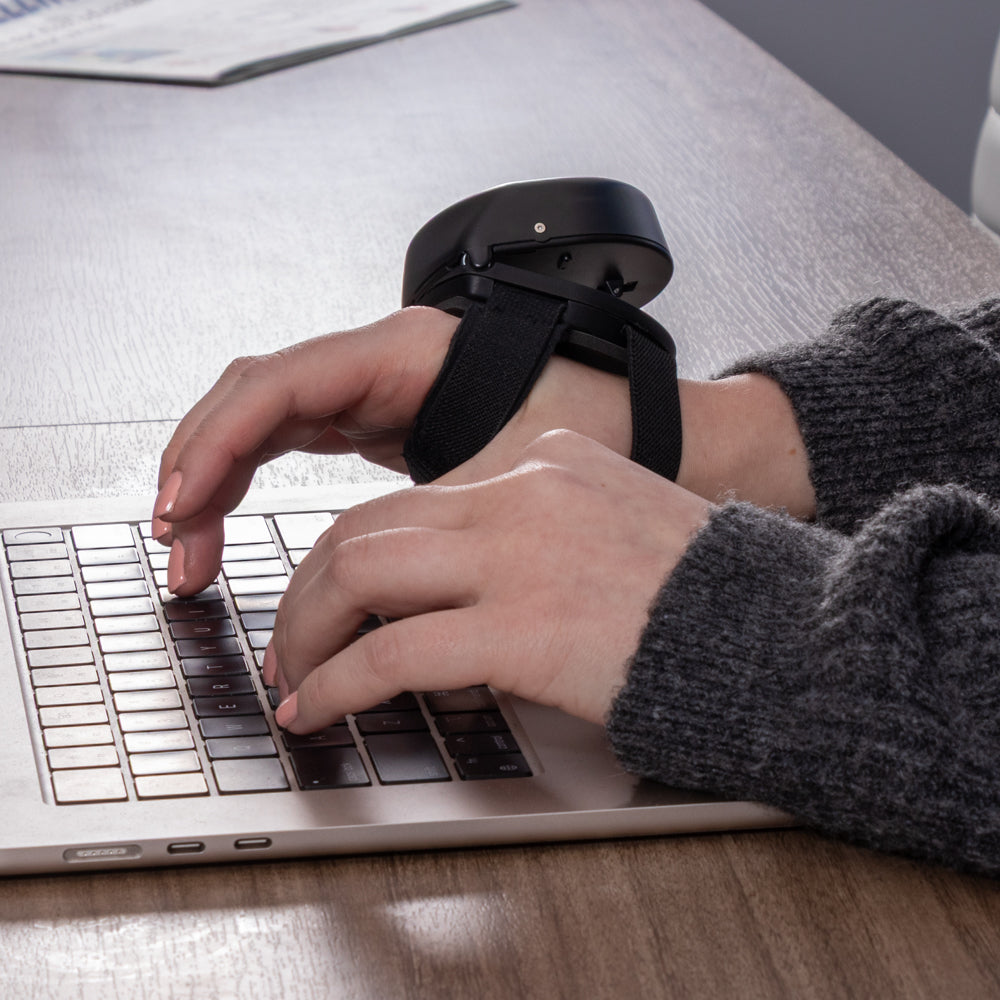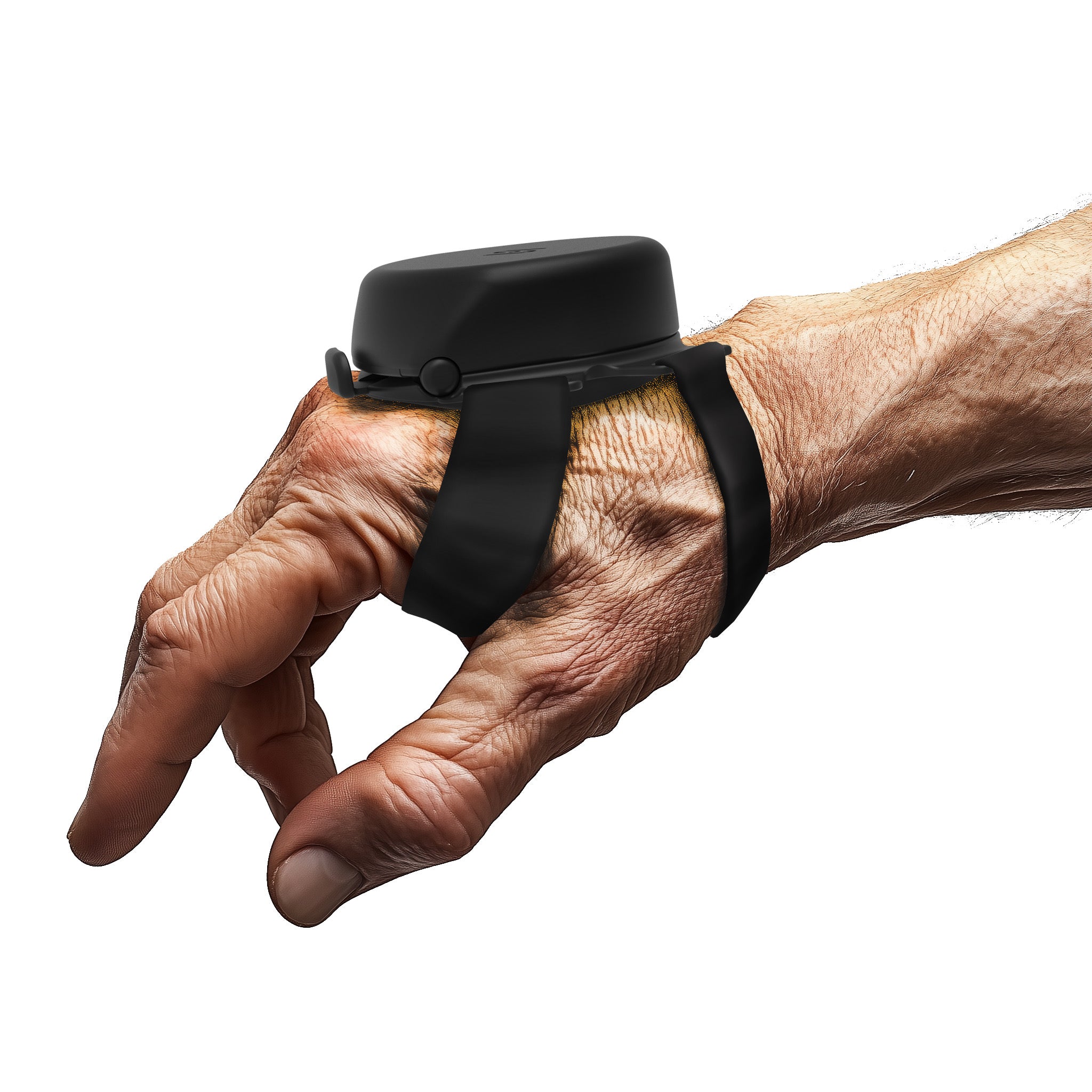
Anti-tremor gloves vary so widely in mechanism, performance, and daily usability that choosing between them requires more than reading a product description. The right glove depends on tremor type and severity, daily activity needs, tolerance for added weight or battery charging, budget, and professional guidance. Essential Tremor has no cure; anti-tremor gloves aim to reduce the functional impact of tremors on daily tasks such as eating, writing, and drinking.
Start with tremor type and severity
Anti-tremor gloves are designed primarily for action tremors, tremors that occur during hand use, which is the predominant pattern in Essential Tremor. Resting tremors, more common in Parkinson's Disease, present differently and may not respond to the same device mechanisms equally well. Tremor severity affects which mechanism is sufficient: mild tremors may be manageable with passive approaches; moderate to severe tremors may require mechanisms that adapt in real time. A neurologist or movement disorder specialist should confirm tremor type before a device is selected; purchasing based on self-assessment alone increases the risk of choosing a mechanism that does not match the tremor pattern.
Understand the mechanism before the product
Weighted orthotics add calibrated mass to the hand to dampen movement through increased inertia; passive, battery-free, widely available, best for mild tremors. Passive magnetic stabilization uses an internal disc that moves in opposition to the tremor; passive, battery-free, responds mechanically to tremor motion. Gyroscopic stabilization uses a spinning mechanism to actively resist involuntary movement in real time; active, requires battery charging. Neurostimulation devices work at the neurological level rather than the mechanical level; distinct from all glove-form devices and prescription-only. The mechanism is the most important variable in any comparison; it determines response speed, adaptability, fatigue risk, and who benefits most.
Evaluate clinical evidence before buying
Evidence quality varies significantly across anti-tremor gloves: some have placebo-controlled, blinded clinical studies; others rely on internal testing or user-reported outcomes with no published data. A placebo-controlled study with blinded assessor evaluation is the strongest evidence standard for a wearable tremor device; it controls for expectation effects and observer bias. A manufacturer's stated efficacy percentage without a published protocol should be evaluated cautiously; the methodology behind the claim determines whether the number is meaningful. FDA registration indicates the device has been registered as a medical device; it is distinct from FDA clearance. Ask a neurologist or occupational therapist to help interpret evidence claims before purchasing.
Consider battery dependency and daily wearability
Active devices require battery charging and have finite use duration per charge; a device that runs out of power mid-meal or mid-workday creates practical disruption. Passive battery-free devices can be worn continuously without interruption for charging, which matters for users who need all-day support across multiple tasks. Battery dependency does not automatically disqualify a device: if a user only needs tremor support during specific activities, limited battery life may be acceptable. Charging management adds a step to daily routine that can be a barrier for older adults or individuals with cognitive fatigue. Confirm stated battery life under real-use conditions, not laboratory conditions.

Assess fit, form factor, and comfort
Measure palm circumference at the widest point before purchasing any anti-tremor glove sold in sizes; poor fit reduces effectiveness and increases discomfort. One-size-fits-all designs may not accommodate all hand proportions; a device that fits loosely cannot stabilize effectively. Open-palm or fingerless designs preserve dexterity for fine motor tasks such as typing, using a phone, or handling small objects. Breathable materials reduce heat buildup and extend comfortable wear duration, important for gloves worn during meals or extended activity. Check for latex content in glove materials, relevant for users with latex sensitivities. An occupational therapist can provide a fitting and confirm the selected device suits the individual.
Factor in cost, return policy, and trial options
Anti-tremor gloves range from under $50 for basic weighted options to several hundred dollars for advanced passive magnetic or gyroscopic devices. Before purchasing, confirm the return policy and trial period; a 30-day return window reduces financial risk for a device that may not suit individual tremor characteristics. Many anti-tremor gloves may qualify for FSA or HSA reimbursement when purchased to manage a diagnosed medical condition such as Essential Tremor or Parkinson's Disease. A letter of medical necessity from a treating neurologist or occupational therapist strengthens an FSA and HSA reimbursement claim. Confirm reimbursement eligibility with the plan administrator before purchase; eligibility varies by plan and by device regulatory status.
Questions to ask before purchasing
Is this glove designed for action tremors, resting tremors, or both, and does it match my confirmed tremor type? What is the stabilization mechanism, and is it passive or active? Do I want battery-free continuous wear or am I willing to manage charging? What clinical evidence supports this device: a published study with a control group, or manufacturer-reported figures? What is the FDA status of this device: registered, cleared, or neither? What is the return policy, and is there a trial period that reduces purchasing risk? Is this glove eligible for FSA and HSA reimbursement? Has an occupational therapist or neurologist reviewed my tremor pattern and recommended a mechanism type?
How the Steadi-3 compares on the criteria that matter
Mechanism: passive magnetic stabilization, a tuned mass damper that moves in opposition to the user's tremor, generating a mechanical counterforce; not a weighted glove. Battery: battery-free, no charging required, continuous wear supported. Clinical evidence: 84% of users in a placebo-controlled study experienced improved tremor control, assessed by blinded neurologists. FDA status: FDA-registered Class I medical device. Fit: universal sizing, adjustable, available for left or right hand; Steadi-3 Plus features replaceable straps; Steadi-3 has non-detachable straps. Patients who want to explore whether the Steadi-3 is appropriate for their tremor pattern should consult a neurologist or occupational therapist before purchasing.
When to involve an occupational therapist
An occupational therapist can assess tremor pattern, hand strength, and daily activity demands and recommend the mechanism type most likely to be effective for the individual. OT fitting is particularly important for devices sold in sizes or requiring proper placement; a poorly fitted device reduces stabilization effectiveness regardless of mechanism quality. Occupational therapists can also recommend complementary assistive tools, such as weighted utensils, adaptive pens, and modified cups, that work alongside a tremor glove for specific tasks. Some anti-tremor gloves require OT involvement as part of the acquisition process. An OT assessment before purchase reduces the risk of investing in a device that does not match individual needs.
Common mistakes when choosing anti-tremor gloves
Choosing a generic fitness or workout glove repurposed for tremor use: consumer weighted fitness gloves are not purpose-built medical devices and lack the design, fit, and clinical context of purpose-built anti-tremor gloves. Selecting weight based on intuition rather than OT guidance: heavier does not mean more effective and causes fatigue without proportional benefit. Confusing FDA registration with clinical trial evidence: a device can be FDA-registered without a published controlled study; these are distinct attributes. Ignoring the return policy: an anti-tremor glove that does not suit a specific tremor pattern may be non-returnable. Purchasing before confirming the tremor type with a healthcare provider is the most common reason anti-tremor gloves underperform.
How to try a tremor glove before committing
Many anti-tremor gloves are sold with a return window, typically 30 days, that functions as a de facto trial period; confirming this before purchasing reduces financial risk. Occupational therapy clinics sometimes carry wearable assistive devices for demonstration and loan during assessment sessions; asking an OT whether a device can be trialed before purchase is a reasonable first step. Some device manufacturers offer specific trial programs; checking the device's website for trial availability before buying through a third-party retailer is worthwhile. Caregivers purchasing on behalf of a family member should confirm sizing by measuring palm circumference first rather than estimating.
Choosing anti-tremor gloves: what matters most
Choosing anti-tremor gloves well requires matching mechanism to tremor type, evaluating clinical evidence honestly, confirming fit and comfort for daily use, and understanding the full cost picture including return policies and FSA and HSA eligibility. No anti-tremor glove works equally well for all patients; the same device may provide meaningful tremor management for one person and insufficient support for another. The best gloves for hand tremors for any individual are the ones recommended after a proper assessment of tremor type, severity, and daily activity profile. There is no cure for Essential Tremor or Parkinson's Disease; the goal of any anti-tremor glove is to restore control over daily tasks and support greater independence.