


Steadi-3 Plus
Steadi-3 Plus uses a magnetically tuned mass-damping system integrated into a wrist-worn glove. The stabilizer unit contains a disc surrounded by magnets. When tremor motion occurs at the wrist and hand, the disc moves in the opposite direction of the tremor, counteracting the motion in real time. Because the system is magnetic and passive, it adapts to changes in tremor intensity without batteries, electronics, or manual adjustment. The wrist placement allows the damping effect to act close to where fine motor control is needed.
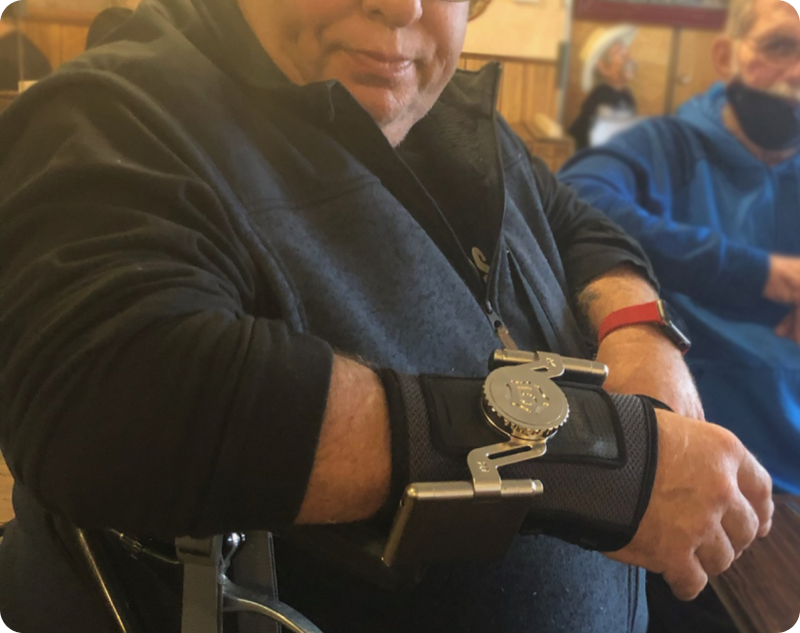
Tremelo
Tremelo uses vibration absorbers, tuned mass dampers positioned on the dorsal and ventral surfaces of the arm. Each absorber consists of springs attached to weights that respond to tremor oscillations. As the arm tremor moves, the added masses oscillate in opposition, transferring tremor energy into the absorber system. This design focuses on proximal arm tremors rather than wrist or hand-specific motion. Like Steadi-3 Plus, Tremelo is fully mechanical, non-invasive, and battery-free.
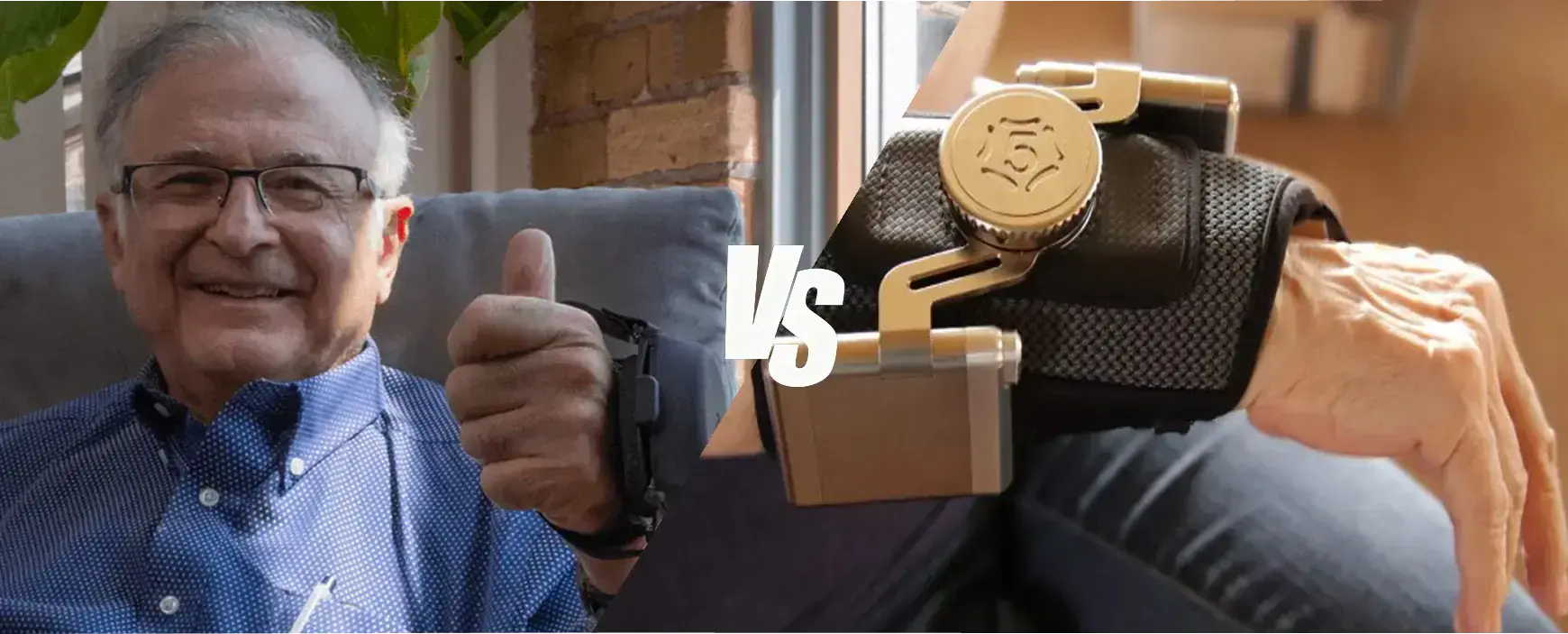
Clinical Evidence: RCT Validation vs Claimed Efficacy Without Published Trials
Steadi-3 Plus is supported by published clinical research, including a randomized controlled trial completed in 2024. In that study, users experienced an average 84 percent improvement in tremor control compared to no device and a 70 percent improvement compared to a placebo device. These results were measured under controlled conditions and reflect real-world functional improvement. Steadi-3 Plus is also an FDA-registered Class I medical device, adding a layer of regulatory oversight.
Tremelo reports that it reduces essential tremor by 85 to 90 percent based on manufacturer claims and user feedback. However, peer-reviewed literature published on PubMed Central explicitly states that this claim is not supported by published clinical data and that the methodology used to calculate effectiveness has not been specified. A pilot clinical study was noted as ongoing as of 2021, but no randomized controlled trial results have been published to date.
Anatomical Targeting: Wrist-Specific vs Arm-Specific Tremor Control
Understanding where your tremor originates is critical when deciding between the best tremor control device for the wrist vs the arm.
Steadi-3 Plus is designed specifically for wrist and hand tremors. Stabilizing motion at the wrist, it improves control of the fingers and hand during fine motor activities such as handwriting, utensil use, and buttoning clothing. This distal targeting is particularly relevant for Essential Tremor wrist stabilization device searches, where precision matters most.
Tremelo targets arm tremors using vibration absorbers placed along the upper or lower arm. This approach is better suited for proximal tremors that cause the entire arm to shake and interfere with reaching or holding the arm steady in space. The device does not directly stabilize the wrist or fingers, but instead aims to reduce tremor amplitude higher up the limb.
Weight, Wearability, and Design: Glove vs Sleeve Form Factor
Steadi-3 Plus weighs under one pound at approximately 275 grams and is worn like a compact glove with adjustable silicone and neoprene straps. Its low-profile design allows it to be worn for extended periods without drawing attention or interfering with clothing. Many users wear it throughout the day during meals, work, and daily activities.
Tremelo weighs approximately 1.4 pounds and is worn as an arm sleeve with two vibration absorbers extending from the dorsal and ventral surfaces of the arm. This design is functionally necessary to address arm tremors, but it creates a larger visual profile. Peer-reviewed literature has noted that some users find the device heavy or cumbersome, which may contribute to discomfort or fatigue with prolonged wear.
Cost and Financing: Transparency on Price Points
Steadi-3 Plus is priced at 799 $ for a single device and is available directly through the Steadiwear website. Financing options through Affirm range from approximately 43 to 73 dollars per month, and the device is eligible for FSA and HSA reimbursement. Pricing and payment options are clearly stated, allowing patients to plan accordingly.
Tremelo’s website prominently displays a financing option of approximately 68 dollars per month, but does not clearly disclose a base purchase price. Based on financing structures, the estimated total cost appears to fall in the 800 to 1200 dollar range, although this is not officially published. This lack of transparency can make direct cost comparison difficult for budget-conscious users.
Who Should Choose Steadi-3 Plus? Who Should Choose Tremelo?
Steadi-3 Plus is well-suited for individuals with wrist or hand-focused tremors who rely on fine motor control for daily tasks. It is also appropriate for people with Parkinson’s Disease or combined Essential Tremor and Parkinson’s Disease, as well as those who value randomized controlled trial evidence, FDA registration, lightweight design, and transparent pricing.
Tremelo may be a better fit for individuals whose tremor is primarily arm-focused and who experience difficulty stabilizing the arm during reaching or holding tasks. It may also appeal to users who are comfortable relying on manufacturer claims and testimonials rather than published clinical trials, and who are willing to wear a bulkier device to target proximal tremor. Tremelo is intended for Essential Tremor only and is not positioned for Parkinson’s Disease use.
Tuned Mass Damper Technology: How Both Devices Work
Tuned mass damper technology is the foundation of both Steadi-3 Plus and Tremelo. A tuned mass damper consists of a mass that is calibrated to move out of phase with an unwanted oscillation. When tremor motion occurs, the damper moves in the opposite direction, absorbing energy and reducing the amplitude of the movement.
In Steadi-3 Plus, this effect is achieved through magnetic repulsion acting on a disc within the wrist stabilizer. In Tremelo, the effect is achieved through springs attached to weights that respond to arm motion. Both systems are passive, meaning they are always active and require no power source.
This approach is fundamentally different from weighted gloves, which simply add mass without responding dynamically to tremor frequency. Tuned mass dampers are effective because they are tuned to the characteristics of tremor, not just its presence. This technology has decades of validation in structural engineering and is increasingly applied to medical assistive devices.
Essential Tremor vs Parkinson's: Which Device Is Right for Your Condition?
Condition type is a critical factor in determining the best tremor control device, wrist vs arm. Steadi-3 Plus is indicated for both Essential Tremor and Parkinson’s Disease. Clinical evaluations have included users from both populations, and the wrist-focused design addresses action tremor and resting tremor patterns.
Tremelo is marketed specifically for Essential Tremor and explicitly states that it is not intended for Parkinson’s Disease. There is limited evidence supporting its use outside of Essential Tremor populations. For individuals with Parkinson’s Disease, Steadi-3 Plus is the appropriate option.
For users with Essential Tremor only, both devices may be viable depending on tremor location. Wrist-dominant tremors align better with Steadi-3 Plus, while arm-dominant tremors may align better with Tremelo. Understanding your diagnosis and tremor distribution can prevent choosing a device that does not match your needs.
Making Your Final Decision: Steadi-3 Plus vs Tremelo Comparison Checklist
When making your final decision, consider the following questions carefully.
- First, is your tremor primarily in the wrist and hand or higher up in the arm?
- Second, do you have Essential Tremor only or Parkinson’s Disease as well?
- Third, do you prioritize published clinical trial evidence or are you comfortable relying on manufacturer-reported outcomes?
- Fourth, are you comfortable wearing a 1.4-pound arm device, or do you prefer a lighter wrist-worn option?
- Fifth, does a glove style or sleeve style better fit your daily routine?
- Sixth, do you want transparent pricing, or are you comfortable with financing first disclosures?
Answering these questions honestly will guide you toward the device that aligns best with your condition and lifestyle. Revisiting the sections above can help clarify any remaining uncertainty.
Frequently Asked Questions
Wearability is often a deciding factor in Steadi-3 Plus vs Tremelo comparisons. Steadi-3 Plus is designed for extended daily use, with a lightweight wrist-worn form that minimizes fatigue and interference with routine activities. Many users wear it throughout meals, work, and daily tasks. Tremelo can also be worn for long periods, but its heavier arm sleeve design may lead some users to experience discomfort or fatigue over time. Tremolo arm tremor device reviews frequently note effectiveness, but also mention bulk and weight as considerations for all-day wear.
A critical difference in the Steadi-3 Plus vs Tremelo comparison is condition suitability. Steadi-3 Plus is indicated for both Essential Tremor and Parkinson’s Disease, and its clinical evaluations include Parkinson’s populations. Tremelo is intended for Essential Tremor only and explicitly states it is not designed for Parkinson’s Disease. For individuals with Parkinson’s Disease or mixed diagnoses, Steadi-3 Plus is the appropriate option. This distinction is especially important when evaluating Steadi-3 Plus clinical evidence vs Tremelo claims, as Tremelo’s data does not address Parkinson’s use.
According to peer-reviewed sources, Tremelo has referenced a pilot clinical study in the past, but no results have been published. In Steadi-3 Plus vs Tremelo discussions, this is often attributed to ongoing development or limited research resources, although the current status of any trials remains unclear. Without published data, it is difficult to assess methodology, outcomes, or consistency across users. This lack of transparency is frequently highlighted in analyses of Steadi-3 Plus clinical evidence vs Tremelo claims and is a key concern for evidence-focused patients.
There is no universal answer when evaluating Steadi-3 Plus vs Tremelo. Effectiveness depends on where the tremor is most pronounced, wrist and hand versus arm, as well as the underlying condition and personal preferences. Steadi-3 Plus excels for wrist-focused tremors and users seeking published clinical validation. Tremelo may be suitable for arm-dominant tremors and users who are comfortable relying on testimonials and tremolo arm tremor device reviews. Rather than one device being objectively better, the right choice depends on anatomical targeting, evidence expectations, and lifestyle needs.