


Steadi-3 Plus
Steadi-3 Plus is a mechanical hand tremor device worn like a glove that provides immediate, on-demand stabilization through magnetic tuned mass damping. It does not use electricity, batteries, or software, making it fundamentally different from electronic tremor therapies. In a Steadi-3 Plus vs Cala Trio comparison, Steadi-3 Plus functions as a physical stabilizer that responds automatically to tremor motion as it occurs.
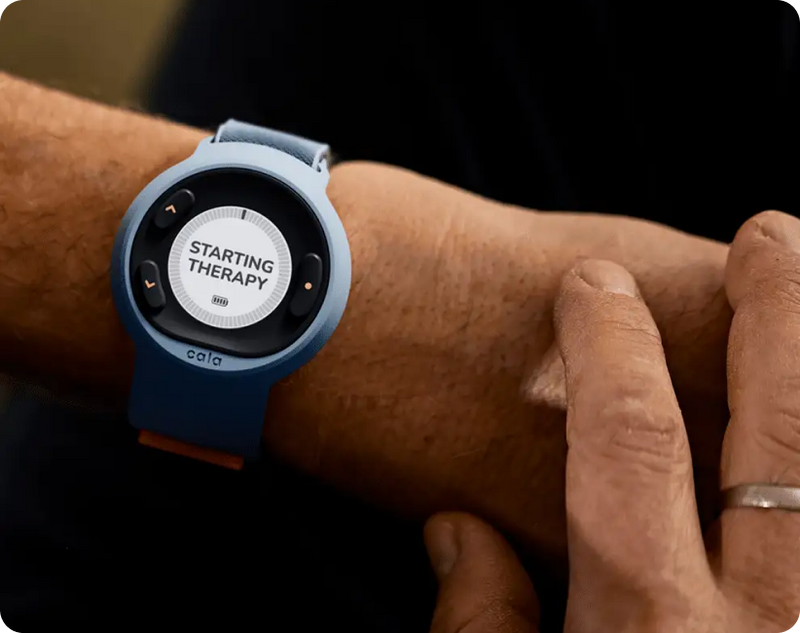
Cala Trio
Cala Trio is a prescription-based wearable hand tremor device that delivers electrical neuromodulation through the wrist using patterned stimulation. This approach is designed to influence tremor-related neural pathways during structured therapy sessions rather than providing continuous stabilization. In clinical and consumer comparisons, Cala Trio is often described as a scheduled treatment system that requires physician involvement and regular session use. Some users experience temporary wrist discomfort, a side effect associated with electrical stimulation.

How These Tremor Control Devices Work: Mechanical vs Electrical Stimulation
Steadi-3 Plus is a mechanical tremor glove that uses passive magnetic tuned mass damping. Inside the stabilizer unit, precisely calibrated magnetic masses respond automatically to involuntary tremor motion. As the hand begins to shake, the internal system counteracts those movements in real time, reducing tremor amplitude without sending any electrical signals to the body. Because this approach is entirely passive, Steadi-3 Plus is battery-free, does not require charging, and does not interact with the nervous system through stimulation.
Cala Trio, by contrast, is based on electrical neuromodulation. It delivers transcutaneous afferent patterned stimulation to nerves at the wrist. These electrical signals are designed to influence tremor-related pathways that connect peripheral nerves to the thalamus, a key brain region involved in tremor generation. By modulating abnormal signaling in these circuits, Cala aims to reduce tremor after each therapy session.
Clinical Efficacy: What the Evidence Shows
Steadi-3 Plus has been evaluated in a clinical trial. In this study, 84 percent of participants experienced tremor reduction compared to no device, and 70 percent showed improvement compared to a placebo condition. These results suggest that the mechanical stabilization provided by Steadi-3 Plus delivers measurable benefit beyond expectation or weight alone. Because the device is passive and battery-free, reported adverse effects were minimal, with no electrical or skin-related side effects associated with stimulation.
Cala Trio’s primary evidence comes from the PROSPECT trial, an open-label study evaluating transcutaneous afferent patterned stimulation. In this trial, participants demonstrated a 68 percent improvement in Activities of Daily Living scores and a median tremor power reduction of 92 percent following therapy sessions. These results are frequently referenced in published Cala Trio comparison analyses, but it is important to understand what they represent. Improvement in Activities of Daily Living reflects tasks such as eating, drinking, or writing feeling easier after treatment, rather than continuous tremor suppression throughout the day.
Ease of Use and Daily Life: Wear Time, Setup, and Maintenance
Steadi-3 Plus is designed for immediate, on-demand use. The glove is worn on the affected hand and automatically calibrates to the user’s tremor without setup. Because it is battery-free, there is no charging, no software, and no maintenance beyond routine strap replacement. Many users incorporate it into daily activities such as eating, writing, or cooking without planning ahead. If you decide to attend dinner, hold a cup, or sign a document, you simply put it on and go.
Cala Trio follows a more structured therapy model. It requires a physician's prescription and an initial clinical setup. Users complete two 40-minute therapy sessions per day, guided by the device and supported through a Bluetooth-connected portal. Relief is typically experienced after each session and can last for a period of time rather than continuously throughout the day. For some individuals, this structure and clinical oversight are appealing, especially if they value data tracking and guided treatment plans.
Cost Comparison: Direct Purchase vs Insurance Coverage
Steadi-3 Plus is available through direct purchase, typically priced at $799. Because it is sold directly to consumers, there are no clinic fees or ongoing therapy costs. For many patients and caregivers, this clarity is helpful when budgeting. Steadi-3 Plus is also eligible for FSA and HSA reimbursement with appropriate documentation, and monthly payment plans through Affirm are available, generally ranging from $43 to $73 per month, depending on terms.
Cala Trio and related systems involve higher overall costs, but they benefit from insurance pathways. As of December 2025, Cala’s TAPS therapy is covered by Medicare for qualifying beneficiaries, and VA benefits are available for eligible veterans. Commercial insurance coverage varies and often depends on individual plans and prior authorization. While insurance can significantly reduce out-of-pocket expenses for some users, it also introduces administrative steps and eligibility requirements.
Who Should Choose Steadi-3 Plus? Who Should Choose Cala Trio?
Steadi-3 Plus is often well-suited for individuals who prefer a battery-free solution that provides immediate relief without clinic visits. It appeals to users who want to manage tremor during everyday activities without scheduling therapy sessions. It is also appropriate for those with deep-brain stimulation implants, as mechanical stabilization does not interfere with implanted systems. Budget-conscious users who value direct purchase and predictable costs may also find Steadi-3 Plus appealing.
Cala Trio may be a better fit for individuals who prefer structured therapy guided by a healthcare provider. Patients who qualify for Medicare or VA coverage and want to take advantage of insurance reimbursement often consider Cala. The ability to track sessions and outcomes through a digital portal can be helpful for those who like data-driven care and regular routines.
Beyond Steadi-3 Plus and Cala Trio: Other Tremor Control Options to Consider
While this page focuses on Steadi-3 Plus vs other devices like Cala Trio, it is helpful to understand the broader landscape of tremor control tools. Several alternatives exist, each addressing tremor in different ways.
Tremelo uses tuned vibration absorbers designed to dampen tremor through localized vibration. Readi Steadi gloves rely primarily on added weight to reduce tremor amplitude, which may help some users but can increase fatigue. Liftware offers smart eating utensils that stabilize specific tasks like eating, but do not address general hand tremor. GyroGlove has been explored as a gyroscopic stabilization concept, though availability and development status have varied.
Compared to these options, Steadi-3 Plus and Cala Trio are often considered market leaders due to their clinical backing and broader applicability across daily activities. Understanding these alternatives can help patients clarify what they value most in a hand tremor device, whether that is versatility, simplicity, or targeted task support.
Making Your Final Decision: Steadi-3 Plus vs Cala Trio Comparison Checklist
If you are still weighing your options, a simple checklist can help guide your decision.
First, consider whether you prefer a battery-free solution. If avoiding charging and electronics is important, Steadi-3 Plus aligns with that preference.
Second, think about timing. Do you want immediate relief whenever a tremor occurs, or are you comfortable with structured therapy sessions that provide relief after treatment?
Third, review insurance eligibility. If you qualify for Medicare or VA coverage and want to use those benefits, Cala Trio may be financially attractive.
Fourth, consider medical factors such as implanted devices. Individuals with deep-brain stimulation implants should avoid electrical stimulation and may favor mechanical stabilization.
Finally, assess your budget and tolerance for ongoing processes. Direct purchase offers simplicity, while insurance-based models involve more steps. Revisiting the earlier sections of this Steadi-3 Plus vs Cala Trio comparison can help you explore each factor in more depth and arrive at a decision that feels informed and practical.
Frequently Asked Questions
Yes. In a Steadi-3 Plus vs Cala Trio comparison, this is a critical safety distinction. Steadi-3 Plus is a mechanical hand tremor device that does not use electrical stimulation, making it safe for individuals with deep-brain stimulation implants or other implanted electronics. Cala Trio uses electrical neuromodulation and is contraindicated for patients with DBS systems. For users who require a tremor control device without electrical signals, Steadi-3 Plus offers a clear option, especially for those managing long-term neurological care alongside implanted therapies.
Relief duration is one of the most practical differences highlighted in any Cala Trio comparison. Steadi-3 Plus provides continuous tremor reduction for as long as the device is worn, supporting all-day use during daily activities. Cala therapy sessions typically deliver tremor relief lasting 90 minutes or more after each completed session. Some users also report transient sensations related to Cala Trio side effects, such as mild wrist discomfort, which are not associated with mechanical stabilization devices.
Yes. Both companies offer return policies that allow users to try the hand tremor device before committing to it long-term. In a Steadi-3 Plus vs Cala Trio evaluation, this trial period is important for assessing comfort, effectiveness, and fit with daily routines. Return terms, timelines, and eligibility requirements differ between manufacturers and should be reviewed carefully before purchase. Having a trial option helps patients and caregivers make a more confident tremor control device decision based on real-world experience rather than specifications alone.
Both devices are indicated for Essential Tremor and Parkinson’s Disease, particularly for action tremor affecting the hands. In a Cala Trio comparison, Cala therapy focuses on structured neuromodulation sessions, while Steadi-3 Plus delivers mechanical stabilization during movement. For users seeking a tremor control device that integrates directly into activities like eating or writing, Steadi-3 Plus may feel more intuitive. Cala may appeal to those who prefer scheduled therapy sessions guided by a clinical framework.
Yes. Steadi-3 Plus is designed for unlimited daily use and can be worn during routine tasks such as eating, writing, cooking, or using a phone. In a Steadi-3 Plus vs Cala Trio comparison, this flexibility stands out because Steadi-3 Plus does not require planned sessions or downtime. As a mechanical hand tremor device, it provides stabilization whenever tremor occurs, without concerns about charging, electronics, or side effects associated with electrical stimulation.