

What Is the Disability Tax Credit in Canada?
The Disability Tax Credit (DTC Canada) is a non-refundable tax credit administered by the Canada Revenue Agency to reduce income tax for individuals with severe and prolonged impairments. Eligibility is based on functional limitation, not diagnosis alone. The impairment must last at least 12 months and restrict basic activities of daily living 90% or more of the time. For tremor conditions, relevant activities include feeding, dressing, and upper limb function. Parkinson’s disease often qualifies when limitations are documented, while essential tremor may qualify if functional impact is clearly described.

Understanding the Medical Expense Tax Credit Canada for Tremor Devices
Even if you do not qualify for the Disability Tax Credit, you may still benefit from the Medical Expense Tax Credit. This credit allows Canadians to claim eligible medical expenses as a medical expense deduction for tax purposes that exceed a defined income threshold. Unlike the DTC, it is based on actual expenses paid and does not require prior approval. Prescribed assistive devices, including tremor-related technology, may qualify when supported by proper documentation and not reimbursed by insurance.
Do Tremor Devices Qualify as Medical Expenses?
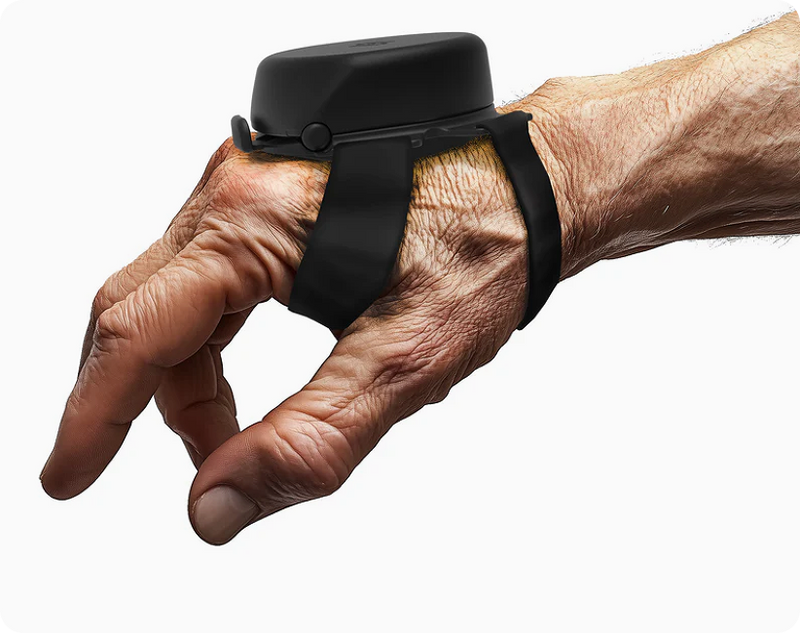
Tremor-reducing devices may qualify as eligible medical expenses under specific conditions. The CRA generally requires that the device be prescribed or ordered in writing by a qualified medical practitioner, intended to help a person with an impairment perform daily activities, and not reimbursed by insurance. Examples often claimed include tremor-stabilizing gloves, adaptive utensils, writing aids, and assistive software. Medical justification is essential, and documentation should clearly explain how the device supports functional independence rather than convenience or general wellness use.
How to Apply for the Disability Tax Credit
Applying for the Disability Tax Credit requires completing Form T2201. Part A is completed by the applicant or a representative, while Part B must be certified by a qualified medical practitioner. The practitioner should describe functional limitations in detail, using concrete examples rather than listing a diagnosis. Forms can be submitted online or by mail. If approved, applicants may request retroactive adjustments for prior years when eligibility existed.
Claiming Expenses and Keeping Proper Documentation
To claim tremor devices under the Medical Expense Tax Credit, keep organized records. Required documentation includes itemized receipts, a written prescription or medical order, proof of non-reimbursement, and approved T2201 forms if applicable. Expenses are claimed on the appropriate tax lines. Maintaining documentation annually simplifies future claims, transfers to family members, and potential CRA reviews.
Frequently Asked Questions
For the 2025 tax year, the federal disability amount is $10,138 for adults. This amount does not represent a direct payment. Instead, it is a non-refundable tax credit, meaning it reduces the amount of federal income tax you owe. The actual dollar value of the credit depends on your marginal tax rate. For example, at a 15% federal rate, the federal portion could reduce taxes by roughly $1,400. In addition, each province and territory offers its own disability amount, which can further increase total tax savings. If you do not use the full credit, it may be transferred to an eligible supporting family member.
The Disability Tax Credit (DTC) is based on functional limitations, not on having a specific diagnosis. The CRA assesses whether a person has a severe and prolonged impairment that significantly restricts basic activities of daily living at least 90% of the time, for 12 months or more. Eligible impairment categories include feeding, dressing, walking, mental functions necessary for everyday life, bowel or bladder functions, vision, hearing, and life-sustaining therapy. Tremor-related conditions, such as essential tremor or Parkinson’s disease, may qualify if they cause marked restriction in activities like feeding or dressing, or if there is a cumulative effect of multiple significant limitations. Medical documentation of functional impact is critical.
Yes, many assistive devices can be claimed under the Medical Expense Tax Credit (METC) if certain conditions are met. The CRA generally requires that the device be prescribed or ordered in writing by a qualified medical practitioner, used to assist with a recognized impairment, and not reimbursed by insurance or another program. Tremor-related assistive devices—such as adaptive utensils, writing aids, or tremor-stabilizing gloves—may qualify if they are medically justified. You must keep detailed receipts and the written prescription or order. Eligible expenses are claimed on Line 33099 or 33199 and must exceed the applicable income threshold to provide tax relief.
To apply for the Disability Tax Credit, you must complete Form T2201 (Disability Tax Credit Certificate). Part A is completed by the applicant or their legal representative, while Part B must be completed and certified by a qualified medical practitioner, such as a physician or nurse practitioner. The practitioner must describe how the impairment affects daily functioning, not just list a diagnosis. Once completed, the form can be submitted online through CRA My Account or mailed to the CRA. Processing times vary, and the CRA will issue a written determination. Approval may allow you to claim the credit going forward and potentially request adjustments for prior years.