When researching tremor management, patients frequently encounter "anti-tremor device" and "anti-tremor glove" used interchangeably. These terms actually describe distinct product categories with meaningfully different mechanisms. The distinction matters: mechanism determines who benefits, how long a device can be worn, whether a prescription is required, and what level of clinical evidence exists. There is no cure for Essential Tremor or Parkinson's Disease; all wearable devices aim to manage the functional impact of tremor on daily tasks.
What is an anti-tremor device?
An anti-tremor device is a wearable assistive device worn on the hand, wrist, or forearm that uses a physical or electrical mechanism to reduce the amplitude of involuntary hand shaking. Devices in this category do not treat the underlying neurological condition; they reduce the functional expression of the tremor during daily tasks. Most are used for action tremors, tremors that occur during movement, which are the primary presentation in Essential Tremor. The category includes several distinct sub-types with meaningfully different mechanisms, regulatory status, and evidence bases. Consulting a neurologist before selecting a wearable tremor device is recommended for all patients.
What is an anti-tremor glove?
An anti-tremor glove describes wearable devices in a glove or glove-adjacent form factor designed to reduce hand tremor. The term covers at least three distinct mechanisms: weighted orthotics, which add mass; passive magnetic stabilization, in which a disc oscillates against tremor motion; and gyroscopic stabilization, a spinning mechanism that resists involuntary movement. These mechanisms perform very differently despite sharing the glove label. Most anti-tremor gloves target action tremors occurring during daily tasks such as eating, writing, and drinking. Some are over-the-counter; others require a physician's order or custom fitting.
Passive vs. active: the most important distinction
Passive devices respond to tremor through fixed physical properties; they do not adjust based on the tremor's current intensity or direction. Active devices use sensors or dynamic mechanisms to generate a counterforce in real time, adapting to each tremor event as it occurs. In practical terms: a passive device performs consistently at its physical limit regardless of whether the tremor is mild or severe; an active device scales its response. The passive and active distinction is the clearest predictor of which patients will find a device sufficient and which will not. Both categories are represented within anti-tremor gloves.
Weighted orthotic gloves: how they work and who they suit
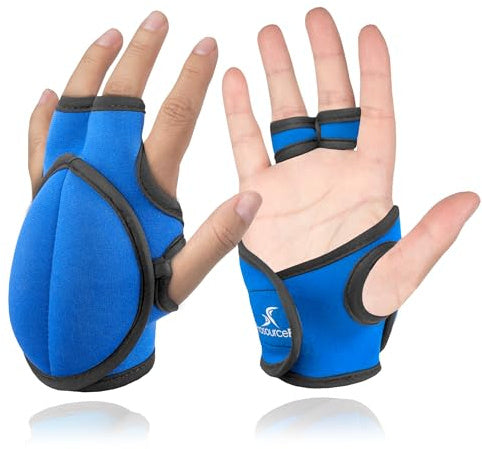
Weighted orthotic gloves add calibrated mass to the hand or wrist, increasing the inertia of the hand and making small involuntary movements less pronounced. Entirely passive: no electronics, no charging, no prescription required in most cases. Available over the counter for consumer purchase; purpose-built versions are custom-fitted with a physician's order. Most appropriate for mild tremors where short-duration tasks benefit from light stabilization. Fatigue is a documented limitation: the added weight can become tiring during extended wear, reducing the glove's practical usefulness across a full day of activity.
Passive magnetic stabilization gloves: mechanism and practical use
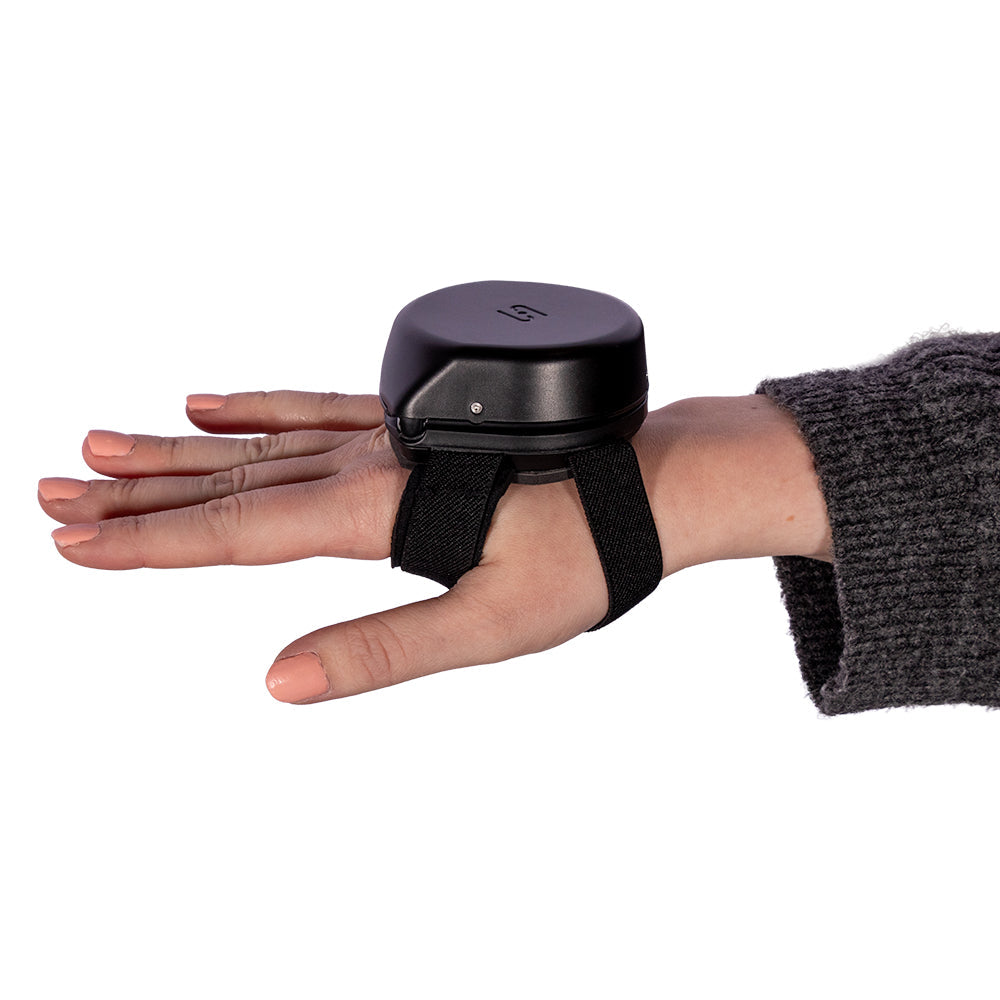
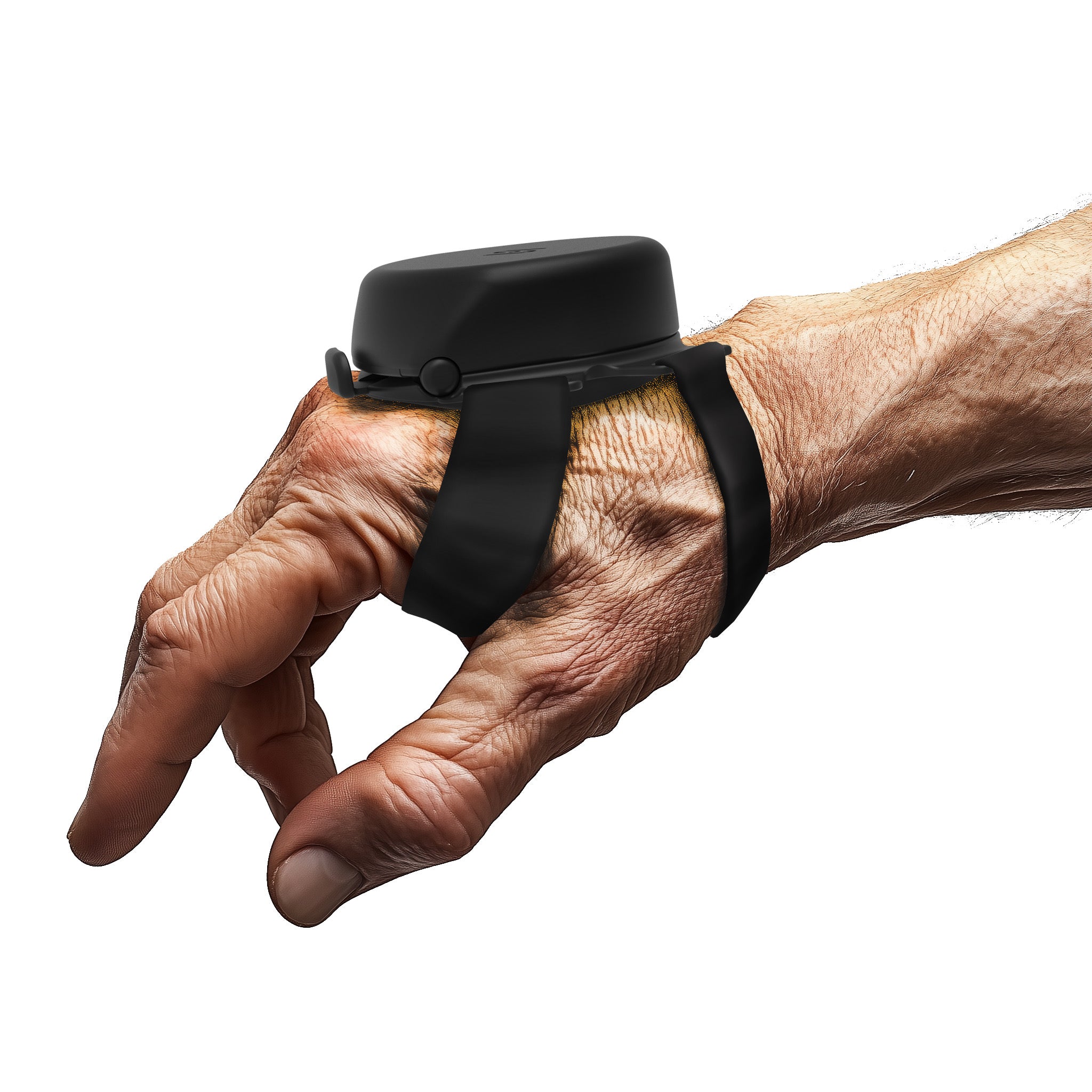
Passive magnetic stabilization gloves use an internal disc surrounded by magnets; when the hand moves involuntarily, the disc is repelled in the opposite direction, generating a counterforce that partially cancels the tremor. The mechanism is passive: it responds to tremor motion mechanically rather than through sensors or electronics. Battery-free: the device requires no charging and has no electronic components. Adapts to tremor frequency in real time through mechanical response rather than programmed adjustment. Well-suited for action tremors during daily tasks; performance varies with tremor severity and individual tremor pattern.

Gyroscopic and neurostimulation anti-tremor devices
Gyroscopic stabilizers use a spinning mechanism that generates angular momentum, actively resisting sudden tremor movements in real time; this is an active mechanism that adapts to each tremor event. Neurostimulation devices deliver electrical pulses to peripheral nerves to disrupt the tremor-generating circuits in the brain. Neurostimulation devices are the only wearable tremor devices that address the neural source of tremor rather than its physical expression. Both categories typically require a prescription or physician referral, unlike most glove-form devices. Patients with implanted devices such as deep brain stimulation systems may be contraindicated for neurostimulation approaches.
How to compare anti-tremor devices across key criteria
Tremor type compatibility matters first: action tremors and resting tremors respond differently to the same mechanisms; confirm the device is indicated for your tremor type. Battery requirement is relevant for real-world daily use; a device that requires charging mid-meal or mid-workday has practical limitations that passive devices avoid. FDA registration and FDA clearance are distinct regulatory categories with different evidence thresholds. Clinical evidence quality varies: look for placebo-controlled studies with blinded assessments, not anecdotal reports. Prescription versus over-the-counter access affects whether physician involvement is required before purchasing a device.
Where the Steadi-3 fits in the anti-tremor device landscape
The Steadi-3 occupies the passive magnetic stabilization sub-category within the anti-tremor glove landscape; it is not a weighted glove and does not use added mass as its stabilization mechanism. It uses patented passive magnetic stabilization: an internal magnetic disc that moves in opposition to the user's tremor, generating a counterforce without batteries or electronic components. FDA-registered Class I medical device, distinguishing it from generic consumer gloves and fitness products repurposed for tremor use. In a placebo-controlled study, 84% of users experienced improved tremor control. For patients who have tried weighted gloves without adequate relief, discussing passive magnetic stabilization with a healthcare provider is a reasonable next step.
What conditions are anti-tremor devices used for?
Essential Tremor is the primary condition for which anti-tremor gloves and devices are used; its action tremor pattern occurs during hand use, making wearable devices during daily tasks clinically relevant. Parkinson's Disease produces both resting tremors and action tremors; not all anti-tremor glove mechanisms are equally effective across both tremor types. Some devices are used for MS-related tremors, post-stroke tremors, and cerebellar tremor, though evidence bases for these populations are more limited. There is no cure for Essential Tremor or Parkinson's Disease; anti-tremor devices are management tools only. A neurologist or movement disorder specialist should confirm tremor type before selecting a wearable device.
Do anti-tremor devices require a prescription?
Neurostimulation devices are the only wearable tremor devices that universally require a physician's prescription. Some weighted orthotic systems require a physician's order and custom fitting through an occupational therapist. Passive gloves and magnetic stabilization devices are generally available for direct purchase without a prescription. FDA registration as a Class I device does not by itself require a prescription; it indicates the device has been registered as a medical device with the FDA. Many anti-tremor devices are eligible for FSA and HSA reimbursement when purchased to manage a diagnosed medical condition; confirming eligibility with a plan administrator is recommended.
What clinical evidence exists for anti-tremor devices?
Evidence quality varies significantly across device categories: some have placebo-controlled, blinded studies; others rely on user-reported outcomes or single-arm trials. A placebo-controlled study with blinded neurologist assessments is the strongest evidence standard for wearable tremor devices, as it controls for expectation effects and assessor bias. The APDA notes that additional clinical trial data are anticipated to better clarify the potential of wearable devices in tremor treatment plans. FDA clearance, as distinguished from registration, requires substantial evidence of safety and effectiveness; Class I registration requires different documentation standards. Patients should ask a healthcare provider to help interpret evidence for any device they are considering.
Anti-tremor device versus anti-tremor glove: the key takeaway
An anti-tremor device is the broader category; an anti-tremor glove is one form factor within it. The most important variable is mechanism: passive mass, passive magnetic stabilization, active gyroscopic stabilization, and neurostimulation each perform differently and suit different patients. No single anti-tremor device works for everyone; tremor type, severity, daily activity needs, prescription access, and tolerance for battery charging all influence which option is appropriate. A neurologist or occupational therapist is the most reliable guide to which anti-tremor device matches an individual patient's functional goals. No device in this category cures Essential Tremor or Parkinson's Disease; all are management tools aimed at restoring control and maintaining independence.