How fast Parkinson's progresses is one of the first questions patients and caregivers ask after a diagnosis. The honest answer is that there is no single timeline — progression is highly individual and influenced by subtype, age at onset, and management choices. This article covers what research shows about stage-to-stage durations, the factors that accelerate or slow progression, and what practical steps can be taken at each stage.
Why There Is No Single Timeline for Parkinson's Progression
Parkinson's Disease progresses differently in every person, and the American Parkinson's Disease Association notes that an individual's rate of progression tends to remain relatively consistent once established. Some people live with mild symptoms for 20 years or more; others reach mid-stage more quickly. The Parkinson's Foundation acknowledges that accurate prediction is not clinically possible. This variability is not an oversight in the research — it is a defining feature of the disease. Early symptom management matters regardless of where any individual falls on the progression curve.
The Five Stages of Parkinson's Disease — What Each One Looks Like
The Hoehn and Yahr scale provides the standard clinical framework for the stages of Parkinson's Disease progression. Stage 1 involves unilateral symptoms and mild tremor with no functional limitation. Stage 2 introduces bilateral symptoms affecting daily tasks. Stage 3 adds balance impairment and fall risk. Stage 4 involves significant disability requiring assistance. Stage 5 is characterized by wheelchair or bed-bound dependence. Stages 1 and 2 are considered early-stage, Stage 3 is middle-stage, and Stages 4 and 5 are advanced. Staging is descriptive, not prescriptive, and guides treatment adjustments rather than predicting a fixed outcome.
How Long Does Each Stage of Parkinson's Typically Last?

Research published through the Stanford Parkinson's Community Blog and presented by Dr. Annie Killoran suggests most people advance approximately one stage every two years. The Stage 1 to Stage 2 transition has a median duration of approximately 20 months. Stage 2 is the longest plateau for many patients, sometimes lasting up to five years. Stage 3 onward becomes more variable. The Parkinson's Disease stages timeline from Stage 1 to Stage 4 spans anywhere from a few years to several decades. Many patients never progress beyond Stage 3. These are population-level averages, not individual predictions.
Tremor-Dominant vs. Non-Tremor-Dominant Parkinson's — Why Subtype Affects Progression Speed
Not all Parkinson's Disease progression follows the same arc, and no top-ranking competitor currently addresses this distinction clearly. Tremor-dominant Parkinson's Disease, in which resting tremor is the primary symptom, is associated with slower overall motor decline. The non-tremor-dominant subtype, characterized by postural instability and gait disorder (PIGD), is associated with faster motor decline, greater balance impairment, and increased cognitive risk. The APDA and Parkinson.ca both note that this distinction carries prognostic significance.
Age at Diagnosis and Other Factors That Influence Progression Rate
Several factors affect how quickly Parkinson's progresses in individuals. Older age at diagnosis is associated with faster motor and cognitive decline, according to APDA clinical data. Young-onset Parkinson's Disease, diagnosed before age 50, generally follows a slower course with better initial medication response. Genetic variants, including LRRK2 and GBA mutations, influence the disease trajectory. Treatment adherence, comorbidities, and complications such as falls can accelerate apparent decline even without true disease advancement. Hopkins Medicine notes that progression driven by falls or injury should be distinguished from underlying neurological change when evaluating an individual's stage.
The Role of Exercise in Slowing Parkinson's Progression
Exercise is the most evidence-supported intervention for maintaining function across the stages of Parkinson's Disease progression. The Parkinson's Foundation Outcomes Project found that at least 2.5 hours of exercise per week is associated with a slower decline in quality-of-life measures. Both aerobic and strength-based training show benefits. Current evidence supports functional improvement and maintenance of independence rather than modification of the underlying neurodegenerative process. No cure exists for Parkinson's Disease, but exercise meaningfully supports independence at every stage and delivers the greatest benefit when introduced early.
Medication Timing, Levodopa, and What Research Shows About Slowing Progression
Patients frequently ask whether starting medication earlier or later affects how fast Parkinson's progresses. The Michael J. Fox Foundation is clear: no currently approved medication modifies the underlying course of Parkinson's Disease. Levodopa remains the most effective tool for symptom management and does not accelerate disease progression. Early initiation improves quality of life without harmful effects. Dopamine agonists may delay levodopa introduction in some patients. No approved disease-modifying treatment exists. Medication decisions should be made in consultation with a neurologist or movement disorder specialist.
What Stage 3 Means — The Critical Window for Intervention
Stage 3 represents the transition from early functional management to active assistance needs in the Parkinson's Disease progression arc. Balance impairment becomes clinically significant, fall risk increases measurably, and daily tasks requiring fine motor control — eating, writing, gripping — become consistently difficult. Stanford Parkinson's Community Blog data associate Stage 3 with notably lower quality-of-life scores. This is the most common point at which patients and caregivers begin seeking adaptive tools, but occupational therapy literature supports acting earlier. Patients who address tremor management before Stage 3 typically preserve a wider window of functional independence. Patients considering adaptive tools at this stage can explore the Steadi-3 tremor glove for use during eating, writing, and daily tasks.
Planning Ahead at Each Stage — What Patients and Caregivers Should Consider
Parkinson's Disease progression stages each call for different planning priorities. At Stages 1 and 2, the focus is on maintaining independence, establishing a care team, and proactively considering adaptive tools. Stage 3 is the critical window for occupational therapy referral, assistive device evaluation, and home safety review. At Stages 4 and 5, advance care planning, caregiver coordination, and home modification become the primary concerns. The Parkinson's Foundation recommends proactive care planning at each transition.
Non-Motor Symptoms and Cognitive Changes — How They Progress Differently
Non-motor symptoms in Parkinson's Disease often progress along a separate arc from motor staging. Sleep disruption, mood changes, autonomic dysfunction, and cognitive changes can emerge at any stage and do not reliably follow the Hoehn and Yahr trajectory. The Parkinson's Foundation notes that the risk of cognitive decline increases meaningfully after approximately 10 years with the disease. Cleveland Clinic data indicate Parkinson's Disease dementia occurs in approximately 30% of patients over time. Monitoring non-motor symptoms separately from motor staging gives patients and care teams a more complete picture.
Managing Tremors at Every Stage: Where the Steadi-3 Fits

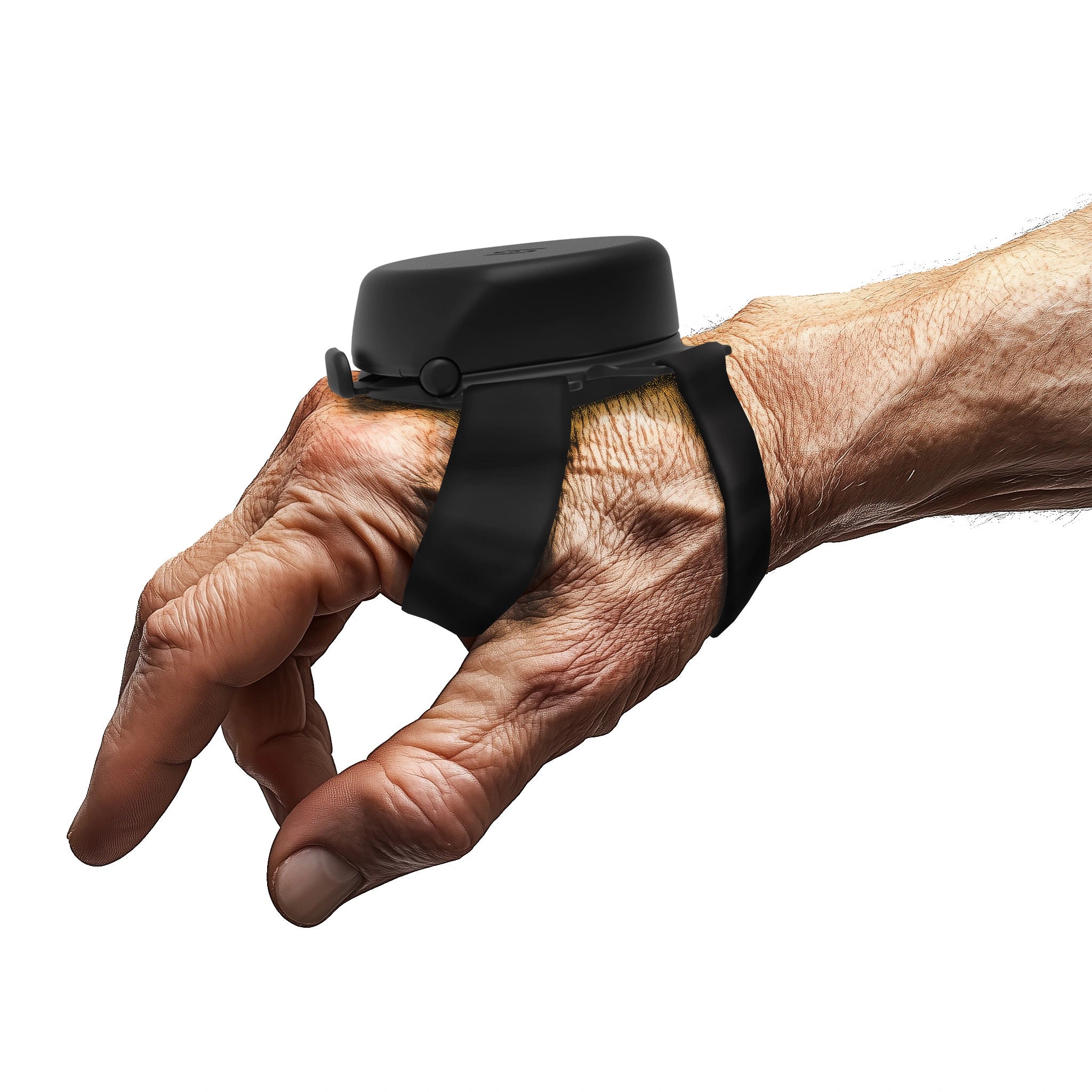
For patients with tremor-dominant Parkinson's Disease at Stages 1 through 3, non-pharmaceutical tools can complement medical management and preserve independence in daily tasks. The Steadi-3 is a battery-free, FDA-registered Class I medical device that uses patented passive magnetic stabilization to reduce hand tremors during activities like eating, writing, and holding objects. A placebo-controlled clinical study showed a reduction in tremor in 84% of participants. No electronics, no charging, and no prescription are required. It is most effective when introduced before Stage 3 independence decline sets in.
What to Take Away About How Fast Parkinson's Progresses
How fast Parkinson's progresses is shaped by subtype, age at onset, lifestyle, and individual biology — no single timeline applies. Tremor-dominant Parkinson's Disease generally follows a slower course; Stage 3 is the key intervention window before balance and independence meaningfully decline. There is no cure for Parkinson's Disease, but Parkinson's Disease progression stages can be navigated with meaningful tools: exercise, physical therapy, occupational therapy, medication management, and clinically validated assistive devices.