Essential Tremor social withdrawal is a documented clinical consequence affecting the majority of people managing this neurological condition. Involuntary hand tremors are most visible during intentional movement, in precisely the settings where visibility carries the highest social cost. This article explains why avoidance occurs, identifies the specific behaviors documented in research, and maps evidence-based pathways back to social participation.
How Many People with Essential Tremor Withdraw from Social Life
Clinical research shows social avoidance in Essential Tremor is widespread. An IETF study of 55 veterans found 74% admitted embarrassment and 65% acknowledged avoiding social situations because of tremor. A separate study of 349 outpatient ET patients found that 58% reported regular embarrassment. O'Suilleabhain et al. (2023) found that 33.8% of ET patients met criteria for social dysfunction. A PMC study found 48.8% met criteria for social anxiety versus 12.9% of controls. These figures establish withdrawal as a clinical reality, not a personal failing.
The Five Specific Ways People with Essential Tremor Avoid Social Situations
O'Suilleabhain et al. (2023, UT Southwestern) identified five specific avoidance strategies among ET patients: keeping a low profile in group settings, using alcohol before social interactions, avoiding volunteering with others, avoiding social events, and avoiding participation in sports and games. Essential tremor and alcohol use as a social coping mechanism is explicitly documented in O'Suilleabhain et al. (2023) — and is one of the five avoidance strategies most commonly reported. Each is a rational short-term response to a real social trigger. Cumulatively, they progressively narrow social life. 33.8% of study participants met the frequency threshold for social dysfunction. Clinical research now quantifies these patterns—patients using any of these strategies are far from alone.
Why Essential Tremor Triggers Social Withdrawal: The Neurological and Psychological Mechanisms
Social withdrawal in Essential Tremor operates through two documented mechanisms. Anticipatory fear of embarrassment activates the sympathetic nervous system, amplifying tremor. The IETF describes this as a vicious cycle: fear worsens tremor, which reinforces fear. Separately, Frontiers in Psychiatry (2023) finds ET patients commonly exhibit harm avoidance and pessimistic rumination about humiliating situations, meeting Essential Tremor social anxiety criteria at significantly elevated rates. These neurological and psychological mechanisms reinforce each other and are documented patterns, not personal choices.
What Others Actually Think When They See Tremors: The Stigma Reality
Essential tremor stigma stems primarily from public misattribution of tremor to nervousness, intoxication, or frailty. O'Suilleabhain et al. (2023) confirm that Essential Tremor is poorly understood by the public and reliably gives rise to these impressions. O'Suilleabhain (2023) also documents that colleagues frequently misattribute tremor to anxiety — the same misperception confirmed across multiple ET studies. These are not imagined fears. Younger patients and those with vocal tremor face the highest perceived stigma burden. The source of shame is a documented gap in public awareness.
When Withdrawal Becomes Depression and Isolation: Recognizing the Escalation

Situational avoidance in Essential Tremor can progress through documented stages. Frontiers in Psychiatry (2023) finds that avoiding social contact leads to reduced participation, severe anxiety, depression, and, in some cases, suicidal ideation. A Turkish social phobia study found that ET patients with social phobia showed significantly higher functional disability than those without. The IETF notes that rates of depression, anxiety, and apathy are alarmingly higher in ET than in the general population. Discussing pervasive avoidance with a neurologist or mental health professional is strongly recommended.
Social Situations People with Essential Tremor Avoid Most — And Why
Essential tremor embarrassment in public is among the most consistently reported experiences across clinical studies. The social settings ET patients most commonly avoid cluster around visible hand use. Restaurants present the greatest difficulty, as eating and drinking make tremor amplitude visible. Handshake situations trigger anticipatory anxiety in professional and personal contexts. Events requiring public signing or writing, such as bank transactions, are often avoided. Group sporting and game participation are explicitly documented in O'Suilleabhain (2023). Large family gatherings and meetings where concealment is impossible are also high-avoidance settings. For each, the specific hand-use trigger is what makes the setting feel unmanageable.
The Cost of Staying Home: What Prolonged Withdrawal Takes Away
Sustained social withdrawal does not reduce tremor severity. It compounds the psychosocial burden it was meant to avoid. Frontiers in Psychiatry documents that reduced participation worsens anxiety and depression outcomes. A PubMed social phobia study found that avoidance actively increases functional disability beyond the tremor itself. WebMD frames sustained engagement as a documented component of emotional and physical well-being in ET. Loss of professional roles, relationship deterioration, and narrowing of identity are the compounding costs. Avoidance carries documented clinical consequences.
Evidence-Based Strategies for Re-Engaging with Social Life
Evidence-based strategies for re-engaging with social life begin with the neurologist. Situational use of a beta-blocker, such as propranolol, under a physician's direction before specific social events has been shown to effectively reduce tremor in high-stakes settings. Occupational therapy addresses task-specific adaptations. Cognitive behavioral therapy targets essential tremor social anxiety directly through graduated exposure and reframing anticipatory fear. Graduated exposure, starting with lower-stakes social settings before progressing, reduces fear of judgment incrementally. Disclosure to trusted people reduces the concealment effort that sustains anticipatory anxiety between social events.
How to Talk to Family and Friends About Essential Tremor
Explaining Essential Tremor to others reduces the concealment burden that drives withdrawal. WebMD recommends explaining the condition simply and honestly, noting it reduces confusion for others and embarrassment for the patient. O'Suilleabhain (2023) identifies misattribution as the primary driver of Essential Tremor stigma. Correcting it at the interpersonal level reduces stigma load. The IETF offers a free patient information packet that can be shared with family or colleagues. Disclosure is a personal decision and does not require a comprehensive explanation in every social context.
Essential Tremor social withdrawal often eases when family members adjust how they offer support. Family support for Essential Tremor works best when loved ones follow the patient's own disclosure preferences rather than pushing them into high-stakes settings before they are ready. Quietly accommodating specific triggers, such as eating, writing, or handshakes, without drawing attention allows continued participation instead of avoidance. Occupational therapy can help families identify these accommodations, turning Essential Tremor isolation into a pattern loved ones can actively help interrupt.
Finding Community: You Are Not the Only One Staying Home
Essential tremor support groups are a documented protective factor against social dysfunction and isolation. An estimated 7 to 10 million people in the United States live with Essential Tremor. Social withdrawal is a shared experience at scale, and community connection is documented as a protective factor against social dysfunction in ET research. The IETF maintains a worldwide support group directory at essentialtremor.org. Online groups are particularly valuable for patients whose withdrawal makes in-person participation difficult at first. The Essential Tremor community resource provides curated links to support. Community connection is a management strategy, not a supplement to one.
How Reducing Hand Tremor Can Help Restore Social Participation with Steadi-3

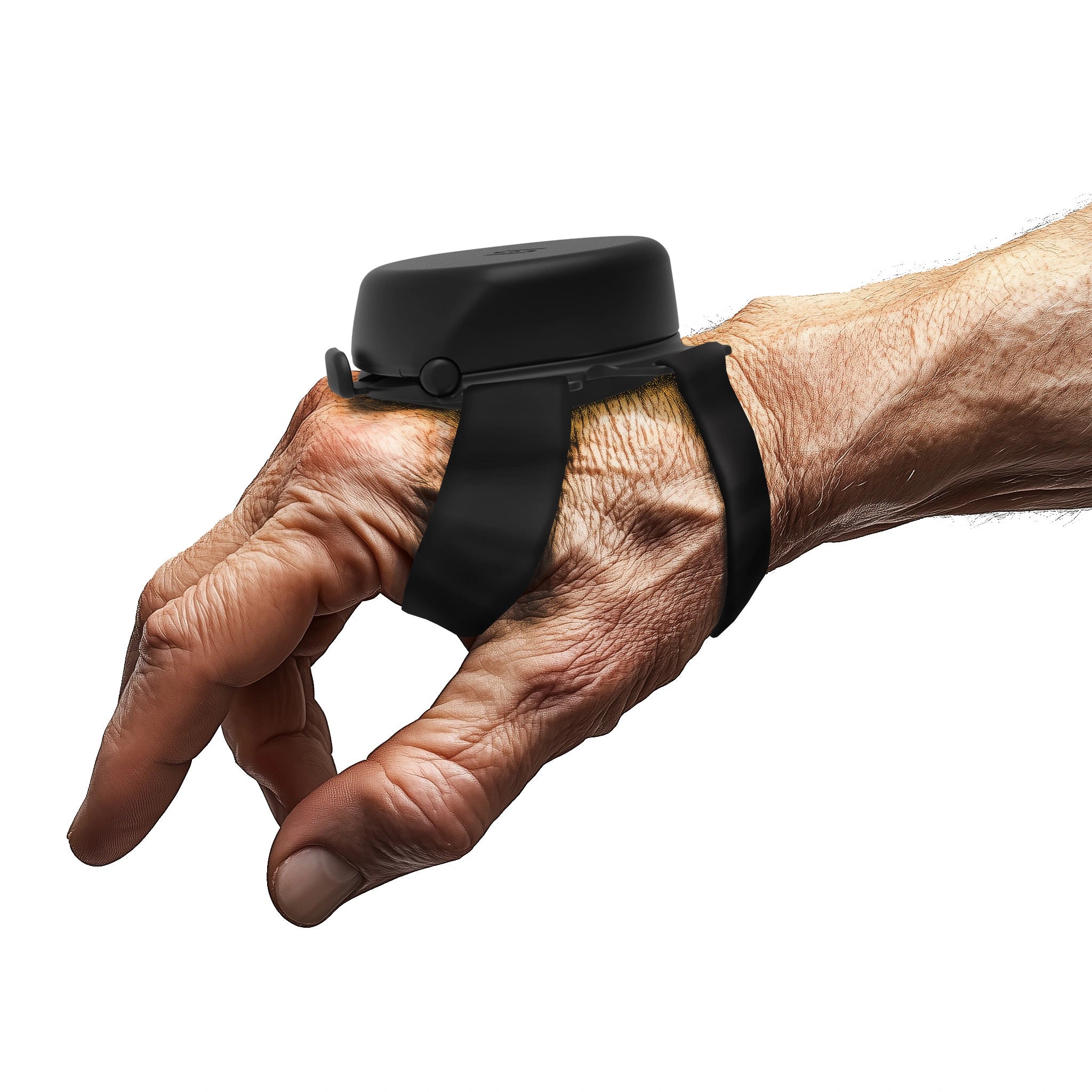
For many patients, anticipatory anxiety before social events is anchored to visible hand tremor during eating, drinking, and handshaking. The Steadi-3 is an FDA-registered Class I medical device that uses passive magnetic stabilization to reduce action and postural tremors, without batteries or electronic components. In a placebo-controlled study, 84% of users experienced reduced tremor. Reducing visible hand tremor can lower anticipatory anxiety and interrupt the feedback loop. Patients should consult a healthcare provider before adding any device. The Steadi-3 validation study provides clinical detail.
Conclusion
Essential Tremor social withdrawal is clinically documented, neurologically driven, and reversible through evidence-based management. The majority of ET patients experience essential tremor isolation, and none of them are alone. The pillars covered here — situational medication, occupational therapy, disclosure, community connection, and hand stabilization — address different dimensions of the withdrawal pattern. There is no cure for Essential Tremor, but independence and social connection remain achievable. The support community blog and companion social life post provide additional context.