Essential Tremor dressing challenges begin with tasks most people complete without thought. This neurological condition causes involuntary hand tremors during intentional movement, making buttons, zippers, laces, and clasps among the first daily tasks to become unreliable. This article covers the most effective dressing aids for Essential Tremor across adaptive clothing features, closure replacements, handheld tools, footwear solutions, and grooming adaptations that restore independent dressing for people managing Essential Tremor.
Why Dressing Is Particularly Difficult with Essential Tremor
Essential Tremor produces action and postural tremors that peak during intentional movement. Dressing requires exactly this: sustained grip, fine pinch, and coordinated bilateral hand use. Fastening a button demands precise finger coordination at the moment tremor is most severe. The PMC systematic review (2022) identifies dressing as a basic ADL where ET impact is most pronounced. The Turkish Journal of Neurology (2021) found that 73% of ET patients have measurably impaired ADLs. Adaptive solutions work by reducing the fine motor demand of each dressing task.
Closure Solutions: Magnetic Buttons, Velcro, and Snap Fasteners
Replacing standard fasteners is the most impactful single modification in adaptive clothing for tremors. Magnetic closures require no fine motor pinch, making them well-suited for dress shirts, blouses, and lightweight jackets. Magnetic button adaptor kits retrofit existing shirts without the need to purchase new garments. Velcro closures offer ease across all severity levels but attract lint. Snap closures suit casual wear. The IETF notes that magnetic clasps and Velcro do not change how clothing looks but significantly reduce fine motor demand during the morning routine.
Adaptive Clothing Brands That Work for Essential Tremor
Several adaptive clothing brands produce ET-relevant garments that preserve personal style while maintaining functionality. MagnaReady specializes in magnetic closure dress shirts. Buck and Buck offers a full range of adaptive options, including open-back and side-zip designs, with over 33 years in the category. Silverts provides adaptive options across men's and women's ranges. Tommy Hilfiger Adaptive applies magnetic closures at multiple price points. Kizik addresses footwear with hands-free entry designs. An occupational therapist can help match brand features to an individual's specific tremor profile and dressing routine.
Dressing Tools: Button Hooks, Zipper Pulls, and Dressing Sticks
Adaptive tools for hand tremors allow patients to continue wearing standard clothing without needing wardrobe changes. A button hook uses a wire loop to thread buttons through buttonholes with minimal pinch grip. Weighted versions reduce tremor amplitude during use. Zipper pulls extend the tab of any zipper for easier grasp. A dressing stick uses shaped hooks to push, pull, and loop garments without excessive reach. A sock aid allows application while seated. A reacher extends the range for items on shelves or the floor without bending.
Footwear Solutions: Elastic Laces, Velcro Shoes, and Hands-Free Options
Footwear is both a dressing challenge and a safety consideration in Essential Tremor. Elastic shoelaces allow existing shoes to function as slip-ons, in coiled and clasp styles. Velcro-closure shoes provide a secure fit without tying. Hands-free designs, such as those from Kizik, eliminate the need to fasten entirely. A long-handled shoehorn assists with heel insertion while seated. Footwear guidance developed for movement disorder patients broadly recommends lightweight, supportive shoes with non-skid soles rather than smooth-soled slippers, as footwear choice directly affects fall risk and postural stability — a concern equally applicable to Essential Tremor given shared balance risks.
Grooming Adaptations: Electric Tools, Suction Devices, and Weighted Handles
Grooming tasks, including tooth brushing, shaving, nail care, and hair combing, are frequently disrupted by Essential Tremor. Electric toothbrushes and razors reduce the need for hand movement and offer heavier handles with larger grips. The IETF notes that electronic devices mean less active handwork, reducing the impact of tremor. Tucking the elbow against the side while using a long-handled comb reduces reach-related amplitude. Suction-secured devices, including tabletop nail clippers and suction-cup toothbrush holders, provide a stable surface that reduces the demand on bilateral coordination.
Dressing Strategies: Sequencing, Seated Dressing, and Timing

Behavioral strategies reduce the impact of tremor during dressing without requiring new tools or clothing. Dressing from a seated position throughout eliminates the risk of balance during one-legged movements. Gathering all clothing before starting prevents mid-sequence fatigue. Timing dressing after tremor-reducing medication takes effect, where applicable and under physician direction, reduces morning symptom severity. Laying out clothing the night before reduces cognitive and motor load. Avoiding rushing is important, as stress exacerbates tremor and increases the risk of falls — a principle well-established across movement disorder management and applicable to Essential Tremor.
Clothing Features to Look For When Shopping with Essential Tremor
Specific garment features reduce dressing difficulty regardless of brand. For tops, raglan or dolman sleeves allow arm entry without precise alignment; stretch fabrics reduce the need for precise positioning. For bottoms, elastic waistbands and pull-on designs eliminate clasps; wide leg openings ease step-in application. Front-close and side-close undergarment options reduce bilateral reach. Lightweight fabrics are easier to manage across all categories. Many of these features now appear in conventional fashion lines alongside specialist adaptive collections, expanding options for ET patients across price points.
When to See an Occupational Therapist for Dressing and Self-Care
Essential tremor occupational therapy provides the most individualized pathway to dressing independence. Supportive therapy, including occupational therapy, is a core component of managing Essential Tremor dressing challenges. An OT assessment covers specific task evaluation, home environment review, adaptive tool trials, and sequencing strategies. The IETF notes that it is crucial for occupational therapists to understand how ET impacts each individual before making recommendations. Because tremor profiles differ, recommendations must be tailored. OT referrals typically come from a neurologist or primary care physician. The Essential Tremor occupational strategies blog provides clinical context on the OT process.
Supporting a Family Member Who Struggles with Dressing: A Caregiver's Guide
Caregivers often face the tension between maintaining the pace of a morning routine and preserving patient autonomy. Introducing adaptive tools before full assistance is needed extends independent dressing longer. Open-back and side-zip designs are useful when caregiver help with specific garments becomes necessary. Caregivers who assist with sub-tasks, such as applying a shoehorn, preserve more patient agency than those who take over the full routine. An occupational therapist can advise both the patient and the caregiver. The support community blog provides peer resources for caregivers.
How the Steadi-3 Supports Dressing Independence

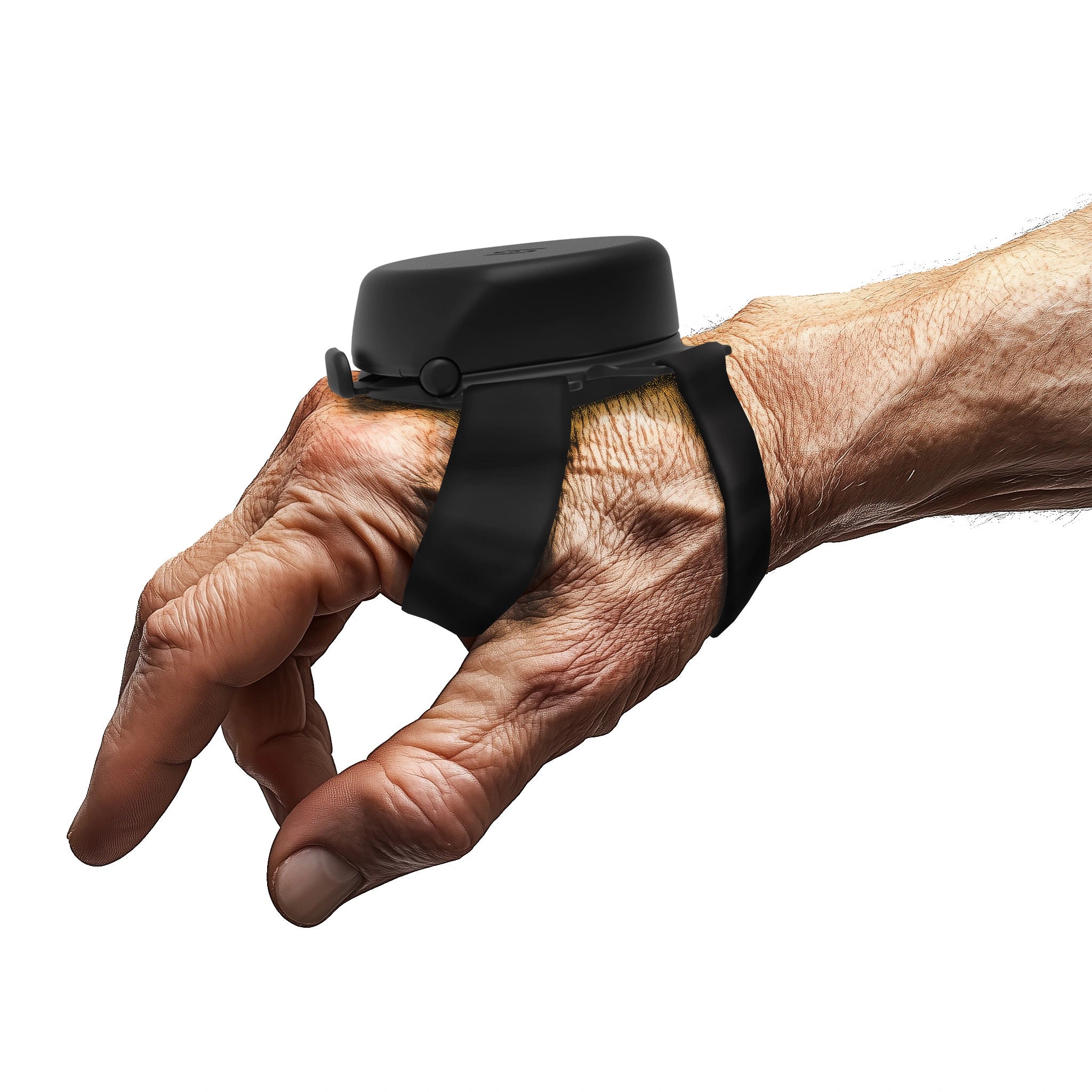
Adaptive clothing and tools address individual task barriers. Reducing hand tremor itself supports the full dressing routine. The Steadi-3 is an FDA-registered Class I medical device that uses passive magnetic stabilization to reduce action and postural tremors without batteries or electronic components. In a placebo-controlled study, 84% of users experienced reduced tremor. The Steadi-3 complements adaptive closures and dressing tools rather than replacing them. Patients should consult a healthcare provider before adding any device to their plan. The Steadi-3 validation study provides full clinical detail.
Conclusion
Essential Tremor dressing challenges are specific and solvable. Adaptive clothing for tremors, adaptive closures, handheld tools, footwear solutions, grooming adaptations, and behavioral strategies each address a different difficulty in the morning routine. When combined with Essential Tremor occupational therapy and hand-stabilization support, these approaches can help maintain dressing independence throughout the full progression of ET. There is no cure for Essential Tremor, but control over daily routines remains achievable. Consulting an occupational therapist early through a neurologist is the most direct pathway to an individualized plan.