
Living with Essential Tremor means navigating a neurological condition that progressively disrupts the activities most people perform without thought. Involuntary hand tremors affect eating, dressing, grooming, writing, and cooking in ways well documented in the clinical literature. This article explains how Essential Tremor affects daily independence across specific activity categories and maps out management options to help reclaim control.
How Essential Tremor Progresses and Why Daily Life Changes Over Time
Essential Tremor is a progressive neurological condition. Hand tremor amplitude increases at 1.5 to 5% per year on average, while tremor frequency, typically 6 to 12 Hz, gradually slows as severity advances. Early stages produce mild inconvenience during fine motor tasks. Moderate stages require deliberate adaptation. In advanced stages, the Cleveland Clinic notes that eating, drinking, and dressing become meaningfully compromised. Research from the Turkish Journal of Neurology (2021) found that 73% of ET patients have measurably impaired activities of daily living.
Which Daily Activities Does Essential Tremor Affect Most
Clinical literature identifies the same ADL categories as most disrupted. Eating and drinking are affected earliest, as maintaining posture with a full cup directly amplifies tremor. Writing legibility declines before speed. Dressing tasks requiring fine motor precision, including buttons, laces, and clasps, become difficult before gross motor function is affected. Grooming tasks, including brushing teeth, shaving, and flossing, follow. Cooking, particularly pouring liquids and cutting, presents a compound risk. Both basic self-care ADLs and instrumental ADLs are affected through different mechanisms.
The Emotional Weight of Losing Independence
Functional decline in Essential Tremor is associated with documented psychological consequences. Frustration from repeated task failure, embarrassment in shared settings, and anxiety about progression are all clinically recognized. The PMC systematic review (2022) identifies psychosocial deficits as established outcomes. Peer-reviewed research confirms that Essential Tremor significantly impacts mental health and social life. These responses reflect genuine loss of control over daily routines, not personal failure. A neurologist or mental health professional can provide appropriate support alongside medical management.
When Essential Tremor Affects Eating and Drinking

Drinking from a cup and eating with utensils represent the most immediately limiting ADL impairments in Essential Tremor. The IETF notes that soups and liquids present the greatest challenge, as tremor amplitude translates directly to spillage. Many patients adopt a bilateral grip on cups to reduce instability. Adaptive tools, including weighted utensils, lidded cups, and non-slip surface mats, can restore meaningful participation in shared meals. The Eating with Essential Tremor page provides specific adaptive guidance. Maintaining mealtime participation supports both physical function and social independence.
When Essential Tremor Affects Dressing, Grooming, and Personal Care
Personal care tasks are often among the first that patients recognize they may need outside help with. Buttons, laces, clasps, and small grooming implements all require fine motor precision that action tremor disrupts. The Turkish Journal of Neurology (2021) identifies self-care as a priority problem in ET, with dressing and hygiene among primary ADL measures. The PMC 2022 review names brushing, flossing, and dressing as the fine-motor categories most affected. Occupational therapy offers personalized adaptive strategies for each category before independence is substantially compromised.
How Essential Tremor Affects Writing, Cooking, and Home Tasks
Instrumental ADLs, tasks that support independent community living, are disrupted alongside basic self-care. The Cleveland Clinic notes that patients with advanced-stage disease may be unable to cook due to hand tremors. The most affected kitchen tasks include pouring liquids, cutting, and handling hot items. Handwriting impairment can affect practical communication well before medical attention is sought. Adaptive tools include non-slip surfaces, weighted implements, and one-handed cutting boards. The Turkish Journal of Neurology (2021) links writing and eating impairment directly to workforce disability.
Essential Tremor and Balance: The Less-Discussed Independence Risk
Essential tremor and balance problems frequently co-occur as the condition progresses. A 2024 PMC postural transitions study found decreased performance across all phases of the Timed Up and Go assessment in ET patients. The Turkish Journal of Neurology (2021) identifies balance problems and gait disturbance as motor symptoms with direct negative effects on ADL performance. Fall risk increases with severity. This is neurologically distinct from Parkinson's Disease. Discussing balance assessment with a neurologist or physical therapist is recommended.
What Occupational Therapy Can Do for Daily Independence
Occupational therapy offers the most individualized clinical pathway to regain daily functioning when Essential Tremor affects ADLs. An occupational therapist assesses specific task limitations, develops a personalized intervention plan, recommends adaptive equipment, and teaches activity modification strategies. Therapy Achievements (2026) notes that OTs help patients perform everyday tasks more easily through adaptive strategies. OT and physical therapy frequently work together when balance involvement is present. A neurologist can provide an OT referral. The Essential Tremor occupational strategies blog provides further clinical context.
Medical Treatment Options That Support Daily Function
There is no cure for Essential Tremor, but several treatment options can reduce tremor severity enough to restore meaningful daily function. First-line medications include propranolol and primidone. Botulinum toxin injections are used when oral medications are insufficient. Deep brain stimulation and focused ultrasound are reserved for severe cases unresponsive to other interventions. The Cleveland Clinic notes that treatment is ineffective in 30 to 50% of patients, making early consultation with a neurologist essential. All treatment decisions should be made with a healthcare provider.
Supporting a Loved One with Essential Tremor: A Guide for Caregivers
As Essential Tremor progresses, many patients experience increased reliance on family members or professional caregivers. The Cleveland Clinic notes that some patients eventually require assisted living or skilled nursing support. A PMC caregiver burden study (2017) using the Zarit Burden Interview documents that caregiver stress in ET is measurable and real. Caregivers support daily tasks most effectively by assisting with specific modifications rather than replacing patient agency. Occupational therapists can advise caregivers on appropriate strategies. IETF support groups provide resources for caregivers and patients alike.
How the Steadi-3 Supports Daily Independence

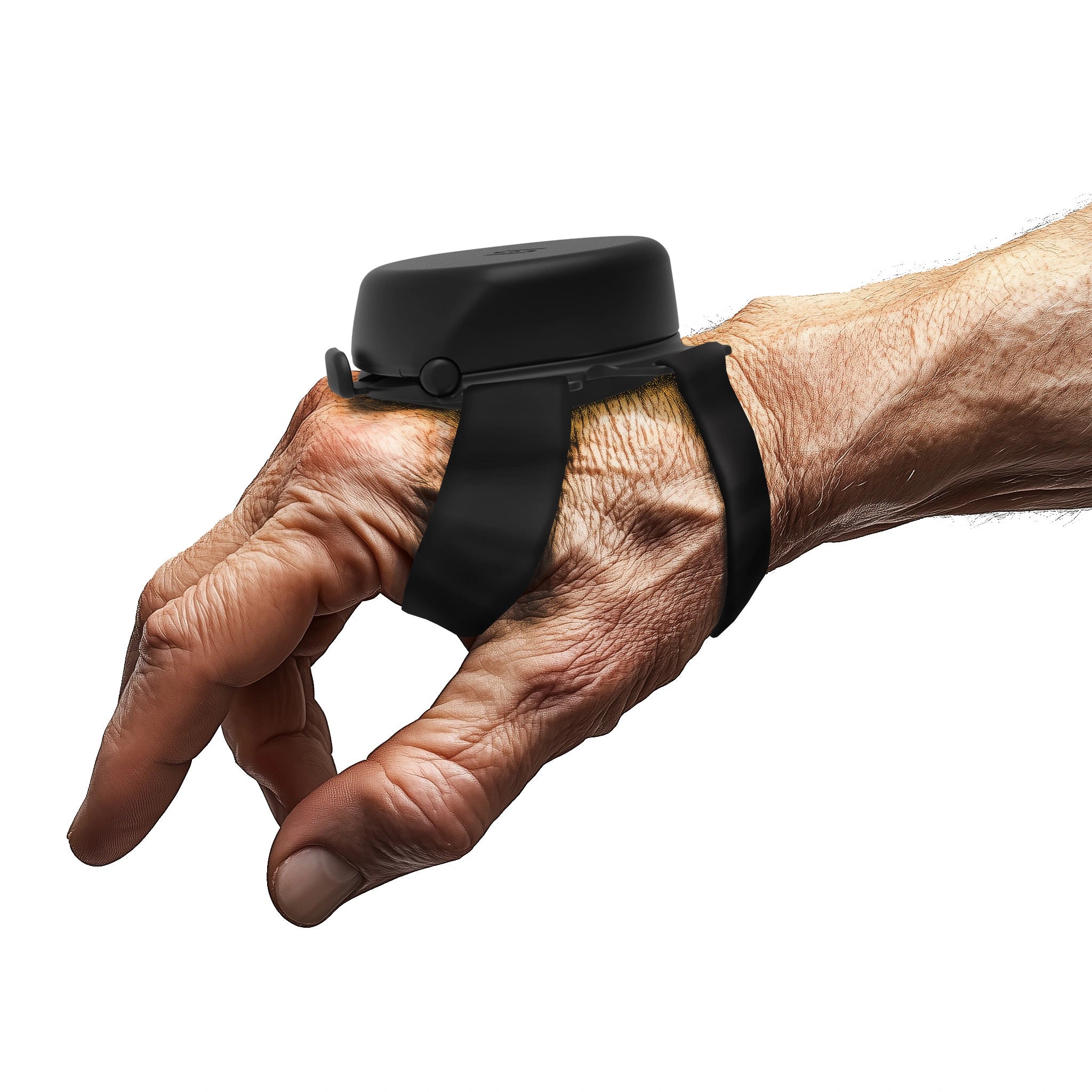
For patients managing hand tremors that disrupt eating, writing, dressing, and cooking, the Steadi-3 helps maintain function during these daily tasks. An FDA-registered Class I medical device, it uses passive magnetic stabilization to reduce action and postural tremors without batteries or electronic components. In a placebo-controlled study, 84% of users experienced reduced tremor. The Steadi-3 is one management option alongside medical treatment and occupational therapy. Patients should consult a healthcare provider before adding any device. The Steadi-3 validation study provides full clinical detail.
Conclusion
The Essential Tremor impact on daily life is a documented, progressive reality, but not one without recourse. Medical treatment, occupational therapy, adaptive equipment, and caregiver support address different dimensions of functional decline. Many patients maintain substantial independence by combining these approaches with professional guidance. Living with Essential Tremor means navigating challenges across eating, grooming, writing, and mobility, and management strategies exist for each. Consulting a neurologist and occupational therapist early provides the strongest foundation for preserving control and independence.