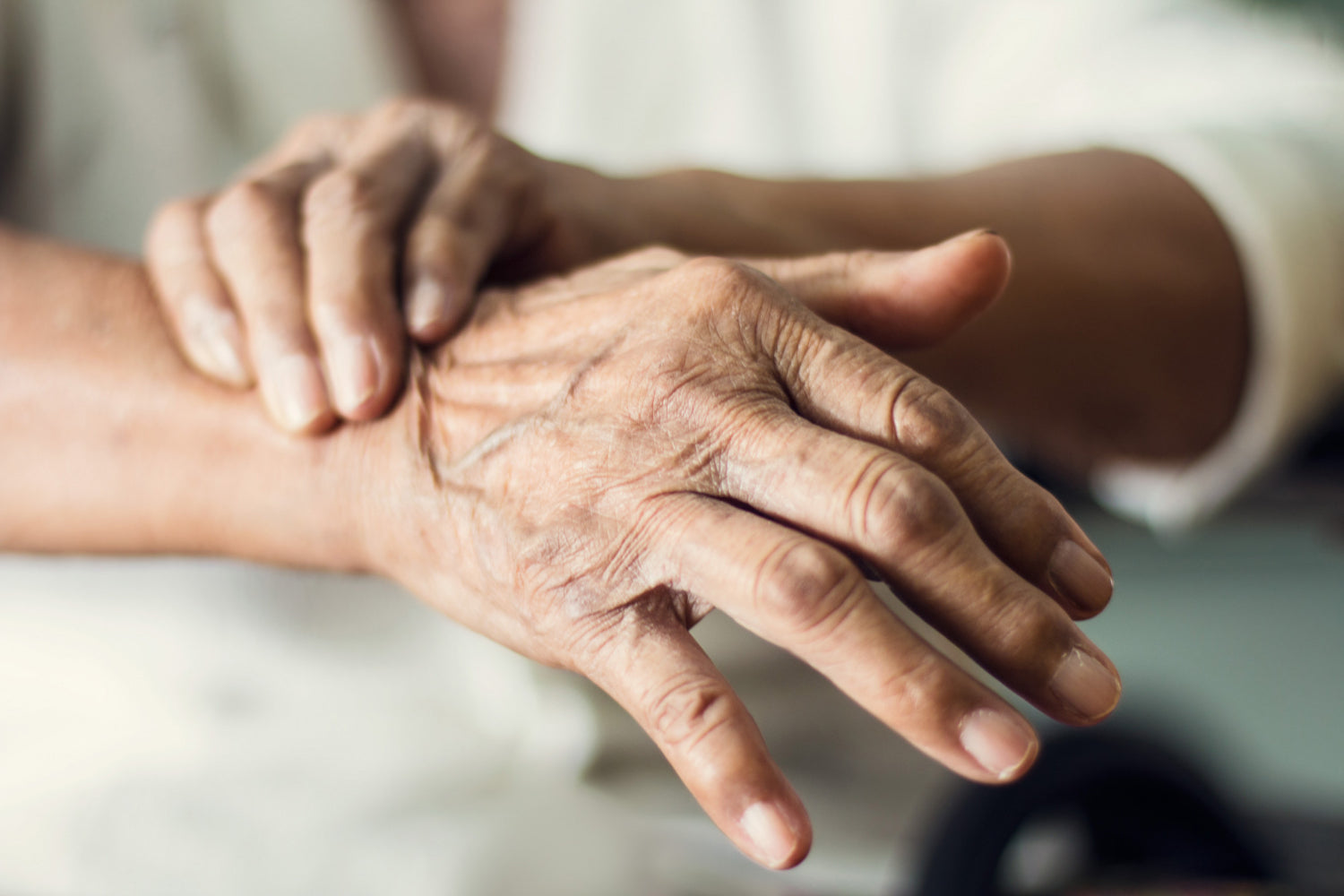
Essential Tremor is a neurological condition that causes involuntary hand tremors, and its consequences extend well beyond the physical. The relationship between Essential Tremor and anxiety is documented, bidirectional, and underrecognized in clinical practice. This article covers how Essential Tremor affects social participation, what amplifies those effects, and the evidence-based management options available to support greater independence.
Why Essential Tremor Makes Social Situations More Difficult
Essential Tremor produces action and postural tremors, meaning shaking is most pronounced during movement rather than at rest. This makes it most visible in precisely the situations that carry the highest social stakes. Reaching for a glass at a restaurant, signing a document, or extending a hand for a greeting all involve the fine motor tasks ET impairs most. For the estimated 13.3 per 1,000 people globally living with ET, and 57.9 per 1,000 among those over 65, these are not hypothetical scenarios.
The Anxiety-Tremor Feedback Loop: How Fear Makes It Worse
A documented neurological feedback loop connects Essential Tremor and anxiety. When a person anticipates a social situation where their tremor may be visible, anticipatory fear activates the sympathetic nervous system. This fight-or-flight response increases tremor amplitude, making the outcome they feared more likely. Visible tremor produces embarrassment, embarrassment generates anticipatory fear, and fear intensifies the tremor. This is a physiological mechanism, not a personal failing, and it explains why social avoidance tends to escalate without intervention.
Social Withdrawal and Isolation: What the Research Shows
Research consistently documents the social consequences of Essential Tremor. A 2023 study found that 48.8% of ET patients met clinical criteria for social anxiety disorder, compared to 12.9% in controls. A separate study of ET veterans found that 65% avoided social situations and 74% reported feeling embarrassed by their tremor. Social withdrawal in ET is not a personal limitation. It is a documented neurological consequence with measurable prevalence, and recognizing it as such is the first step toward addressing it.
How Essential Tremor Affects the Workplace and Professional Life
For working-age adults, Essential Tremor introduces a specific layer of professional strain. The tasks most impaired by ET, including signing documents, presenting to a room, or exchanging a handshake, are among the most visible professional behaviors. Colleagues may misattribute tremor to nervousness, a misperception that carries real professional consequences. Many patients develop concealment strategies: gripping pens tightly, avoiding handshakes, requesting digital signatures. These strategies are cognitively demanding and unsustainable, and they do not address the underlying loss of professional participation.
The Emotional Impact: Anxiety, Depression, and Reduced Self-Esteem

Depression, anxiety, and apathy occur at significantly higher rates in ET populations than in the general population. Part of this is reactive: repeated social withdrawal and loss of independence produce genuine frustration and grief. Research also indicates a neurological contribution. Changes in the cerebellum, thalamus, and basal ganglia associated with ET may influence mood independently of external circumstances. This distinction matters for treatment. Essential Tremor-related emotional challenges are real, and they respond to professional support. Discussing them with a neurologist is the appropriate starting point.
Social Situations Patients Most Commonly Avoid
Patients with Essential Tremor consistently identify the same categories of situations as most difficult. Eating in public, including handling utensils or raising a cup, is among the most frequently cited situations. Writing in front of others, participating in meetings, greeting people with a handshake, and attending family gatherings are also frequently avoided. Each avoided situation incrementally reduces the scope of a patient's social world. The cumulative effect is not dramatic withdrawal but a gradual narrowing of participation that many patients experience before recognizing the pattern.
How Essential Tremor Affects Personal Relationships
Essential Tremor's social impact extends to the people in a patient's life. Family members who assist with daily tasks carry a documented caregiver burden that is understudied relative to other movement disorders. Research confirms that ET-related avoidance affects both patients and their relatives, limiting shared activities and altering relationship dynamics. Some patients also experience changes in executive function and working memory that affect conversational fluency, adding relational strain that neither patient nor partner may initially connect to the condition.
When to Talk to a Doctor About the Social and Emotional Impact of Essential Tremor
When social withdrawal is increasing, depressive symptoms are present, or anxiety is interfering with daily function, professional support is appropriate. A neurologist or movement disorder specialist can evaluate both the physical tremor and its psychosocial effects. A neuropsychological evaluation can precisely characterize cognitive and emotional changes. Occupational therapists offer practical functional strategies. Mental health professionals experienced in chronic condition management can address anxiety and depression in ET. Discussing these effects openly with a healthcare provider is the most productive starting point.
Evidence-Based Management Strategies for Social Independence
Several evidence-based options exist for managing the social dimension of Essential Tremor. Propranolol, a beta-blocker, is used on an as-needed basis by patients whose tremor is most disruptive in specific social situations, making it worth discussing with a physician before presentations or public appearances. Primidone is an established first-line medication for ongoing management. Occupational therapy provides strategies for adapting fine motor tasks. Adaptive devices address specific functional limitations. A combination of approaches guided by a movement disorder specialist is typically most effective.
Community and Support: You Are Not Alone
Essential Tremor affects an estimated 7 to 10 million people in the United States. That scale means the social withdrawal, embarrassment, and anxiety described in this article are shared experiences, though many patients are unaware of each other. The International Essential Tremor Foundation maintains a worldwide support group directory connecting patients across geographic boundaries. Online communities extend that access to those without local groups. Connection with others living with Essential Tremor improves overall quality of life.
How the Steadi-3 Supports Functional Independence in Social Settings

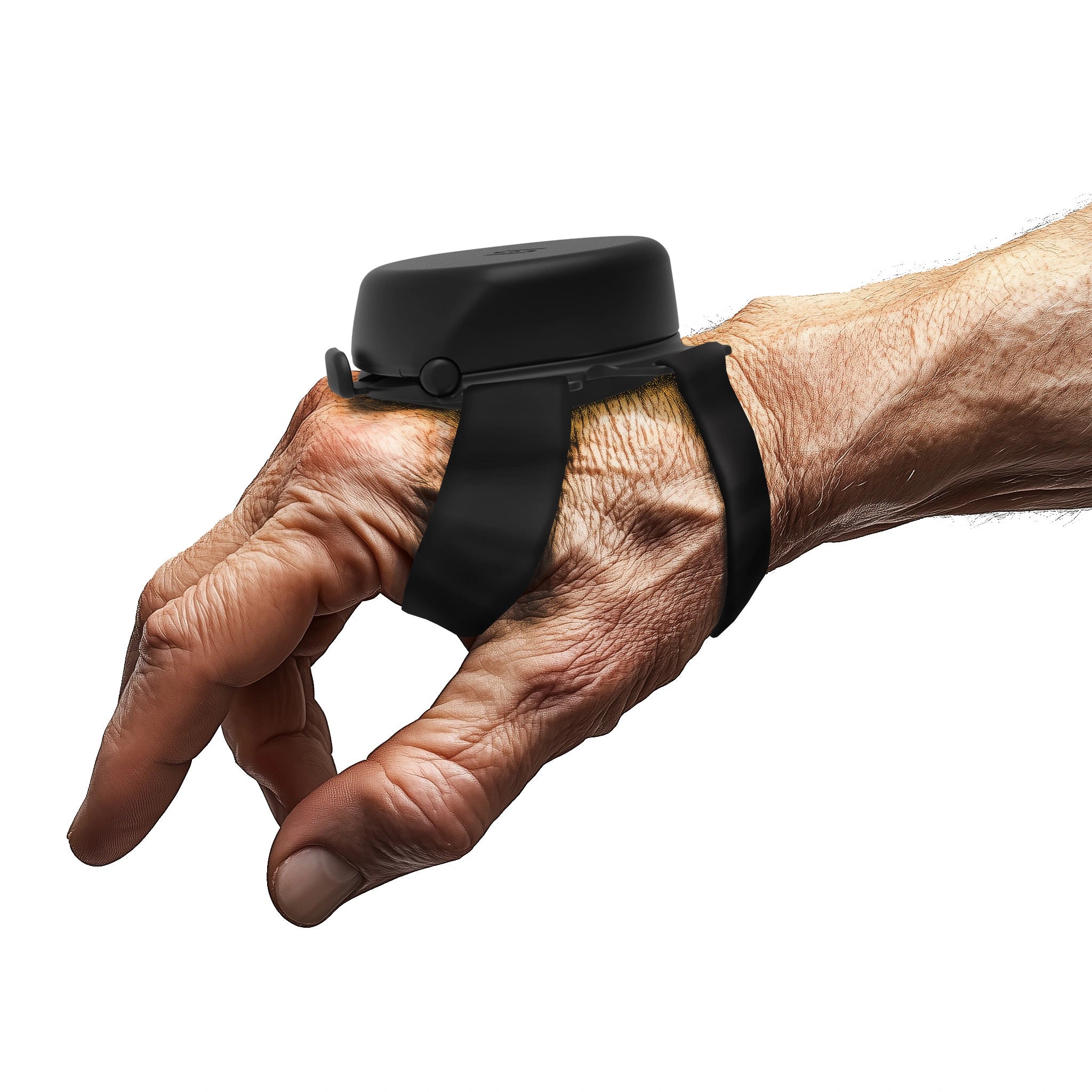
For situations like eating in public, signing documents, and participating in meetings, the Steadi-3 offers a practical management option. As an FDA-registered Class I medical device, it uses passive magnetic stabilization to reduce action and postural tremors that are most visible in social settings. Battery-free with no electronic components, it requires no charging. Validated in a placebo-controlled study in which 84% of users experienced reduced tremor, the Steadi-3 is one option alongside medical treatment. A healthcare provider can help determine the right combination of approaches.
Conclusion
The connection between Essential Tremor and anxiety is neurological, bidirectional, and well-documented. Social withdrawal, depression, and professional strain are core consequences of ET that deserve direct attention alongside the physical tremor. Evidence-based management, including medication, occupational therapy, assistive devices, and professional psychological support, can meaningfully restore social participation and independence for those living with Essential Tremor. There is currently no cure for Essential Tremor, but management is achievable. A neurologist or movement disorder specialist is the right starting point for a plan that addresses both the tremor and its social impact.