One of the most frustrating aspects of living with Essential Tremor is the unpredictability. Yesterday you ate breakfast without spilling anything. Today, you cannot hold a coffee cup steady. The tremor that felt manageable last week feels impossible to hide this week. Nothing dramatic changed in your diagnosis, your medication, or your life. So why does it keep shifting?
The answer is not that your condition is rapidly deteriorating. It is that the tremor does not operate at a fixed intensity. It responds to your body's physiological state, which changes constantly based on sleep, stress, caffeine, medication timing, temperature, and a dozen other variables. Understanding those variables gives you something to work with. This guide covers every major category of tremor-worsening trigger, explains why each one affects Essential Tremor at a neurological level, and provides practical strategies for each.

Why Essential Tremor Varies from Day to Day
Essential Tremor fluctuates. This is not a flaw in the diagnosis or a sign that something has gone wrong. It is a fundamental characteristic of the condition.
The cerebellum, which plays a central role in generating essential tremor, is not an isolated system. It is deeply sensitive to the body's overall physiological state. Changes in arousal level, fatigue, blood chemistry, hormonal activity, and medication concentration all influence cerebellar output. When those inputs shift, tremor amplitude shifts with them.
The sympathetic nervous system adds another layer of variability. The fight-or-flight response, which is activated by stress, anxiety, and stimulants, increases both muscle tension and neural excitability. For a patient with essential tremor, this amplification is direct and measurable. Any state that activates the sympathetic system, whether it is a stressful meeting, a cup of coffee, poor sleep, or cold air, tends to worsen tremor.
What this means practically is that many "bad tremor days" are not evidence of disease progression. They are the nervous system responding to temporary inputs. That distinction matters enormously for how patients interpret their experience. Gradual worsening over the years is how essential tremor typically progresses. Day-to-day swings are usually trigger-driven rather than progression-driven.
Understanding your personal trigger pattern is the most empowering non-medication step available to essential tremor patients. The rest of this guide walks through each major trigger category so you can begin identifying which ones affect you most.
Stress, Anxiety, and Emotional Triggers
Stress is the most universally recognized trigger of essential tremor, and understanding why it triggers it makes it easier to address.
When the brain perceives a threat, whether physical or social, it activates the sympathetic nervous system and releases adrenaline and cortisol. Adrenaline increases heart rate, elevates blood pressure, and raises the excitability of motor neurons throughout the body. Cortisol, the longer-lasting stress hormone, maintains this elevated state. Both compounds amplify the oscillatory signals that produce essential tremor. The result is a physiologically inevitable increase in tremor amplitude whenever the stress response activates.
The particular cruelty of this mechanism for ET patients is the feedback loop it creates. Tremor worsens in a stressful situation. The person becomes self-conscious about the visible shaking. That self-consciousness is itself a stressor, which triggers more adrenaline, further worsening the tremor. Social eating, public writing, meeting new people, and performing tasks under observation all carry the double burden of the task itself and the awareness of being watched. Research supports the connection between essential tremor and social anxiety, and clinicians who specialize in ET consistently identify performance-related stress as among the most functionally impairing triggers.
Chronic background stress, the kind produced by work demands, caregiving responsibilities, financial pressure, or ongoing health concerns, maintains an elevated sympathetic baseline without the sharp peak of an acute stressor. This sustained arousal can make essential tremors get worse, feel like the new normal, when in fact the underlying driver is a treatable stress load.
Practical strategies for the stress trigger include progressive muscle relaxation, in which muscle groups are systematically tensed and released to lower overall tension; diaphragmatic breathing, which directly activates the parasympathetic nervous system and counteracts the stress response; mindfulness meditation practiced consistently rather than only in moments of crisis; cognitive behavioral approaches that address the self-monitoring and catastrophizing patterns that amplify tremor self-consciousness; and regular aerobic physical activity, which reduces baseline cortisol levels over time. None of these eliminates stress from life, but they reduce the height of the sympathetic activation that stress produces, which directly reduces its tremor-amplifying effect.
Fatigue and Sleep Deprivation
The connection between fatigue and essential tremor is not a perception. It is a physiological relationship with a clear mechanism.
As the body fatigues, the nervous system's capacity to regulate and suppress involuntary movement decreases. The filtering systems that keep baseline neural noise from expressing as visible movement become less effective. For patients with essential tremor, whose cerebellar output already generates abnormal oscillatory signals, this reduced filtering means those signals pass more fully into visible tremor. Tremor amplitude increases as the day progresses and as physical and mental reserves deplete.
Sleep deprivation is the acute version of this process. A single night of poor sleep elevates cortisol and sympathetic tone in ways that are measurable the following day. For patients with essential tremor, this translates directly into worsened tremor. The NINDS explicitly identifies fatigue and sleep deprivation as factors that worsen tremor, and this observation is consistently supported by patient experience.
Physical fatigue from repetitive hand tasks creates a more localized version of the same effect. Extended writing, typing, or other fine motor activities can temporarily increase tremor severity in the hands because the muscles and motor circuits involved have been working under tremor conditions for a sustained period. Scheduling the most demanding hand tasks for the morning, when reserves are highest, is a practical strategy that many occupational therapists recommend.
The sleep-tremor relationship is bidirectional in a way that creates a deteriorating cycle for many patients. Poor sleep worsens the next day's tremor. Higher daytime tremor severity increases physical and emotional fatigue. That fatigue makes the following night's sleep less restorative. Each poor night and difficult day feeds into the next. Breaking this cycle requires addressing both ends simultaneously, which is why a companion resource specifically on essential tremor and sleep is worth reading alongside this guide. If nighttime tremor disruption is contributing to your fatigue, that deserves its own focused attention.
Practical strategies include prioritizing seven to nine hours of sleep as a clinical priority rather than a lifestyle aspiration; scheduling demanding hand tasks earlier in the day when tremor is typically better controlled; building rest breaks into activities that require sustained fine motor control; and recognizing that a high-fatigue day is a trigger day, not a progression day.
Caffeine, Stimulants, and Diet
The caffeine question is one of the most common that essential tremor patients ask, and the honest answer involves more nuance than a simple yes or no.
Johns Hopkins Medicine, Mayo Clinic, and Cleveland Clinic all list caffeine as a potential trigger for essential tremor. Caffeine stimulates the central nervous system by blocking adenosine receptors, which normally dampen neural activity. The result is increased neural excitability across the board, including in the cerebellar circuits that drive tremor. This is the mechanistic reason for the clinical caution.
The research picture is more complicated. A formal study examining the effect of a 325-milligram caffeine dose on essential tremor found that the dose did not produce a statistically significant worsening of objectively measured tremor amplitude. However, 8% of participants reported that their tremor worsened with caffeine. This gap between objective measurement and subjective experience is clinically meaningful. Tremor's functional impact is not fully captured by amplitude measurements, and individual sensitivity to caffeine varies considerably based on genetics, tolerance, and baseline tremor severity.
The practical conclusion is this: if you notice that your tremor is consistently worse after caffeine, you have your answer regardless of what population studies show. If you have never tracked the relationship carefully, two weeks of observation, recording your tremor severity and caffeine intake daily, will tell you more about your personal response than any general recommendation.
Beyond coffee and tea, other stimulant sources are worth reviewing. Energy drinks and pre-workout supplements often contain caffeine levels that significantly exceed those in a standard cup of coffee. Certain medications, including albuterol inhalers, pseudoephedrine in cold medications, and some nasal decongestants, are beta-agonists or sympathomimetics that produce tremor-worsening effects through mechanisms similar to those of adrenaline. If you take any of these and notice correlations with your tremor severity, your neurologist can advise on alternatives.
Blood sugar fluctuations deserve mention as a dietary tremor factor distinct from stimulants. Skipping meals or consuming high-sugar foods that cause reactive hypoglycemia produces shakiness and weakness that can layer on top of essential tremor or be confused with it. Eating regular, balanced meals that maintain stable blood glucose is a basic but meaningful piece of tremor management.
Does Caffeine Actually Make Essential Tremor Worse?
The major medical institutions advise caution because the physiological mechanism is plausible and individual sensitivity is real. The formal evidence is mixed because population studies average out highly variable individual responses.
The most useful approach is personalized tracking. Keep a simple log for two weeks: rate your tremor severity from one to ten each morning and afternoon, record your caffeine intake, including timing, and look for patterns. If your tremor consistently rates higher on caffeine days, the relationship is real for you. If no pattern emerges, caffeine may not be a significant personal trigger.
If you want to reduce caffeine without the withdrawal headaches that abrupt cessation causes, a gradual reduction over two to three weeks avoids the rebound effects that can themselves temporarily worsen tremor. Decaf coffee and herbal teas are the most practical substitutes. Limiting caffeine to morning hours only, with a strict cutoff before noon or 1 p.m., can reduce the nighttime sympathetic activation that disrupts sleep,, even if daytime tremor effects are unclear.
Medications That Can Worsen Tremor
This is the trigger category that most ET patients do not know to look for, and it is worth a direct conversation with your neurologist.
Several commonly prescribed medications list tremor as a potential side effect. Selective serotonin reuptake inhibitors, which are among the most widely prescribed antidepressants, can produce or worsen tremor in some patients. Tricyclic antidepressants carry the same risk. Lithium, used for bipolar disorder and certain psychiatric conditions, is a well-established tremor trigger at therapeutic doses and particularly at higher blood levels. Valproate, prescribed for epilepsy and mood disorders, also causes tremor as a side effect in a significant percentage of patients. Albuterol and other beta-agonist bronchodilators used for asthma and COPD activate the sympathetic nervous system through a mechanism similar to that of adrenaline. Corticosteroids at higher doses can also produce or worsen tremor.
This does not mean these medications should be stopped or avoided. Many of them treat conditions more serious than the tremor side effect they produce. It means the medication list is worth reviewing with your neurologist, particularly in terms of its impact on tremor. Harvard Health advises ET patients to bring a complete medication list to their neurologist and ask directly whether any current medications could be contributing to tremor worsening. In some cases, dose adjustments, timing changes, or alternative formulations can reduce the tremor side effect without compromising the primary therapeutic purpose.
Medication timing within your ET treatment itself also matters. Propranolol and primidone, the two most commonly prescribed ET medications, have finite durations of action. Immediate-release propranolol maintains peak blood levels for approximately four to six hours. If you notice that your tremor is most controlled in the hours after a morning dose and progressively worsens through the afternoon, that is pharmacokinetic variability, not disease progression. Your neurologist may be able to adjust dose timing, switch to an extended-release formulation, or add an afternoon dose to smooth out the coverage window.
The practical rule for all medication concerns is the same: never adjust medication schedules or dosages without medical guidance, but bring specific observations about when your tremor is most and least controlled to your next appointment. That information is directly actionable for a movement disorder specialist.
Temperature Changes and Environmental Factors
Temperature sensitivity is a less frequently discussed but real trigger for patients with essential tremor.
Cold environments increase muscle tension throughout the body as muscles contract to generate heat. This elevated muscle tension increases the neural load on the motor system and can amplify tremor amplitude. Cold also directly affects nerve conduction velocity and can increase the excitability of peripheral motor neurons. Patients who live in colder climates or who spend significant time outdoors in winter often notice that tremor is more difficult to manage when their hands are cold.
Heat and dehydration work through different mechanisms, but can also worsen tremor. Dehydration lowers blood pressure and can cause fatigue-like effects, increasing susceptibility to tremor. Extreme heat causes fatigue through elevated metabolic demand. The combination of heat and physical exertion is a recognized context in which tremor worsens.
UCHealth identifies temperature changes as a recognized trigger, alongside caffeine, stress, and fatigue, noting that transitions between temperature environments can be as disruptive as sustained exposure to extremes.
Practical strategies include dressing in layers to manage thermal transitions, keeping hands warm in cold weather with gloves or mittens during outdoor exposure, maintaining consistent hydration throughout the day, particularly in warm weather, and being aware that high-exertion activities in hot conditions carry a higher risk of worsening tremor than lower-exertion alternatives.
Does Essential Tremor Get Worse With Age?
The direct answer to one of the most anxiously searched questions in the ET patient community: yes, essential tremor is generally progressive.
Essential tremor worsens gradually over years to decades for most patients. The cerebellum undergoes age-related changes that contribute to increasing tremor amplitude over time, and for some patients, the tremor spreads from the hands to other body parts, including the head, voice, or legs, as the condition progresses. The Parkinson's Foundation and major movement disorder centers consistently characterize ET as a slowly progressive condition.
The rate of progression varies considerably between individuals. Some people experience minimal change over decades, maintaining functional independence well into older age with medication management alone. Others see a more significant worsening over shorter periods. There is no reliable way to predict an individual's progression rate from diagnosis.
The crucial distinction for patients with worsening essential tremor lies in the timescale and pattern of change. Gradual worsening over years, noticed retrospectively across months, is the signature of natural ET progression. Sudden worsening over days or weeks usually reflects exposure to a trigger, a medication interaction, or another treatable cause rather than accelerated progression. A high-stress month, a sleep disturbance period, a new medication added for another condition, or an illness can all produce dramatic short-term tremor worsening that resolves when the precipitating factor is addressed. These should not be interpreted as permanent steps down in function.
Practical strategies for managing progressive ET over the long term include regular neurologist follow-up to adjust medication as the condition evolves, proactive introduction of adaptive devices before function significantly declines rather than in crisis, and awareness that surgical options, including focused ultrasound and deep brain stimulation, exist for patients whose tremor has progressed beyond what medication can adequately manage.
How Steadiwear Helps You Stay Functional on Your Worst Tremor Days
Trigger management is preventive. Reducing caffeine, improving sleep, managing stress, and optimizing medication timing all reduce the frequency and severity of high-tremor days. But none of them guarantees that high-tremor days will not happen. When triggers combine, when poor sleep meets a stressful morning and too much coffee the day before, even well-managed essential tremor can become significantly disabling for the hours or day that follows.
On those days, having a real-time stabilization option changes the situation.
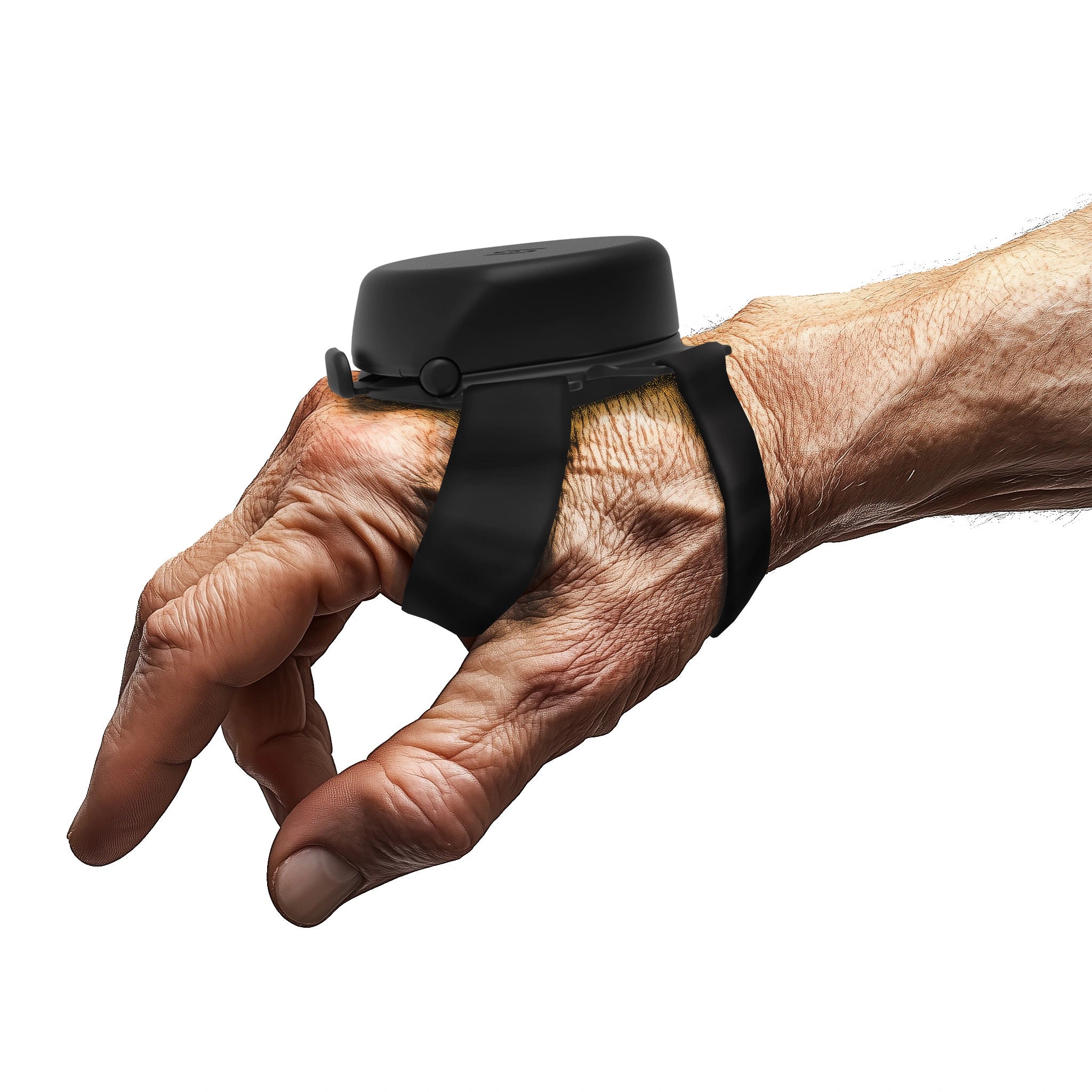
The Steadi-3 Tremor Glove uses magnetic dampening technology to generate a continuous counterforce against hand tremor. Because the mechanism is purely mechanical and responds instantly to any tremor, it automatically provides greater counteraction on high-tremor days, when oscillation is greater. The device does not require programming, adjustment, or calibration for bad days. It responds to the actual tremor.
This is the distinction between a preventive approach and a responsive one. Trigger management reduces the likelihood and severity of tremor flares. The Steadi-3 provides support during the flare itself, maintaining functional capacity for eating, writing, drinking, and other daily tasks when tremor is at its worst. On a high-fatigue, high-stress day, the ability to still eat independently and complete basic tasks without assistance preserves both function and dignity.
The Steadi-3 is battery-free and designed for all-day wear, so it is available whenever tremor intensifies without requiring preparation or charging. Using it as a consistent daily tool rather than a crisis intervention works better for most patients, both because it maintains consistent hand function and because the reduced tremor burden lowers fatigue and stress accumulation that contribute to worse evenings.
The most effective strategy combines both approaches: identify and manage your top triggers to reduce the frequency of high-tremor periods, and use the Steadi-3 to maintain function during the periods that triggers cannot entirely prevent.
How to Track Your Personal Tremor Triggers
Every competing guide on essential tremor triggers recommends avoiding caffeine, managing stress, and getting enough sleep. Very few provide a method for figuring out which of those factors actually matters most for you personally. Triggers are not equally important for all ET patients, and the time investment of managing a trigger that barely affects your tremor is wasted effort that could go toward addressing a trigger that matters significantly.
A two- to four-week tremor-trigger journal solves this problem. The format is simple. Each day, record the following: tremor severity on a scale of one to ten, both in the morning and afternoon; sleep hours and quality the previous night; caffeine intake including type, quantity, and timing; stress level on a scale of one to ten; physical activity type and duration; which medications you took and when; meals eaten and timing; and any notable environmental conditions such as temperature extremes, social situations, or travel.
After two to four weeks, look for consistent patterns. Do your worst tremor days almost always follow nights with less than six hours of sleep? Does your afternoon tremor severity correlate with morning caffeine intake? Are your high-stress days reliably your high-tremor days even when sleep and caffeine are controlled? The answers to these questions are more valuable than general recommendations because they tell you specifically where the intervention will have the greatest return.
Bring the log to your neurologist. A clinician looking at two weeks of severity data alongside medication timing, sleep quality, and trigger exposure can make much more targeted recommendations than one working from a general description of your experience. If your worst tremor days consistently cluster around the twelve-hour mark after your morning propranolol dose, that is a specific, actionable observation about medication coverage. If they cluster around high-stress days regardless of sleep and caffeine, that shifts the priority toward stress management and possibly medication adjustment.
Digital tools for tracking include a simple spreadsheet, a notes app with a daily template, or dedicated symptom tracking applications designed for chronic condition management. The specific tool matters less than the consistency of daily recording. Even two weeks of data provides a meaningful pattern to work with.
The goal is not to identify and avoid every possible trigger perfectly. That is not realistic. The goal is to identify your top 2 or 3 most impactful triggers and make consistent, achievable changes in those areas.
When Worsening Tremor Means You Should See Your Doctor
Day-to-day variability in essential tremor is normal, expected, and almost always trigger-driven. However, certain patterns of worsening warrant neurological evaluation rather than self-management.
Steady worsening over weeks or months despite consistent trigger management is worth discussing with your neurologist. Gradual progression is expected over years, but noticeable acceleration over a shorter period may indicate that the medication is no longer providing adequate control and that adjustment is needed.
Tremor spreading to new body parts that were not previously affected, such as the head, voice, or legs, warrants an appointment. This can be normal ET progression, but should be assessed and documented by your neurologist.
New accompanying symptoms alongside tremor, including stiffness or rigidity in the limbs, slowness of movement, changes in balance or gait, changes in facial expression, or alterations in the sense of smell, warrant prompt evaluation. These symptoms can indicate a different or additional neurological condition that requires separate assessment.
Declining medication effectiveness is a specific and common concern for long-term ET patients. If propranolol or primidone seems clearly less effective than it was a year or two ago, a medication adjustment, a dose change, or the addition of a second agent may restore better control. This is a medical conversation, not a self-management one.
Significant functional impact on eating, writing, dressing, working, or other daily activities is a threshold that warrants discussion of all available treatment options. Surgical interventions, including focused ultrasound, which uses precisely targeted ultrasound energy to reduce tremor in appropriate candidates, and deep brain stimulation, are options for patients whose tremor has progressed beyond what medication can manage. A movement disorder neurologist can assess candidacy and discuss what these procedures involve.
Sudden worsening over days rather than months is a different category of concern. Rapid, dramatic tremor worsening that cannot be explained by obvious trigger exposure, such as a new medication, an illness, or a major acute stressor, should be evaluated by your doctor promptly. Sudden worsening can indicate a medication interaction, a metabolic disturbance, or another treatable acute cause.
Conclusion
The frustrating unpredictability of Essential Tremor is, in a specific sense, useful information. The days when tremor is worse are telling you something about the physiological state your nervous system is in. Sleep quality the night before. Caffeine was consumed that morning. Stress load carried through the day. Medication timing gaps. These are not random. They are patterns that can be identified and, to a meaningful degree, managed.
A two-week trigger journal is the most practical next step this guide can offer. The patterns it reveals will be more actionable than any general recommendation, because they will be yours rather than a population average.
Where trigger management reaches its limits — and some high-tremor days will happen despite your best efforts — the Steadi-3 provides real-time stabilization that works harder on the days when tremor is most severe. It does not require planning for bad days. It is available throughout every day, automatically calibrating to whatever the tremor is doing in that moment. On a high-trigger day, that kind of consistent support changes what remains possible.
Bring your trigger journal to your next neurology appointment. The data you collect is directly useful for optimizing medication timing, providing lifestyle guidance, and building the most effective individual management plan.