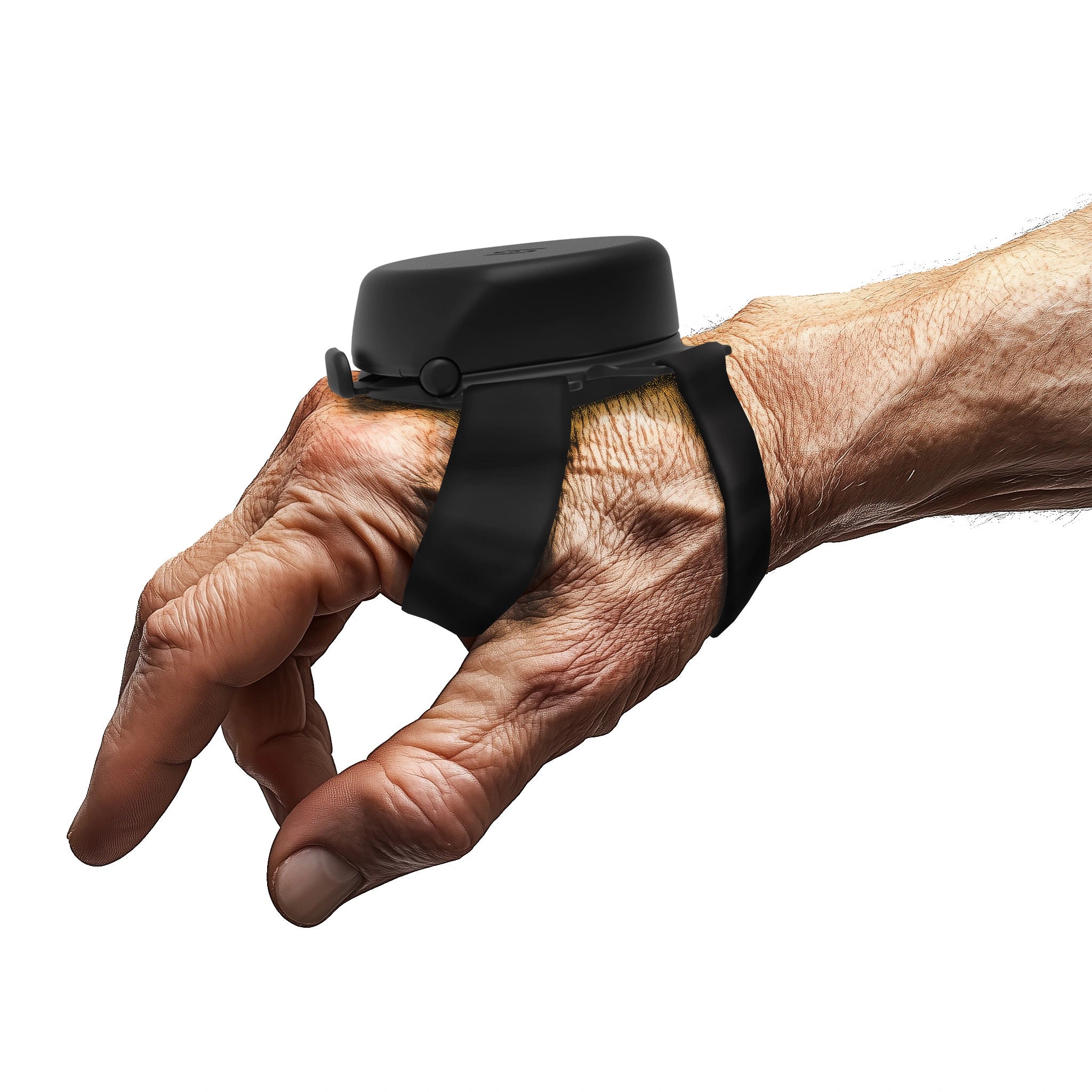
If you have Essential Tremor, you already know the daytime challenges. What many patients do not expect is how much tremor can intrude on the night. The internal vibrating sensation that arrives as you try to fall asleep. The tremor seems worse as you lie quietly in the dark. The anxiety that builds when your body will not settle down. The exhaustion the next morning makes everything harder, including managing your tremor.
This guide is written specifically for patients with Essential Tremor who experience nighttime disruption of tremor. It explains why internal tremor at night feels more intense than during the day, what clinical research says about sleep quality in ET patients, how to distinguish ET-related sensations from other nighttime phenomena, and which practical strategies can help. If you are reading this at night, you are not alone, and this is not a sign that your condition is deteriorating.

Why Tremors Feel Worse at Night
The sensation of internal tremors at night, which feels more intense than during the day, is extremely common among patients with Essential Tremor, and it has a clear explanation.
During waking hours, the nervous system is saturated with sensory input. Visual stimulation, movement, conversation, task focus, and background noise all compete for neurological processing. In that busy environment, the low-level oscillatory activity that produces tremor sensations is partially masked. You are doing other things. Your brain's attention is distributed.
At night, that sensory noise disappears. The room is dark and quiet. You stop moving. Your attention turns inward. In that silence, the nervous system's baseline activity becomes noticeable in a way it was not during the day. Think of an idling car engine. During a busy highway drive, you do not notice the vibration through the seat. Park the car in a quiet garage, and the same vibration becomes obvious. Nothing about the engine changed. The environment did.
Fatigue adds another layer. Tremor amplitude in patients with Esssential Tremor commonly increases as the day progresses and physical and mental reserves are depleted. By the time you get into bed, you may be experiencing a higher baseline tremor level than you were at midday, which makes the quieter nighttime environment even more pronounced.
There is also an anxiety amplification effect. If you have had difficult nights before, the anticipation of tremor at bedtime activates a stress response that makes the very sensations you are trying to avoid more noticeable. Worrying about whether you will be able to sleep and monitoring your body for tremor activity increases nervous system arousal, which increases the sensation. The worry makes it worse, which gives you more to worry about. This cycle is real, it is common in ET patients, and recognizing it is the first step toward interrupting it.
What Causes Internal Tremors at Night in Essential Tremor Patients
The nighttime intensification of Essential Tremor is not arbitrary. Several specific mechanisms contribute to the worsening of tremors during and around sleep.
Clinical research has established that patients with essential tremor have measurably worse sleep quality than healthy controls. Studies using the Pittsburgh Sleep Quality Index found that ET patients scored at an intermediate level between healthy controls and Parkinson's Disease patients, confirming that sleep disruption is a recognized feature of the condition rather than an unrelated complaint. A Columbia University research group examining sleep in ET found that patients show abnormalities in sleep architecture, including changes in REM-stage patterns, suggesting that the same cerebellar and thalamic circuits involved in ET also play a role in regulating sleep.
Medication timing is one of the most clinically relevant contributors. The most commonly prescribed medications for Essential Tremor, primarily propranolol and primidone, have finite durations of effect. Immediate-release propranolol typically maintains peak blood levels for four to six hours. If a patient takes their last dose in the late afternoon or early evening, tremor medication levels may be substantially reduced by the time they are lying in bed trying to sleep, and nearly absent by early morning. This pharmacological gap leaves tremor partially uncontrolled during the hours that should be the most restful.
Caffeine is another significant factor that is often underestimated. Caffeine's half-life in the body averages 5 to 6 hours but varies considerably among individuals, with some people metabolizing it much more slowly. A cup of coffee at 3 p.m. can still have half its caffeine concentration in the bloodstream at 9 p.m. For the nervous system of an Essential Tremor patient, which already runs at elevated oscillatory activity, this persisting stimulant load contributes to the difficulty settling at night.
Sleep deprivation compounds the problem in a bidirectional way that the following section covers in more detail. The short version is that each disrupted night increases the likelihood of a more difficult following night, which is why many ET patients find themselves in a deteriorating sleep cycle that feels impossible to break without deliberate intervention.
Is It Your Tremor or Something Else? Differentiating Nighttime Sensations
One source of particular anxiety for Essential Tremor patients is uncertainty about what they are experiencing at night. Not every sensation is ET-related, and some common nighttime phenomena can feel similar to tremor while having very different causes and implications.
Hypnic jerks are sudden, involuntary full-body jolts that occur during the transition into sleep. They feel nothing like the sustained oscillation of Essential Tremor, but they can be startling enough to fully wake a person and trigger anxiety. Hypnic jerks are extremely common, experienced occasionally by the majority of people, and are entirely benign. They are not a sign of neurological disease and are not related to ET, despite occurring in the same general context of trying to sleep.
Sleep myoclonus refers to brief involuntary muscle twitches that occur during sleep. These are different from the rhythmic oscillation of essential tremor but can be noticed during light sleep or at the sleep-wake transition. Sleep myoclonus is generally benign and common, but can sometimes accompany neurological conditions. It can coexist with ET without one causing the other.
REM sleep behavior disorder (RBD) involves acting out dreams during REM sleep, which can include movement, vocalizing, or more vigorous physical activity. RBD is significantly more common in Parkinson's Disease than in essential tremor and can be an early marker of Parkinson's pathology. ET patients can occasionally develop RBD, but it is not a feature of ET itself. If you or a bed partner notices that you are moving dramatically, shouting, or appearing to physically respond to dream content during sleep, this warrants a neurological evaluation regardless of your ET diagnosis.
Restless leg syndrome (RLS) produces an uncomfortable urge to move the legs, particularly in the evening and at night, accompanied by sensations often described as crawling, itching, or pulling. This is distinct from hand or body tremor, though the two conditions can coexist. RLS responds to different treatments than ET, and a neurologist can assess for it separately.
Anxiety-driven internal tremors are perhaps the most easily confused with ET tremor at night. When the sympathetic nervous system activates in response to stress or worry, it produces a state of physiological arousal that includes internal vibratory sensations, a racing heart, and muscle tension. For an ET patient lying awake at night monitoring their body, distinguishing between ET oscillation and anxiety-driven somatic sensations can be genuinely difficult. The practical implication is that managing the anxiety component, through breathing techniques, mindfulness, or professional support, can meaningfully reduce the subjective intensity of nighttime sensations even when the underlying tremor itself has not changed.
When to contact your neurologist: A new-onset nighttime tremor without a prior tremor diagnosis warrants evaluation. Any apparent acting out of dreams warrants evaluation. Progressive worsening of nighttime symptoms over weeks or months despite consistent sleep hygiene efforts is worth discussing. New accompanying symptoms, such as stiffness, slowness, or balance changes, alongside tremor at any time of day, are a reason to schedule an appointment rather than wait.
The Sleep-Tremor Cycle: How Poor Sleep Worsens Essential Tremor
The relationship between sleep and tremor severity in Essential Tremor is not one-directional. It is a cycle, and understanding that cycle changes how patients and caregivers approach both problems.
Sleep deprivation activates the body's stress response systems. Cortisol and sympathetic nervous system activity both increase with insufficient sleep and directly amplify tremor. A nervous system that is already producing abnormal oscillatory activity becomes more excitable when fatigued. The NINDS explicitly recognizes fatigue as a factor that worsens tremor, noting that tremors become more pronounced when a person is tired. This is not subjective. It is a measurable effect on tremor amplitude.
Higher daytime tremor severity is associated with greater physical fatigue. Managing tremor throughout the day requires compensatory muscle engagement, cognitive effort, and emotional resources. By evening, an ET patient who has had a high-tremor day is more exhausted than one who has had a lower-tremor day. That exhaustion, paradoxically, does not translate to easier sleep. The same nervous system hyperexcitability that drives tremor also interferes with the wind-down process that precedes restful sleep.
The anxiety component ties both ends of the cycle together. Living with a tremor is stressful. The fear of worsening, the social visibility of the condition, the difficulty performing tasks that were once automatic, and the disrupted sleep itself all contribute to a chronic anxiety load. Anxiety both worsens tremor and prevents sleep. This makes it a central target for intervention, not just a secondary concern.
Breaking the cycle requires working on both ends simultaneously. Tremor management strategies that reduce daytime severity have downstream effects on sleep quality. Sleep hygiene practices that improve nighttime rest reduce the physiological amplification of next-day tremor. Neither approach alone is as effective as both together.
Practical Strategies to Manage Tremors at Night
Generic sleep hygiene advice, such as "reduce caffeine" and "stick to a schedule," is well-established for everyone. Essential Tremor patients need strategies tailored to their specific nighttime experiences. Here is a practical guide organized by mechanism.
Medication timing and coverage: The most clinically impactful change many ET patients can make is discussing medication timing with their neurologist. If tremor is pronounced in the evening or upon waking, the issue may be pharmacological rather than behavioral. Extended-release formulations of propranolol maintain more consistent blood levels across a longer period than immediate-release versions. A small evening dose timed specifically for nighttime coverage is another option some neurologists recommend. Never adjust medication timing or dosage without medical guidance, but this is a specific, productive conversation to bring to your next appointment.
Caffeine cutoff: For patients with essential tremor, a strict caffeine cutoff at least 8 hours before bed is more important than the general population recommendation. If you go to bed at 10 p.m., that means nothing caffeinated after 2 p.m. Remember that caffeine appears in coffee, tea, many sodas, energy drinks, chocolate, and some medications. Individual metabolism varies, and some people with slower caffeine processing may need an even earlier cutoff.
Pre-sleep wind-down: Progressive muscle relaxation, in which you systematically tense and release muscle groups from feet to head, actively reduces the physical tension that accumulates from a day of tremor management. Diaphragmatic breathing, in which the breath expands the abdomen rather than the chest, activates the parasympathetic nervous system and counteracts stress-driven arousal that amplifies nighttime tremor sensations. Gentle, slow stretching of the arms, shoulders, and neck in the 30 minutes before bed can reduce compensatory muscle tension caused by daytime tremor activity.
Bedroom environment: A cool room temperature in the range of 65 to 68 degrees Fahrenheit supports the body's natural drop in temperature that accompanies sleep onset. Minimal light exposure in the hour before bed helps avoid suppression of melatonin, which is already more vulnerable in people with irregular sleep patterns. A consistent sleep-wake schedule, even on weekends, reinforces circadian rhythm stability, making falling asleep easier.
Mindfulness-based reframing: Mindfulness practice does not eliminate tremor sensations, but it changes the relationship to them. Body scan meditation, which involves slowly directing attention through the body's regions without judgment, teaches the nervous system to notice sensations without triggering the threat response. Over time, internal tremors at night can shift from an alarming experience that escalates anxiety to a familiar sensation that does not require fear. Apps like Headspace and Calm offer body scan meditations specifically designed for sleep. This takes practice and does not produce results the first night, but ET patients who persist with it report meaningful reductions in nighttime anxiety.
Weighted blankets: Some patients with Essential Tremor report that the deep-pressure stimulation of a weighted blanket (typically 7 to 12 pounds) helps reduce the sensation of internal shaking at night. The proposed mechanism involves the same proprioceptive feedback principles that make weighted gloves and utensils useful during the day. Published evidence for weighted blankets in ET specifically is limited, but anecdotal reports are positive, and the intervention carries minimal risk.
Alcohol avoidance: Alcohol temporarily suppresses Essential Tremor, which is well-established and one reason some ET patients develop problematic alcohol use. As a sleep aid, however, it is counterproductive. Alcohol disrupts sleep architecture, reduces REM sleep quality, and produces a rebound effect in the second half of the night where tremor and nervous system arousal increase as blood alcohol levels fall. Whatever short-term suppression it provides is not worth the downstream disruption.
Medication Timing and Evening Tremor Management
Extended-release propranolol formulations, when available, maintain more consistent blood levels over the dosing interval than immediate-release formulations. For patients who take immediate-release propranolol and notice significant tremor in the hours before bed or upon morning waking, this is a practical option to discuss.
Some neurologists recommend a targeted small evening dose of propranolol or primidone for patients whose primary concern is nighttime or early morning tremor. The goal is to maintain therapeutic drug levels through the sleep window without creating daytime side effects from a single large dose.
The critical principle: medication timing adjustments are a medical decision. The conversation to have with your neurologist is specific. Tell them which hours of the day your tremor is most and least controlled, describe what happens to your tremor during the sleep window, and ask whether your current dosing schedule can be optimized for better overnight coverage.
How Steadiwear Helps Reduce Daytime Tremor Burden to Improve Nighttime Rest
The sleep-tremor cycle begins during the day. By evening, the physical fatigue, compensatory tension, and emotional cost of managing tremor throughout the day have been mounting for hours. These are the conditions you bring into the bedroom.
The Steadi-3 Tremor Glove addresses the daytime side of this cycle. By stabilizing hand tremor during eating, writing, cooking, drinking, and other daily tasks, it reduces the physical effort required to compensate for uncontrolled tremor throughout the day. Less compensatory effort means less accumulated fatigue. Less visible tremor during daily activities reduces the social anxiety and self-monitoring that contribute to the emotional load ET patients carry into the evening.
The Steadi-3 is not designed for nighttime use. It is a daytime tool, battery-free and designed for continuous wear during waking activities. The connection to sleep is indirect but real. Users who experience more stable hand function during the day consistently report feeling less exhausted and less anxious in the evening. A lower stress and fatigue baseline at bedtime is not a guarantee of better sleep, but it is a meaningful contribution to the conditions that make better sleep possible.
Tremor management is a twenty-four-hour strategy. Medication provides the pharmacological foundation. Sleep hygiene practices address the environmental and behavioral contributors. Daytime tremor stabilization through tools like the Steadi-3 reduces the burden that the nervous system carries into each night. An occupational therapist can help integrate daytime stabilization tools into a broader plan that supports both functional independence and sleep quality.
What the Research Says About Sleep Quality in Essential Tremor
Sleep disruption in Essential Tremor is not a patient perception that doctors dismiss. It is documented in published clinical research, and knowing that changes the conversation patients can have with their healthcare providers.
A research group at Columbia University studying sleep in patients with essential tremor found that ET patients scored intermediate between healthy controls and Parkinson's Disease patients on the Pittsburgh Sleep Quality Index, a validated clinical tool for assessing sleep quality. This placed ET patients in a statistically distinct group with measurably impaired sleep compared to people without tremor conditions, while confirming that the degree of disruption is generally milder than in Parkinson's Disease.
Polysomnography, the clinical gold standard for sleep assessment that involves overnight monitoring of brain activity, breathing, and movement, has revealed additional findings in ET patients. Some studies have identified lower blood oxygen levels during sleep and certain REM-stage abnormalities in ET populations compared to controls. The cerebellum, whose abnormal activity drives essential tremor, plays broader roles in the body than motor coordination alone, and its involvement in sleep architecture may partly explain why ET affects nighttime functioning beyond the obvious tremor effect.
The most commonly reported sleep complaints among ET patients are difficulty achieving restful sleep, excessive daytime sleepiness (often a medication side effect, particularly from primidone), and restless legs, which appear more frequently in ET patients than in the general population.
The practical takeaway from this research is twofold. First, if you are an essential tremor patient who sleeps poorly, this is a real, documented aspect of your condition, not a separate problem or a sign of excessive worry. Second, discussing sleep quality with your neurologist is appropriate and clinically supported. The Pittsburgh Sleep Quality Index, which your neurologist may be familiar with, is a tool that can help document and track the sleep component of your condition. Some neurology practices that specialize in movement disorders routinely assess sleep quality as part of ET management.
When to Talk to Your Doctor About Nighttime Tremors
Many ET patients learn to manage nighttime tremor sensations as a fact of life and do not bring them up at neurology appointments. There are, however, specific situations where nighttime tremor symptoms warrant a direct conversation or evaluation.
New-onset tremor without a prior diagnosis is always worth evaluating. If you are experiencing what feels like internal tremors or vibrations at night for the first time and have not been assessed by a neurologist for tremor, a clinical evaluation can determine whether essential tremor, another movement disorder, or a non-neurological cause, such as thyroid dysfunction, medication side effects, or anxiety, is responsible.
Progressive worsening over weeks or months despite consistent sleep hygiene and no obvious lifestyle triggers is worth raising with your neurologist. ET is a slowly progressive condition for most patients, but meaningful acceleration of symptoms should be discussed and documented.
Acting out dreams during sleep, meaning any report from a bed partner of shouting, punching, kicking, or physically responding to dream content, is a specific symptom that warrants neurological evaluation. REM sleep behavior disorder is more commonly associated with Parkinson's Disease and related conditions than with essential tremor. Its presence does not mean a diagnosis has changed, but it warrants assessment.
Excessive daytime sleepiness that interferes with work, driving, or normal functioning may indicate a medication side effect, obstructive sleep apnea, or another sleep disorder unrelated to ET that requires treatment. Primidone in particular can cause sedation, and dose timing or formulation changes may address this.
New accompanying symptoms alongside nighttime tremors, including stiffness in the limbs, slowness of movement, changes in balance or gait, or changes in sense of smell, are reasons to schedule an appointment with your neurologist rather than wait. These can be signs that require assessment beyond the ET diagnosis.
Significant psychological impact is a clinically valid reason for support. If nighttime tremors are causing anxiety, depression, social withdrawal, or fear of going to bed, mental health support alongside neurological care is appropriate and effective. Cognitive behavioral therapy for insomnia has strong evidence behind it and can be combined with ET management strategies to address the anxiety-tremor-sleep cycle comprehensively.
Conclusion
Tremors that feel worse at night are not evidence that your condition is deteriorating. In most cases, they are evidence that the quiet, still conditions of nighttime make sensations that were present all day more noticeable. That distinction matters because it changes what to do about it.
The strategies in this guide — medication timing conversations with your neurologist, caffeine cutoff, pre-sleep wind-down practices, a bedroom environment that supports sleep onset, and mindfulness-based reframing — address the real contributors to nocturnal tremor distress. None of them is guaranteed to eliminate it, but each one targets a specific mechanism that makes nighttime harder than it needs to be.
The sleep-tremor cycle also has a daytime component. Managing tremor during the day reduces the fatigue and stress accumulation that feeds nighttime difficulty. If hand tremor during daily activities is contributing to that burden, exploring daytime stabilization options is a practical next step. The Steadi-3 product page covers what battery-free, all-day tremor stabilization looks like in practice.
Start with your neurologist. Sleep disruption in essential tremor is a recognized and documented part of the condition, and it deserves direct clinical attention rather than private management in the dark.