Dating with Essential Tremor raises real questions that most dating advice ignores: when to disclose, how to handle visible tremor on a first date, and what partners actually respond to well. This article provides practical, evidence-grounded guidance through every stage of the dating experience. There is currently no cure for Essential Tremor; the goal is management and meaningful connection, not concealment.
How Essential Tremor shows up in social and dating situations
Essential Tremor is characterized by action tremors, meaning they activate during precisely the activities common on dates: reaching across a table, holding a cup, writing a name on a receipt. Stress, fatigue, hunger, and emotional intensity all worsen severity; first-date nerves can intensify visible shaking beyond everyday baseline. Head, voice, and internal tremors affect balance and coordination in ways that are less visible but equally relevant. The self-consciousness cycle is worth naming: awareness of tremor causes anxiety, which worsens tremor, which increases self-consciousness.
When and whether to disclose Essential Tremor when dating
For people whose tremors are consistently visible, early or pre-date disclosure reduces the risk of confusion mid-date. For people whose tremors fluctuate or are less visible at rest, mid-date disclosure when it arises naturally feels more conversational and less clinical. Including Essential Tremor in an online dating profile is personal; some find it filters incompatible matches efficiently, others prefer to build connection first. The goal of disclosure is clarity and control of the narrative, not managing the other person's emotional response.
How to disclose Essential Tremor simply and effectively
Effective disclosure is brief, factual, and forward-looking. Name the condition, note one or two ways it may be visible, and redirect the conversation. Example framing: "I have a neurological condition called Essential Tremor. It causes my hands to shake, especially when I'm reaching for things. It's manageable and nothing to worry about." Avoid over-explaining or apologizing; a matter-of-fact tone signals the condition is simply part of life. After disclosing, redirect: "Anyway, I heard you mention you've been traveling recently."

Choosing a first date setting that works with Essential Tremor
Taking the initiative on venue choice is practical self-advocacy. Prefer venues with sturdy, fixed seating; tables with arm rests reduce visible tremor. Request drinks with lids or straws when available; half-filled cups reduce spill risk and require no explanation. Low-pressure, shorter first dates, a coffee or a walk, reduce total fatigue and anxiety compared to multi-hour dinners. Choosing the venue proactively ensures the environment supports rather than amplifies tremor visibility and management throughout the date.
Reading a partner's response to Essential Tremor
Supportive responses acknowledge the condition briefly, ask one or two practical questions, and move the conversation forward. Unhelpful responses include repeated circling back to tremor, expressions of pity, unsolicited treatment suggestions, or treating the tremor as alarming. Treating a partner's reaction as compatibility data rather than a verdict about personal worth reframes the entire disclosure experience productively. A partner who cannot respond to visible tremor with basic matter-of-fact acceptance is signaling something important. That signal is information, delivered early.
Managing tremor visibility during a first date
Resting forearms on the table rather than reaching across reduces the range of motion that triggers hand tremor. Ordering simpler foods requiring less fine motor precision reduces anxiety around eating; soups and difficult-to-spear items are worth noting in advance. Pacing the conversation and allowing natural pauses reduces nervous tension that worsens tremor. It is acceptable to excuse oneself briefly during a long date to collect composure; short breaks reset the anxiety-tremor feedback cycle and restore presence in the conversation.
Essential Tremor, fatigue, and managing energy on dates
Fatigue is a significant tremor amplifier; by the end of a long date, tremor severity may be meaningfully worse than at the start. Shorter date formats of one to two hours are a practical strategy, not a social limitation. Acknowledging fatigue without over-explaining works: "I've had a great time. I tend to lose energy earlier in the evening, so I'll head home, but I'd love to continue this." Planning dates during lower-tremor periods, often mid-morning or early afternoon, uses natural fluctuation patterns productively.
Wearable tremor reduction for Essential Tremor in daily and social life
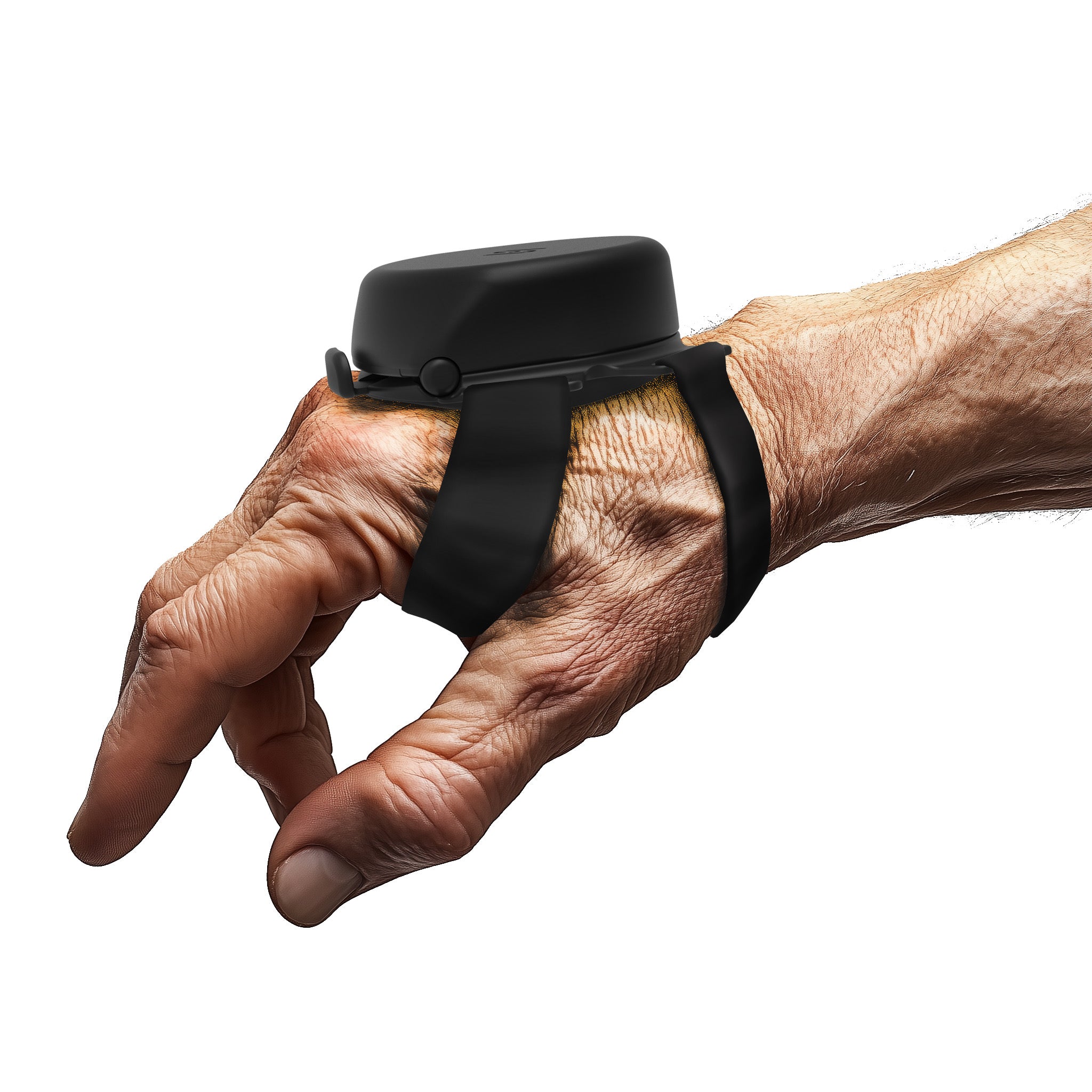
Managing hand tremor in social situations, including dates involving eating, drinking, and handling objects, is one of the most practical quality-of-life priorities for people with Essential Tremor. Wearable assistive devices offer a non-pharmaceutical tool worn during everyday activities to reduce hand tremor and support control. The Steadi-3 is an FDA-registered Class I medical device that uses passive magnetic stabilization to reduce hand tremor; no batteries required. In a placebo-controlled study, 84% of users showed improved tremor control. Consult a healthcare provider to determine individual suitability.
Handling questions from a partner who notices Essential Tremor
Appropriate questions from a curious partner include asking whether anything would help, or whether tremor affects things when you are out together. Brief, matter-of-fact answers are enough in a first-date context; one sentence followed by a redirect is sufficient. For over-reaching questions, a polite boundary works: "That's more detail than I'd want to get into right now, but I'm happy to answer more questions over time." Questions framed as pity or unsolicited advice do not require detailed engagement; a polite deflection is sufficient.
Building a relationship with a partner over time when you have Essential Tremor
Essential Tremor is progressive; a partner who understands this early is better positioned to adapt as symptoms change. Communication about tremor is not a single conversation but an ongoing process; practical adaptations emerge naturally in long-term relationships. Humor, when shared, is a documented coping strategy among people with Essential Tremor and their partners. A partner who engages practically with what tremor means in daily life, rather than ignoring it or making it the dominant narrative, provides a meaningful compatibility signal.
Self-advocacy and Essential Tremor: owning the experience in dating
Dating with Essential Tremor is not a performance of normalcy with tremor as a liability; it is a process of finding a partner whose values are genuinely compatible with an honest representation of who you are. Disclosure, venue choice, and boundary-setting are all forms of self-advocacy; each strengthens a sense of control. Incompatible partners self-select out when tremor is disclosed or visible. Essential Tremor is one aspect of identity, not its defining characteristic; grounding dating in this supports clearer communication and greater independence.
What to remember about dating with Essential Tremor
Dating with Essential Tremor is manageable with practical preparation and clear communication, and does not require concealment or apology. Disclosure timing, venue choice, and energy management are the three most controllable variables in a first-date experience. A partner's response to visible tremor is genuine compatibility information; treating it as such shifts the experience from anxiety to assessment. There is currently no cure for Essential Tremor; management, communication, and connection are the goals. Approaching dating as an expression of control and independence changes the frame entirely.