The early warning signs of Parkinson's Disease rarely begin with a tremor. For many people, the first changes involve smell, sleep, mood, or digestion — symptoms that appear years before any motor sign is visible. This article covers all 12 signs across both motor and non-motor categories, so you and your neurologist can recognize what the body may be communicating long before dopamine loss becomes clinically apparent.
What Makes Parkinson's Disease Warning Signs So Easy to Miss
Parkinson's Disease is a slow-onset neurodegenerative condition. Dopamine-producing neurons in the substantia nigra begin to decline years before any motor symptom becomes detectable. According to the Parkinson's Foundation, motor signs appear only after roughly 60 to 70 percent of neurons have already been affected. This means the body produces non-motor signals, including changes in sleep, digestion, and smell, long before a tremor or stiffness develops. These prodromal symptoms are the earliest, and most commonly missed, warning signs.
Pre-Motor Warning Sign: Loss of Sense of Smell (Anosmia)
Unexplained loss of smell, known as anosmia, is one of the most documented prodromal signs of Parkinson's Disease. Unlike the loss of smell from a cold or sinus infection, PD-related anosmia has no obvious cause and does not resolve. Research from Johns Hopkins indicates that unexplained anosmia may carry at least a 50 percent probability of developing PD within 5 to 10 years, driven by alpha-synuclein accumulation in the olfactory bulb. On its own, it is not diagnostic, but combined with other signs, it is clinically significant.
Pre-Motor Warning Sign: REM Sleep Behaviour Disorder
REM sleep behaviour disorder (RBD) is a condition in which normal sleep paralysis is absent, causing a person to physically act out vivid dreams. It is distinct from insomnia or restless leg syndrome. Movement disorder specialists consider RBD one of the strongest known prodromal markers for Parkinson's Disease. A bed partner is often the first to notice unusual movements or vocalizations during sleep. When RBD occurs without an obvious cause, such as a medication side effect, it warrants prompt neurological evaluation, even in the absence of any motor symptoms.
Early Motor Sign: Resting Tremor

The resting tremor associated with Parkinson's Disease occurs when the hand or limb is relaxed and fully supported, not during active movement. It often begins asymmetrically in a single finger, thumb, or hand and may be subtle enough to be dismissed as nerves or fatigue. According to the Parkinson's Foundation, the asymmetric onset is a diagnostically important pattern. The tremor frequently diminishes when the person intentionally reaches for something. Not every person with Parkinson's Disease develops tremor; its absence does not rule out the diagnosis.
Early Motor Sign: Changes in Handwriting (Micrographia)
Micrographia refers to handwriting that becomes progressively smaller or more cramped, sometimes mid-sentence, without the writer consciously intending it. Letters may trail off or crowd together as the hand moves across the page. The Parkinson's Foundation identifies this as a specific early motor sign driven by bradykinesia, the general slowing of voluntary movement that characterizes Parkinson's Disease motor pathology. Family members often notice the change before the individual does. If handwriting has changed significantly without a physical injury or obvious cause, it is worth raising with a physician.
Early Motor Sign: Stiffness, Reduced Arm Swing, and Slow Movement
Bradykinesia, the slowing of all voluntary movement, and rigidity, the resistance of muscles to passive movement, often appear together in early Parkinson's Disease. One of the earliest observable signs is reduced arm swing on one side during walking, a specific indicator identified by both the Parkinson's Foundation and the American Parkinson Disease Association. Unlike arthritis-related stiffness, which may improve with activity, PD-related rigidity tends to persist throughout movement. These signs are frequently attributed to aging or overexertion, which delays evaluation.
Early Non-Motor Sign: Constipation and Digestive Changes
Persistent constipation without a clear dietary, hydration, or medication explanation is a recognized early non-motor sign of Parkinson's Disease. The enteric nervous system, which governs gut function, is affected early in the progression of PD. Research has identified alpha-synuclein deposits in the enteric nervous system prior to motor symptom onset, consistent with the Braak staging hypothesis. The Parkinson's Foundation lists constipation as a notable early sign. Daily straining or significantly slowed bowel function that cannot be explained by lifestyle factors warrants discussion with a physician, particularly when other signs are also present.
Early Non-Motor Sign: Mood Changes, Anxiety, and Depression
New-onset depression or anxiety that does not correspond to a clear life event may reflect neurological change rather than a primary mood disorder. According to Johns Hopkins movement disorder specialists, these neuropsychiatric symptoms can precede motor signs by years, driven by dopaminergic pathway involvement outside the motor system. They are among the signs most frequently attributed to stress, life circumstances, or age, which delays appropriate evaluation. When depression or anxiety co-occurs with other signs described in this article, it is appropriate to raise the neurological angle directly with a physician rather than treating it in isolation.
Early Motor Sign: Changes in Facial Expression and Voice (Hypomimia and Hypophonia)
Hypomimia, a reduction in facial expressiveness sometimes called a masked face, results from rigidity of the facial muscles, including a decreased normal blink rate. Hypophonia refers to softening or a monotone quality of the voice, related to early motor changes affecting respiratory and vocal cord function. Both are identified by the American Parkinson Disease Association as early motor signs. Family members and close contacts are typically the first to notice these changes, because they are gradual and the person experiencing them rarely perceives the shift. These signs are distinct from the flat affect sometimes associated with depression.
The Difference Between Early-Onset and Typical Parkinson's Disease: What Age Has to Do with It
Early-onset, or young-onset, Parkinson's Disease refers to cases diagnosed before age 50, and occasionally in the 30s or 40s. It accounts for approximately 10 percent of all PD cases. The signs of early-onset Parkinson's disease mirror those of typical onset, but they occur at an age when patients and clinicians are less likely to consider the diagnosis. Genetic factors, including mutations in the LRRK2 and PARK2 genes, are more commonly involved in early-onset cases. The Michael J. Fox Foundation is the leading research resource for young-onset PD. Age alone should not prevent evaluation when unexplained motor or non-motor signs are present.
When Tremor Develops: How People with Parkinson's Disease Manage Hand Shaking

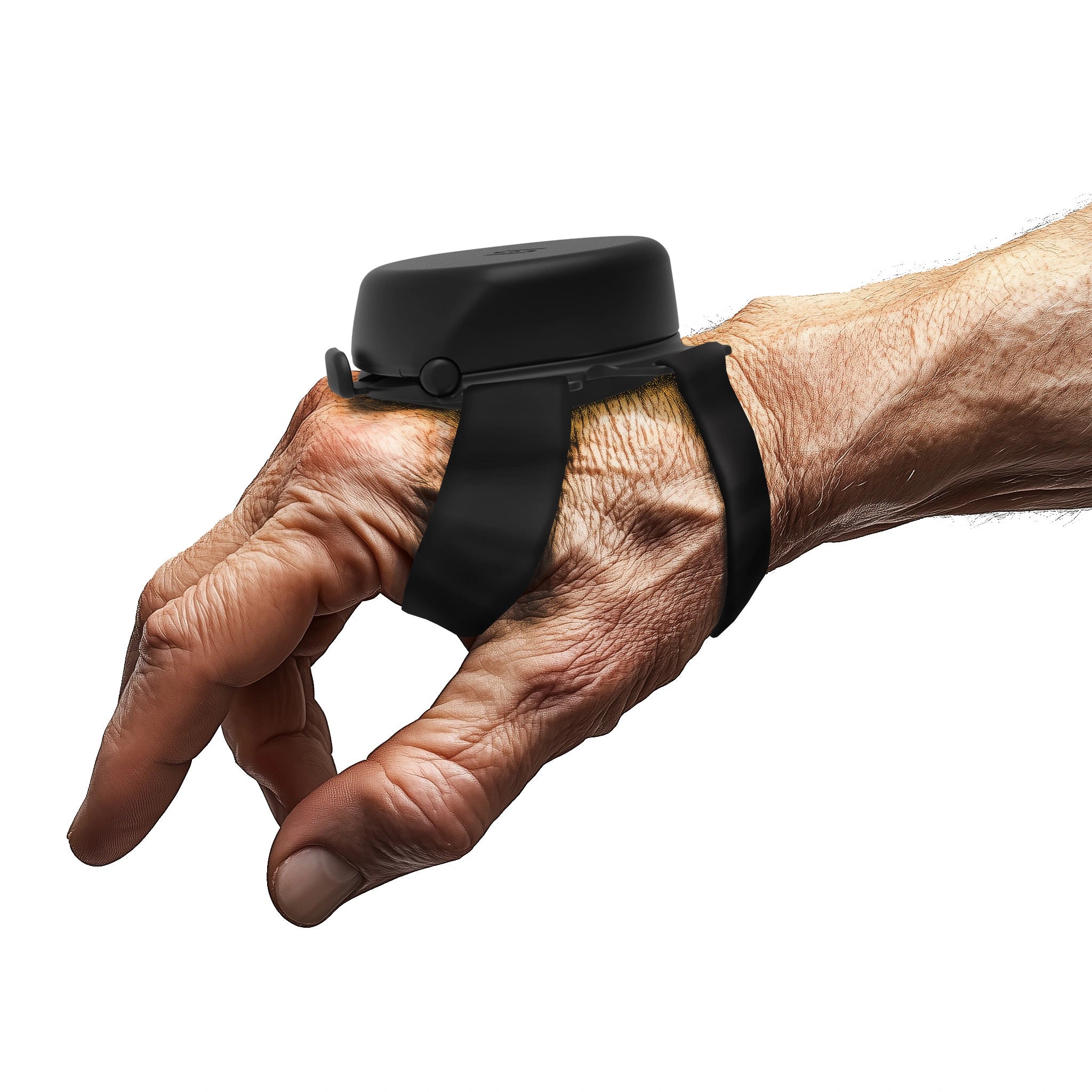
For people already managing Parkinson's Disease, hand tremor can make everyday tasks like eating, writing, and drinking more difficult. Several assistive approaches are available to support function at this stage. The Steadi-3 is an FDA-registered Class I medical device that uses passive magnetic stabilization to reduce hand tremors. It requires no batteries or electronic components and has been validated in a placebo-controlled study that showed tremor reduction in 84% of users. Management focuses on maintaining control and independence in daily activities. A neurologist should guide all treatment planning. Explore the Steadi-3 tremor glove as one option among the available options.
Conclusion
Recognizing the early warning signs of Parkinson's Disease requires looking beyond tremor. The most important signals, including changes in smell, sleep behaviour, digestion, and mood, can appear years before motor symptoms emerge. No single sign confirms the diagnosis; a combination of persistent, unexplained changes across categories is the threshold for seeking neurological evaluation. A movement disorder specialist or neurologist is the appropriate first contact. Although there is currently no cure for Parkinson's Disease, treatments and assistive strategies are available to support control and independence once a diagnosis is reached.