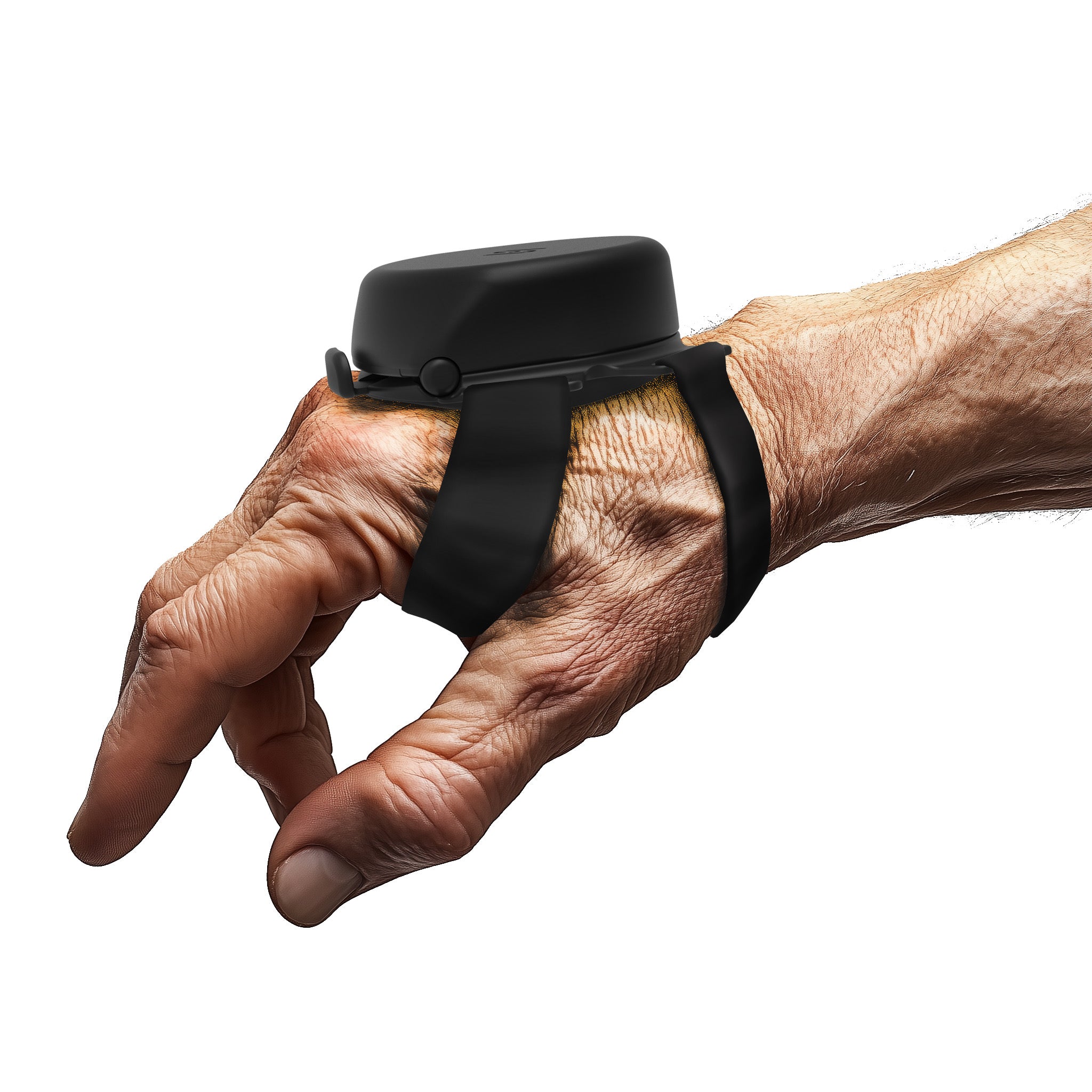
Tremor at work meetings, during handshakes, and in presentations is one of the most practically challenging aspects of Essential Tremor for people in professional roles. The effort to conceal tremor is often more exhausting than the tremor itself. This article shifts the focus from concealment to practical management. There is currently no cure for Essential Tremor; managing it at work is a realistic, achievable goal.
Why concealment is a losing strategy for Essential Tremor at work
Clinical and patient accounts consistently describe the effort to conceal Essential Tremor at work as consuming significant cognitive and emotional energy. Avoiding meetings, delegating handshakes, refusing to hold documents or a pen in view: each workaround compounds the restriction rather than resolving it. Anxiety about tremor visibility worsens tremor, which increases anxiety, which worsens tremor further; concealment attempts feed this cycle directly. The alternative is not announcing the condition to every colleague; it is shifting from reactive concealment to proactive management.
How Essential Tremor behaves specifically in professional settings
Essential Tremor is an action tremor, triggered by voluntary movement; professional activities that involve reaching, holding, signing, writing, or gesturing activate it directly. Stress and fatigue are compounding triggers; both are present in high-stakes professional situations such as presentations and client meetings. Voice tremor and head tremor, less commonly discussed than hand tremor, can also become more pronounced under professional pressure. Understanding which specific activities activate tremor most reliably allows for targeted preparation rather than generalized anxiety management.
Managing tremor during handshakes
Initiating the handshake rather than waiting for the other person provides a moment of control over timing and grip; a firm, brief handshake is less affected by visible tremor than an extended or hesitant one. Brief, casual disclosure is an option for recurring professional contacts: "I have a condition that causes some hand tremor; it's manageable" said once removes the need to manage the other person's visible reaction on each occasion. Alternative greetings, a nod or an elbow greeting, are increasingly accepted and require no explanation.
Managing tremor during meetings
Arriving before others to settle and choose a seat with arm support near the table edge reduces visible tremor from the start of the meeting. Placing a document flat on the table rather than holding it eliminates the arm-reaching extension that activates hand tremor most visibly. Switching from handwritten notes to a laptop or tablet with adjusted mouse sensitivity reduces tremor-related errors and visible effort. Drinks with lids or using a heavy, wide-based cup reduces spill risk and tremor visibility when refreshments are present.
Managing tremor during presentations
A lectern or table edge provides a natural surface to rest the hands between gestures; hands resting on a surface shake less visibly than hands held at the side or used to hold objects. Choosing a heavy, wide-based cup over a lightweight bottle significantly reduces visible tremor if water is needed. Placing printed notes flat on the lectern rather than holding them removes one of the most visibly tremor-amplifying actions in a presentation context. Scheduling presentations during lower-tremor periods, typically when rested and after medication has reached peak effect, is a practical planning step.

Workplace accommodations for Essential Tremor under the ADA
Under the Americans with Disabilities Act, employers with 15 or more employees are required to provide reasonable accommodations for employees who disclose a qualifying medical condition. The Job Accommodation Network, a free service of the U.S. Department of Labor, provides specific accommodation guidance for Essential Tremor and can be reached at 1-800-526-7234. Documented accommodations include alternative computer mice, adjustable keyboard sensitivity, keyguards, voice-to-text software, ergonomic tools, flexible scheduling, and reallocation of tasks requiring sustained fine motor precision. Consulting an employment attorney before formal disclosure is advisable in complex situations.
Ergonomic and assistive tools for Essential Tremor at work
Adjusting mouse sensitivity settings on a computer to filter out small involuntary movements is a zero-cost first step available on all major operating systems. Keyguards placed over a keyboard reduce accidental key presses caused by Essential Tremor and are available from assistive technology suppliers. Anti-tremor gloves and weighted writing tools can reduce visible hand tremor during fine motor tasks such as signing documents or taking notes. Voice-to-text software eliminates handwriting entirely for note-taking, drafting, and data entry, removing a significant source of tremor-related workplace friction.
Wearable tremor reduction for professional and everyday hand control
Managing hand tremor in professional settings, particularly during writing, typing, handling documents, and holding objects in meetings, directly affects the ability to work with greater control. Wearable assistive devices offer a non-pharmaceutical option for professional tasks that reduces visible hand tremor without requiring disclosure or accommodation requests. The Steadi-3 is an FDA-registered Class I medical device that uses passive magnetic stabilization to reduce hand tremor; it requires no batteries. In a placebo-controlled study, 84% of users showed improved tremor control. A healthcare provider or occupational therapist can advise on individual suitability.
Talking to a manager or HR about Essential Tremor at work
The accommodation process under the ADA begins with disclosure of a condition affecting work function; a full medical diagnosis is not legally required, only enough information for the employer to understand the functional need. First conversations typically go to a direct supervisor or HR, depending on company structure; having a clear list of requested accommodations prepared before the meeting focuses the discussion. Following up in writing after any disclosure and accommodation conversation creates a documented record. If an employer responds with adverse action, consulting an employment attorney is the appropriate next step.
Essential Tremor and professional identity: shifting from avoidance to management
Clinical accounts document Essential Tremor derailing careers through avoidance: declining presentations, refusing client-facing roles, leaving positions that require visible fine motor tasks. These career costs are often disproportionate to the underlying functional limitation; they are driven by concealment effort and social fear rather than actual inability to perform the work. Shifting from avoidance to active management, requesting accommodations, using assistive tools, and disclosing where it protects professional standing, restores options that the concealment approach eliminates. Maintaining control over how Essential Tremor is managed at work is a practical expression of professional independence.
Preparing for high-stakes professional moments with Essential Tremor
High-stakes professional moments are predictable; preparing for them specifically is more effective than general tremor management. Timing medication correctly before a meeting or presentation, if medication is part of the management plan, requires advance planning with a healthcare provider. Arriving early, choosing seating or standing position deliberately, and checking that drink and document logistics are in place before others arrive reduces in-the-moment improvisation. Rehearsing a presentation in the actual physical space, where possible, acclimates the nervous system to the environment and reduces the anxiety-tremor escalation that novelty produces.
Taking control of tremor at work meetings and beyond
Tremor at work meetings, in presentations, and during handshakes is manageable with the right combination of physical strategies, assistive tools, workplace accommodations, and selective disclosure. The concealment approach, while understandable, creates compounding costs; proactive management restores control over how and when the condition becomes visible. Workplace accommodation rights under the ADA provide a legal framework that many people with Essential Tremor do not use because they are unaware of it. There is currently no cure for Essential Tremor; managing it professionally is the goal, and it is achievable with planning, support, and the right tools.