When a coworker noticed a tremor and asked about it before any preparation for that conversation, it is one of the most uncomfortable workplace moments for people with Essential Tremor. This article covers what to say in the moment, how to think about longer-term disclosure, and how to take back control of the narrative. There is currently no cure for Essential Tremor; the goal is managing how and when the condition becomes part of professional relationships.
Why unplanned tremor disclosure feels so disorienting
Unplanned disclosure strips away the preparation that makes any sensitive conversation manageable; the person with Essential Tremor is suddenly reactive rather than in control of the information. The coworker may have asked out of genuine concern, confusion, or casual curiosity, but any of these motivations can feel equally intrusive when the person with Essential Tremor was not ready. The moment tends to trigger the anxiety-tremor cycle: embarrassment heightens anxiety, anxiety worsens visible tremor, which heightens embarrassment further. The first thing to recognise is that a brief, calm response buys time and resets the dynamic.
What to say in the moment when a coworker asks about tremor
If a coworker asks directly: "I have a condition called Essential Tremor. It causes some involuntary hand shaking. It's a neurological thing, not serious. Anyway, where were we?" If a coworker looks concerned without asking, offering a brief unprompted sentence removes the uncertainty that is often worse than the question itself. If caught completely off guard, a shorter version works: "It's a mild neurological condition. I'm used to it," followed immediately by returning to the task at hand. The goal is brevity, calm, and redirection; the moment does not require a full explanation.

The difference between a coworker question and a disclosure decision
A brief response to a coworker's observation is not the same as a formal ADA disclosure to an employer; conflating the two creates unnecessary pressure in an already disorienting moment. Telling one curious colleague "I have a neurological condition that causes some hand shaking" shares no information that triggers legal, HR, or accommodation processes. The formal disclosure decision, with its implications for ADA protection and accommodation requests, is a separate conversation that deserves separate preparation. Handling a coworker's question well in the moment preserves the option to make a more considered disclosure decision later.
Deciding what to tell coworkers after the moment has passed
Before deciding how much to tell colleagues, it helps to identify what the goal of any conversation would be: awareness, support, reduced awkwardness, or something else. Telling one trusted colleague who can provide social support is different from briefing the whole team; both are valid choices and neither requires the other. The question "What do I want and need from this conversation?" is a useful frame for any disclosure decision; communication focused on a specific outcome is easier to manage than open-ended sharing. Normalising tremor through brief, matter-of-fact comments over time is often more effective than a single formal explanation.
What colleagues are usually thinking when they notice a tremor
Most colleagues who notice tremor are confused or mildly concerned; they are not alarmed, judging, or thinking about professional performance. The most common misreading is that the person is nervous or anxious; a brief explanation that it is neurological removes this misread immediately. Some colleagues may worry the person is unwell; a calm, matter-of-fact response that names Essential Tremor and signals that it is manageable typically resolves that concern. The catastrophic workplace reaction that the concealment effort is designed to prevent is, in most documented accounts, far less common than genuine curiosity followed by quick adjustment.
How to talk to a manager or HR after a coworker has noticed
If a coworker's question prompts the decision to speak to a manager, preparing for that conversation before it happens is more effective than raising it reactively. The manager conversation has a different purpose from the coworker conversation: it may involve requesting accommodations, which requires more specific information about functional impact. Starting with a human resources department or direct supervisor, depending on company structure, opens the ADA accommodation process if that is the goal. Following up any manager or HR conversation in writing creates a documented record; this protects all parties and is standard practice.
Common coworker reactions and how to respond to each
To intrusive follow-up questions about whether it is getting worse or whether you have tried something: "I appreciate the concern, but I'm managing it with my doctor. I'd rather not make it a regular topic." To pity or sympathy: acknowledge briefly and redirect: "It has its moments, but it's manageable. Anyway, about the project." To supportive curiosity about what would help: "I appreciate that. If anything comes up where it would be helpful, I'll let you know." To prolonged awkward attention: continuing to perform the task at hand, without comment, is itself an effective signal.
Wearable tremor reduction for workplace hand control
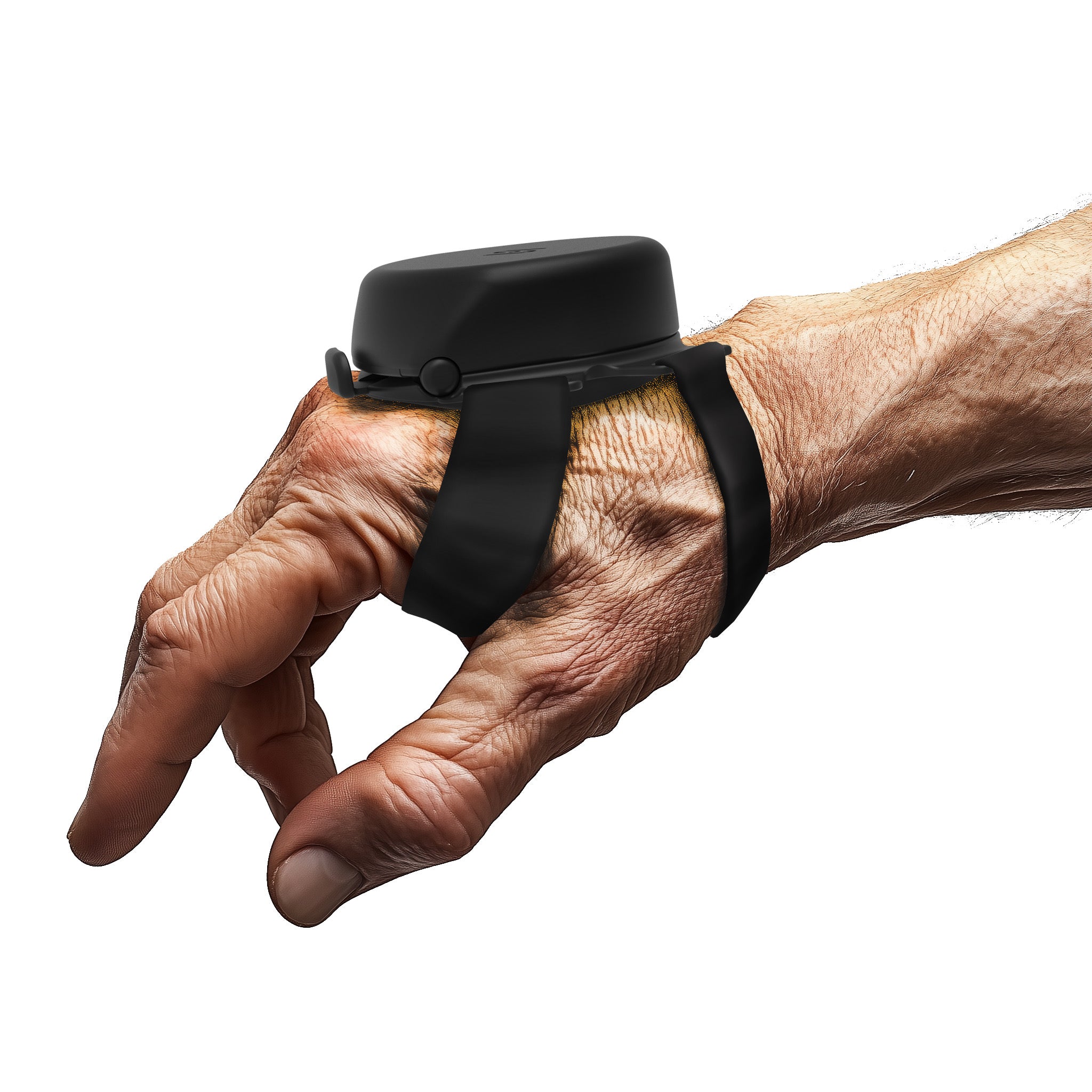
Managing hand tremor visibility at work, particularly during tasks like writing, typing, signing documents, and holding objects in meetings, supports greater control over how and when tremor draws attention. Wearable assistive devices that reduce hand tremor offer a non-pharmaceutical option for daily workplace use, requiring no disclosure, no accommodation request, and no prescription. The Steadi-3 is an FDA-registered Class I medical device that uses passive magnetic stabilization to reduce hand tremor; it requires no batteries. In a placebo-controlled study, 84% of users showed improved tremor control. A healthcare provider can advise on individual suitability.
How Essential Tremor is commonly misunderstood by people who notice it
The most common misunderstanding is that Essential Tremor is early Parkinson's Disease; it is not, and briefly clarifying this removes a significant source of unwarranted concern in a coworker. Essential Tremor is not caused by nervousness or anxiety, though both can worsen it; it is a neurological condition present at rest or under any circumstances. Essential Tremor is the most common movement disorder, affecting an estimated 7 to 10 million Americans; coworkers are often surprised to learn how prevalent it is. There is currently no cure, but management strategies and treatments exist that reduce tremor severity.
Taking back narrative control after an unplanned disclosure
After an unplanned moment, the most effective next step is to continue performing the work without further reference to the tremor; this establishes the normalcy that words alone cannot. If the coworker continues to reference the tremor in subsequent interactions, a brief, friendly redirect is sufficient: "You don't need to worry about it, it's under control." Choosing to follow up with a slightly fuller explanation at a calmer moment, on the person's own terms, is more effective than the pressured in-the-moment exchange. Narrative control is about deciding what role Essential Tremor plays in professional relationships.
Preparing for future coworker questions before they happen
Having a single prepared sentence ready for the coworker question makes the moment dramatically less disorienting: "I have a neurological condition called Essential Tremor. It causes some involuntary hand shaking. It's manageable." One sentence, rehearsed in advance, is all that is needed. Rehearsing this sentence aloud before it is ever needed reduces the anxious hesitation that worsens tremor in the moment of delivery. Deciding in advance how much detail to offer if asked more removes the on-the-spot decision about how much to share. Some people find it useful to disclose proactively to one trusted colleague early on.
When a coworker noticed your tremor: what comes next
When a coworker noticed the tremor before anyone was ready to explain it, the moment is disorienting but manageable with the right response. A brief, calm, factual sentence names the condition, signals that it is manageable, and redirects the conversation; this is all that the moment requires. The coworker question and the formal employer disclosure decision are separate; handling one well does not commit the person to the other. Narrative control comes from preparation: having a sentence ready, deciding how much to share, and then continuing to perform the work that defines professional standing.