Propranolol for Essential Tremor is the only FDA-approved medication specifically indicated for this condition, and it remains the standard first-line prescription after decades of clinical use. It works for approximately half of patients, but side effects affect up to 66% of users, and tolerance can develop over time. This article covers how propranolol works, what the clinical evidence shows, how dosage is managed, and what options are available when medication is no longer sufficient.
What Is Propranolol and How Does It Work for Tremor?
Propranolol is a non-selective beta blocker originally developed for hypertension and is the only FDA-approved drug specifically for Essential Tremor. It has been used for this indication for over 40 years. Its proposed mechanism involves acting on peripheral beta-2 adrenergic receptors in muscle spindles, suppressing the involuntary oscillation that drives tremor. The precise mechanism is not fully understood, as acknowledged in AAN evidence reviews and NIH guidelines. Propranolol is available as immediate-release tablets and long-acting formulations under brand names including Inderal and InnoPran XL, as well as in generic form. It is covered by most insurance plans.
Clinical Effectiveness of Propranolol for Essential Tremor
The American Academy of Neurology designates propranolol as a Level A (established effectiveness) first-line agent for Essential Tremor. Published efficacy data show approximately 50% to 70% reduction in limb tremor amplitude at adequate doses. Hand tremors respond most consistently. Head and voice tremors respond less reliably, which is an important clinical distinction for patients whose primary symptoms are not confined to the hands. Functional improvement does not always match tremor score improvement, meaning measured reduction on a clinical scale and actual improvement in daily tasks can diverge. Individual responses vary significantly across patients.
Propranolol Dosage for Essential Tremor

The typical starting dose for propranolol in the treatment of Essential Tremor is 40 mg twice daily, with gradual weekly titration based on individual response. Most patients reach a maintenance dose of approximately 120 mg per day. Doses up to 320 mg per day are used when lower doses provide insufficient relief. Long-acting propranolol formulations, taken once daily, are as effective as immediate-release formulations and improve medication adherence. Immediate-release tablets, taken at 10-40 mg, are used as needed before social events or high-demand tasks. Dosage is patient-specific and requires neurologist oversight throughout the titration process. No patient should adjust their dose independently.
Common Side Effects of Propranolol
Adverse effects occur in up to 66% of propranolol users, making side effect management a central part of long-term Essential Tremor treatment. The most common effects are fatigue and bradycardia, caused by the drug's heart rate-lowering action. Cold hands and feet result from reduced peripheral circulation. Sleep disturbances, including insomnia and vivid dreams, are linked to lowered melatonin secretion. Erectile dysfunction is reported by a meaningful subset of male patients. Fatigue can significantly reduce exercise tolerance, with functional implications for patients at any stage of Essential Tremor. Discuss all side effects with a prescribing physician before adjusting dosage.
Who Should Not Take Propranolol?
Propranolol is contraindicated in several common patient groups, and understanding why each condition creates a contraindication helps patients ask informed questions. Patients with asthma or COPD face a risk of bronchospasm because propranolol blocks receptors that keep airways open. Severe bradycardia or heart block prevents safe use because the drug further slows the heart rate. Uncontrolled heart failure is a relative contraindication. Patients with diabetes face a specific risk: propranolol masks the warning symptoms of hypoglycemia. Depression is a relative contraindication because beta blockers can worsen mood. For patients in any of these groups, metoprolol is a documented alternative with comparable efficacy for Essential Tremor. Consult a movement disorder specialist before starting any beta blocker.
Propranolol and Tolerance: What Happens Over Time
Tolerance to propranolol develops in approximately 10 to 15% of initial responders within the first year of treatment, a finding documented in NIH-published guidelines and referenced in Koller et al. (Neurology, 1989). This is distinct from primary non-response, which affects approximately 30% of patients who see no benefit from the outset. Tolerance manifests as a gradual return of tremor severity despite stable dosing. Dose escalation at this stage typically yields diminishing returns while increasing side effect burden. Primidone is the most common add-on or replacement therapy when propranolol effectiveness declines. Patients experiencing tolerance should consult their neurologist promptly rather than independently adjusting their dose.
When Propranolol Stops Working — Your Next Options
When propranolol provides insufficient relief for Essential Tremor, AAN guidelines recommend primidone as the next first-line option. Gabapentin and topiramate are second-line alternatives with more variable but documented evidence. For patients with severe, medication-refractory Essential Tremor, deep-brain stimulation and focused ultrasound are procedural options reserved for cases where multiple medication trials have failed. Occupational therapy improves functional independence without directly reducing tremor. Wearable assistive devices are a growing non-pharmacological option for patients managing daily tasks when Essential Tremor medication no longer provides full functional control. At this stage, the treatment goal is restoring control and independence using the least invasive effective approach.
Propranolol vs. Primidone — Choosing Between the Two First-Line Treatments
Both propranolol and primidone carry AAN Level A first-line designations for Essential Tremor with approximately equivalent long-term efficacy. The key distinctions are regulatory and practical. Propranolol is FDA-approved for Essential Tremor; primidone is used off-label. Propranolol is generally preferred for younger patients and for situational, as-needed control before specific events. Primidone is the standard choice when beta blockers are contraindicated. Acute adverse reactions, including sedation and dizziness, occur in approximately 32% of patients at primidone initiation. Tolerance rates are comparable between the two drugs over 12 months. Combination therapy may offer an additive benefit for patients with both limb and head tremors. Neurologist guidance is essential for this decision.
Immediate-Release vs. Long-Acting Propranolol — Does the Formulation Matter?
No top-ranking competitor adequately addresses this distinction for patients with Essential Tremor. Long-acting propranolol, taken once daily, demonstrates efficacy equivalent to that of immediate-release formulations per AAN guidelines, while significantly improving medication adherence. Immediate-release propranolol is the preferred choice for situational or as-needed use, taken 30 to 60 minutes before a high-demand event. A US Pharmacist review cites adherence improvement as the primary practical advantage of once-daily dosing for chronic conditions, including Essential Tremor. Importantly, only tablets and oral solution formulations are FDA-approved for this indication; ER capsule formulations are not. Patients should not switch formulations independently without consulting their prescribing neurologist.
Essential Tremor Medication and Daily Life — What Patients Report
For patients who respond to propranolol, the most consistently reported improvement is in hand tremor during fine motor tasks such as eating, writing, and using utensils. Voice and head tremors typically respond less reliably, meaning some patients see meaningful improvement in one symptom domain but not others. Many describe a partial response: tremor is reduced, but daily tasks still require accommodation and adaptive strategies. Dr. Peter Hedera of Vanderbilt University has noted that medication outcome data for Essential Tremor is "humbling," reflecting the gap between measured tremor scores and real functional independence. Roughly half of Essential Tremor patients are not adequately served by available medications at any point in their treatment course.
Managing Daily Life When Medication Isn't Enough: How the Steadi-3 Fits In

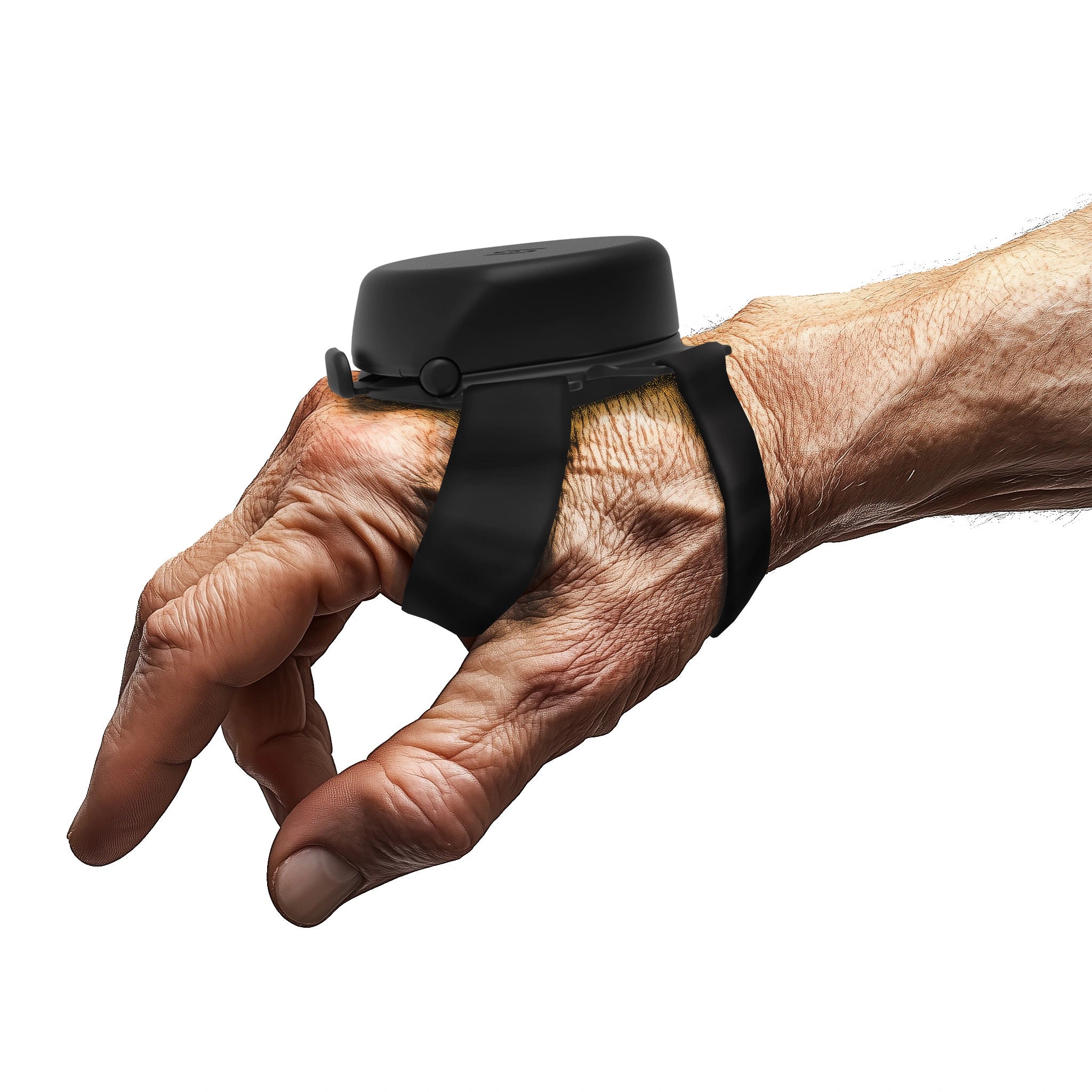
For patients who take propranolol but still experience functional hand tremor during eating, writing, or drinking, a wearable stabilization device offers a complementary, non-pharmaceutical approach to managing daily independence. The Steadi-3 is an FDA-registered Class I medical device using patented passive magnetic stabilization technology. No batteries, charging, or prescriptions are required. A placebo-controlled clinical study showed a reduction in tremor in the majority of participants, as assessed by blinded neurologists. The Steadi-3 does not replace medication but addresses the functional gap that medication alone often leaves. It is FSA and HSA eligible.
Conclusion:
Propranolol for Essential Tremor remains the most evidence-supported first-line option, with an AAN Level A designation and decades of clinical use. Approximately 50% to 70% of patients with hand and limb tremors achieve meaningful benefit. Real limitations exist: side effects in up to 66% of users, a 30% primary non-responder population, and tolerance development in some long-term users. Patients whose needs are not fully met by propranolol have recognized second-line Essential Tremor medications, procedural options, and non-pharmacological approaches available. The goal of any Essential Tremor treatment is restoring daily control and independence, and effective management is rarely a single-drug solution for every patient.