Essential Tremor treatment options in 2026 fall into four categories: medications, surgery, wearable devices, and lifestyle approaches. Essential Tremor is the most common movement disorder, affecting an estimated 10 million people in the United States. There is currently no cure. Propranolol, deep brain stimulation, and wearable stabilization devices each serve different patient profiles depending on severity, age, and health history. This guide compares all categories so patients and caregivers can approach a neurology appointment prepared.
Why There Is No Single Best Treatment for Essential Tremor
Essential Tremor ranges from mild inconvenience to severely disabling, and no single treatment threshold applies across that spectrum. The American Academy of Neurology recommends a stepwise approach: medications first, then devices or surgery when medications fail. Up to 30-50% of patients do not respond adequately to first-line medications, according to AAN guideline data. Age, comorbidities, and personal preference all shape which options are appropriate. The Movement Disorder Society recommends shared decision-making between the patient and neurologist as the framework for navigating treatment options for Essential Tremor.
First-Line Medications for Essential Tremor: Propranolol and Primidone

Propranolol is the only FDA-approved medication specifically indicated for Essential Tremor. As a beta-blocker, it reduces tremor strength and is typically prescribed first. Studies show a mean tremor reduction of approximately 50% with either propranolol or primidone, though results vary widely. Common propranolol side effects include fatigue and low blood pressure, and it is contraindicated in asthma and certain heart conditions. Primidone, an anticonvulsant, calms overactive nerve signals with comparable efficacy. Side effects include sedation and dizziness during initiation. Consult a neurologist before adjusting any dosage.
Second-Line Medications: Gabapentin, Topiramate, and Benzodiazepines
When first-line medications fail or cause intolerable side effects, several documented alternatives exist. Gabapentin carries evidence for moderate efficacy and is used off-label for Essential Tremor. Topiramate ranked among the top-performing agents in a 2024 Lancet systematic review. Benzodiazepines, including clonazepam and alprazolam, are useful for patients whose tremor is exacerbated by anxiety, though they carry a dependency risk with long-term use. Botulinum toxin injections provide short-term relief for head, voice, and hand tremors but require repeat dosing. All second-line options require a neurologist's supervision.
Deep Brain Stimulation — The Surgical Gold Standard
Deep brain stimulation is the most established surgical option for Essential Tremor and is described as the gold standard by the Movement Disorder Society and Mount Sinai. Electrodes implanted in the VIM of the thalamus connect to a pacemaker-like device under the skin. NIH StatPearls data report 70-90% hand-tremor control. DBS is adjustable, distinguishing it from irreversible surgical alternatives, and is reserved for patients who have failed at least two adequate medication trials. Risks include infection, hardware failure, and cognitive effects. A movement disorder specialist evaluation is required.
Focused Ultrasound Thalamotomy — A Non-Invasive Surgical Alternative
Focused ultrasound thalamotomy uses MRI-guided sound waves to create a precise thermal lesion in the VIM thalamus, requiring no incisions and no implanted hardware. It is FDA-cleared for the treatment of unilateral Essential Tremor using the Insightec ExAblate system. A 2024 UNC-Chapel Hill study demonstrated significant improvements in motor control with bilateral treatment. The critical limitation is irreversibility: the lesion cannot be adjusted or removed. This makes focused ultrasound appropriate for patients who prefer to avoid implants but requires careful candidacy assessment, including skull density evaluation and screening for implanted devices.
What Happens When Medications and Surgery Are Not the Answer
Approximately 30% of Essential Tremor patients do not achieve adequate relief from propranolol or primidone. A NIH review of wearable devices found that nearly one-third of patients prescribed pharmacological treatment discontinued it due to insufficient benefit or intolerable side effects. Surgery is clinically reserved for severe, disabling tremor in otherwise healthy patients. Most mild-to-moderate Essential Tremor patients do not meet surgical candidacy criteria, and older adults face heightened procedural risk. This patient subgroup is large, real, and historically underserved by guidance that skips directly from medication failure to surgical options.
Lifestyle Modifications and Complementary Approaches
Lifestyle approaches do not replace medical treatment for Essential Tremor but meaningfully affect tremor intensity as adjuncts. Reducing caffeine lowers the severity for many patients, as stimulants are a documented tremor amplifier. Stress management and consistent sleep reduce baseline tremor intensity. Physical therapy addresses balance, coordination, and functional movement. Occupational therapy helps patients adapt daily tasks using modified techniques and assistive tools. Weighted utensils provide low-cost support for eating and writing. The National Tremor Foundation and International Essential Tremor Foundation both acknowledge OT as a core functional support tool.
Emerging and Investigational Treatments to Watch in 2026
The Essential Tremor treatment landscape is advancing in three directions. CX-8998 and PRAX-944, both T-type calcium channel blockers, remain in active development pipelines. Responsive closed-loop DBS systems deliver stimulation only when tremor is detected, reducing side effects; clinical trials are underway at the University of Florida. Transcutaneous afferent patterned stimulation wearable devices apply peripheral nerve stimulation at the wrist, with FDA-cleared devices now available. Per a 2024 Lancet review and Penn State Health News reporting from March 2026, none are yet standard care. Specialist referral remains the current access pathway.
How to Choose the Right Essential Tremor Treatment for Your Situation
Treatment selection follows a severity and candidacy-based logic. A mild tremor that does not meaningfully interfere with daily activities warrants lifestyle modifications before medication. Moderate tremor affecting daily tasks calls for a first-line medication trial, with second-line options if the first fails. Severe or disabling tremor after two failed medication trials warrants surgical candidacy evaluation. Patients who are not surgical candidates should consider wearable stabilization devices and occupational therapy. All decisions should be made with a neurologist or movement disorder specialist. Listing affected daily activities before an appointment helps accurately calibrate severity.
The Role of Physical and Occupational Therapy in Essential Tremor Management
Occupational therapy and physical therapy are core components of Essential Tremor management, recommended by the International Essential Tremor Foundation and the National Tremor Foundation, yet remain underused in practice. Occupational therapists help patients adapt writing, eating, and dressing tasks using modified techniques and assistive technology. Physical therapists address balance, coordination, and muscle control. Task-specific action tremor, which most directly affects eating and writing, is the area where OT intervention has the clearest functional impact. Referral to OT is appropriate at any stage of Essential Tremor and is frequently covered by insurance when medically necessary.
How the Steadi-3 Fits Into the Essential Tremor Treatment Picture

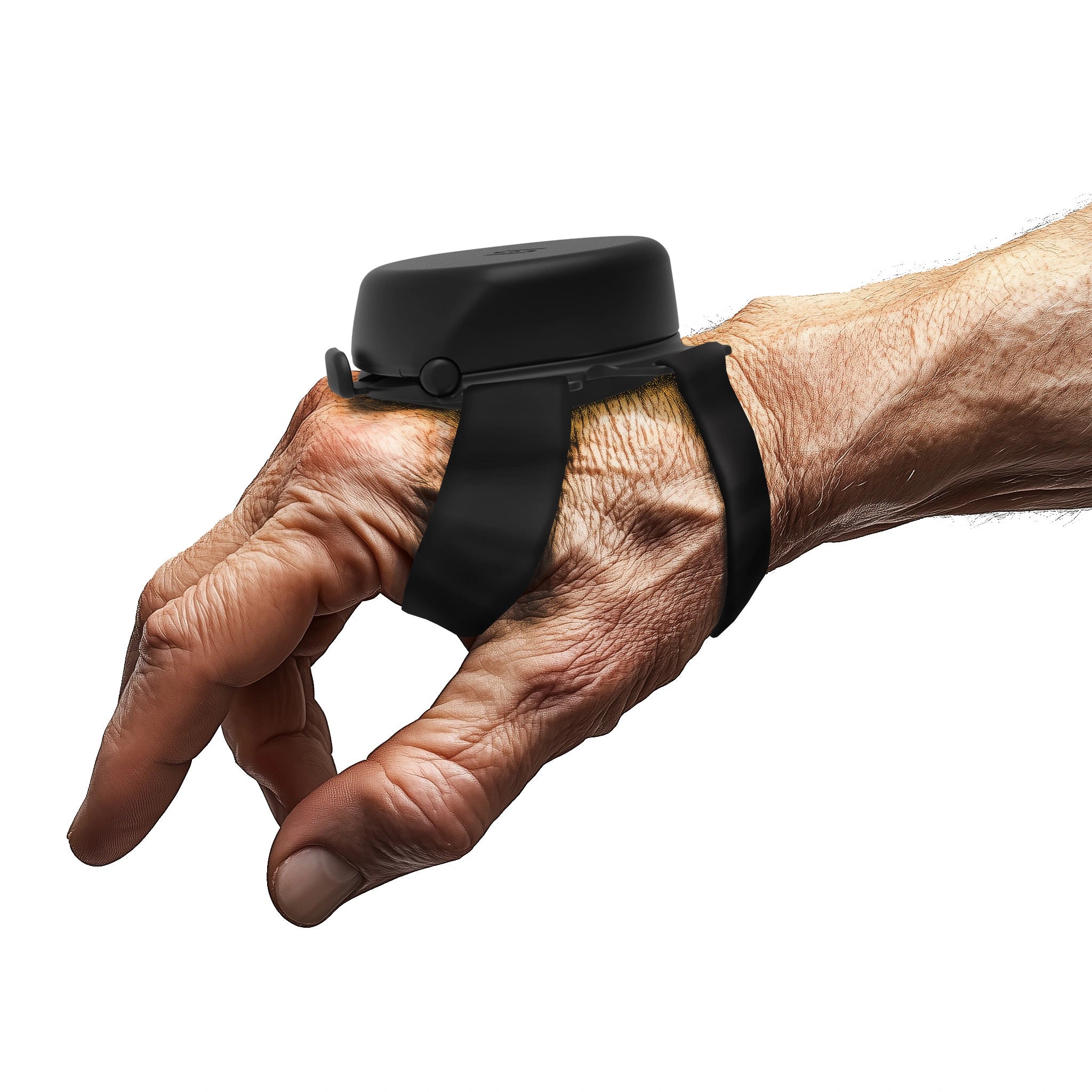
For patients who cannot tolerate medication side effects or do not qualify for surgery, wearable stabilization represents a clinically credible and accessible management option. The Steadi-3 is an FDA-registered Class I medical device that uses a patented magnetic tuned mass damper to passively counteract hand tremor during eating, writing, and drinking. No batteries, charging, or prescriptions are required. A placebo-controlled clinical study with blinded neurologist assessments found that 85% of users reported a significant reduction in tremor. It is designed for patients with Essential Tremor or Parkinson's Disease.
Conclusion:
Essential Tremor treatment options now span a wider range than most patients realize, from well-established first-line medications to investigational therapies in the pipeline, with wearable devices and surgical procedures filling meaningful roles in between. No single treatment works for everyone. Severity, age, comorbidities, and individual preference all shape the right approach. No cure currently exists, but effective management is achievable across the full spectrum of severity. Work with a neurologist or movement disorder specialist to identify the approach best suited to your specific situation and symptom profile.