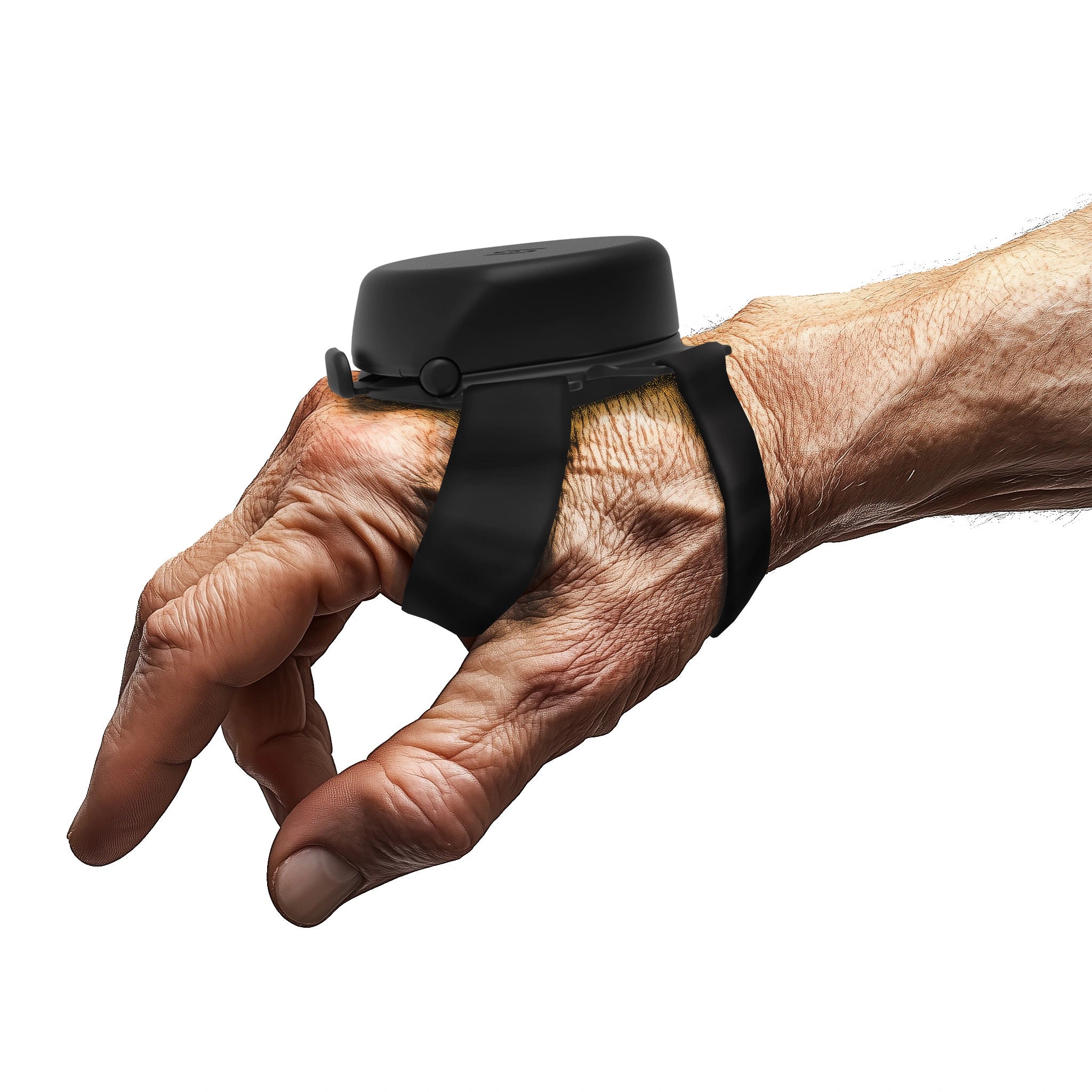
If you or a loved one lives with Essential Tremor or Parkinson’s Disease, managing daily symptoms often comes with added financial strain. Assistive devices such as tremor gloves can make everyday tasks more manageable, but many people hesitate before purchasing because they are unsure how the cost fits into their taxes. This guide explains whether a tremor glove qualifies as a medical expense deduction, how HSA-eligible expenses and FSA-eligible expenses work, and what documentation you need to reduce your out-of-pocket costs while staying aligned with IRS rules.
Understanding what medical expenses are tax-deductible can help you make informed decisions and avoid leaving potential savings unclaimed. The information below focuses on IRS guidance, medical expense tax deduction rules, and practical steps for using tax-advantaged accounts.
Can You Deduct a Tremor Glove as a Medical Expense?
The short answer is yes. A tremor glove or other stabilizing assistive device can qualify as a medical expense deduction under IRS rules when it is used to mitigate a diagnosed medical condition.
The IRS defines medical expenses as costs paid for the diagnosis, cure, mitigation, treatment, or prevention of disease. This definition appears in IRS Publication 502 and applies to a wide range of assistive devices. Equipment purchased to alleviate the effects of physical disabilities is explicitly included.
For people with Essential Tremor or Parkinson’s Disease, a tremor glove functions as an assistive device designed to mitigate symptoms that interfere with daily activities. Because of this medical purpose, it can fall under deductible medical expenses.
To claim the deduction, the cost must be reported on Schedule A as part of your itemized deductions. Only the portion of your total medical expenses that exceeds the required adjusted gross income threshold is deductible. Meeting these requirements is essential for the expense to qualify.
Understanding the Medical Expense Tax Deduction
A medical expense tax deduction is available only to taxpayers who itemize deductions rather than take the standard deduction. Medical expenses are reported on Schedule A and attached to Form 1040.
The IRS allows you to deduct qualified medical expenses only to the extent that they exceed 7.5 percent of your adjusted gross income. Adjusted gross income, often abbreviated as AGI, is your total income minus specific adjustments such as retirement contributions or student loan interest.
For example, if your AGI is $60,000, the 7.5 percent threshold is $4,500. Only medical expenses above that amount are deductible. If your total qualifying medical expenses are $6,000, the deductible portion would be $1,500.
It is also important to compare itemized deductions with the standard deduction. If your total itemized deductions do not exceed the standard deduction for your filing status, you may not receive a tax benefit from itemizing.
The 7.5% AGI Threshold Explained
Calculating the 7.5 percent threshold starts with identifying your adjusted gross income. Multiply your AGI by 0.075 to determine the portion of medical expenses that is not deductible.
Tracking all qualifying medical expenses throughout the year is critical. This includes doctor visits, prescriptions, diagnostic tests, and eligible equipment purchases. When these costs are combined, they are more likely to exceed the threshold.
For instance, a person with an AGI of $55,000 has a threshold of $4,125. If their total medical expenses reach $5,200, including the cost of a tremor glove and other treatments, the deductible amount would be $1,075. Without tracking each expense, that opportunity could easily be missed.
What Medical Expenses Are Tax Deductible?
The IRS allows deductions for a broad range of medical expenses that serve a legitimate medical purpose. These expenses must be primarily to alleviate or prevent a physical or mental condition.
Durable medical equipment and assistive devices are among the most commonly deducted items. The key factor is whether the equipment is used to treat or mitigate a diagnosed condition rather than for general wellness.
Non-prescription items can still qualify if they clearly serve a medical function. The absence of a prescription does not automatically disqualify an expense, although documentation may be required to support its medical necessity.
Medical Equipment That Qualifies for Deduction
Examples of deductible medical equipment include wheelchairs and other mobility aids used to assist with movement limitations. Hearing aids and replacement batteries are also deductible because they address hearing impairment.
Diagnostic devices such as blood glucose monitors qualify because they are used to manage chronic conditions. Special telephone equipment designed for hearing or speech disabilities is another common example.
Tremor gloves and other stabilizing devices fit within this same category. They are designed to mitigate the physical effects of a neurological condition and support daily functioning, placing them alongside other recognized assistive devices.
HSA Eligible Expenses: Using Your Health Savings Account for a Tremor Glove
Health Savings Accounts allow individuals to pay for qualified medical expenses using pre-tax funds. Many assistive devices fall under HSA-eligible expenses, including medical equipment used to treat or mitigate disease.
When you use HSA funds for a qualifying purchase, the expense is paid tax-free. This means you cannot also claim the same cost as an itemized medical expense deduction, since that would be double-dipping.
Medical equipment qualifies under the Internal Revenue Code section 213(d)(1), which defines qualified medical expenses. Some HSA administrators may require a Letter of Medical Necessity to approve reimbursement for certain devices.
How to Use Your HSA for a Tremor Glove Purchase
Start by speaking with your healthcare provider about your diagnosis and daily challenges. Ask whether they can provide a Letter of Medical Necessity that explains why a tremor glove is appropriate for your condition.
Once you have the documentation, purchase the device and keep the receipt. If you have an HSA debit card, you may be able to pay directly from the account.
If you pay out of pocket, submit the receipt and supporting documents to your HSA administrator for reimbursement. Keep all records with your tax files in case questions arise later.
FSA Eligible Items: Flexible Spending Account Coverage for Tremor Devices

Flexible Spending Accounts are employer-sponsored accounts that allow you to set aside pre-tax income for medical expenses. Many adaptive devices qualify as FSA-eligible items when they are used to treat a diagnosed condition.
FSAs are subject to contribution limits and the use it or lose it rule. This means funds generally must be used within the plan year, making timing an important consideration for assistive device purchases.
Some employers offer a grace period or limited carryover option, but these rules vary by plan.
FSA Reimbursement Process for Assistive Devices
Most FSA administrators require a Letter of Medical Necessity for adaptive equipment. The documentation typically includes the diagnosis, a description of the device, and an explanation of how it addresses the medical condition.
You will also need to submit a receipt showing the purchase date and amount paid. Claims are submitted through your FSA administrator’s portal or forms.
Reimbursement timelines vary, but many claims are processed within a few weeks once complete documentation is received.
Letter of Medical Necessity: What You Need from Your Doctor
A Letter of Medical Necessity is a written statement from a healthcare provider explaining why a specific device or service is medically appropriate. It often plays a critical role in both HSA and FSA reimbursement.
An LMN may be required when the expense is not automatically recognized as medical equipment. Even when it is not strictly required, having one strengthens your documentation.
You can request an LMN from your neurologist or primary care doctor by explaining how the tremor affects your daily activities and how the recommended device helps mitigate symptoms.
What to Include in Your Letter of Medical Necessity
The letter should include patient identification details and the date it was issued. It should clearly state the diagnosis, such as Essential Tremor or Parkinson’s Disease.
The healthcare provider should describe the recommended device and explain how it helps treat or mitigate the condition. The letter must be signed and include the provider’s credentials to be considered valid.
Documentation and Record Keeping for Medical Expense Deductions
Accurate record keeping is essential when claiming medical expense deductions or using tax-advantaged accounts. Keep all receipts and invoices related to medical device purchases.
Retain your Letter of Medical Necessity with your tax records, along with proof of payment. Documentation should clearly link the expense to the medical condition being treated.
The IRS generally recommends keeping records for at least three years in case of an audit. Organizing documents by tax year can make future reference much easier.
Sample Calculation: How Much Can You Save on a Tremor Glove?
Seeing real numbers can help clarify the value of pursuing deductions or reimbursements. The examples below illustrate how savings may work in practice.
In the first example, consider a single filer with an adjusted gross income of $50,000. The 7.5 percent threshold is $3,750. If total medical expenses for the year equal $5,500, including a $500 tremor glove, the deductible amount is $1,750. At a 22 percent tax bracket, the estimated tax savings would be $385.
In a second example, the same $500 tremor glove is purchased using HSA funds. Because the money is pre-tax, the savings come from avoiding income and payroll taxes. At a 22 percent income tax rate plus 7.65 percent payroll taxes, the estimated savings would be about $148.
Comparing approaches shows that the best option depends on your overall tax situation. Itemized deductions may provide greater benefit when total medical expenses are high, while HSA or FSA use can offer simpler savings. Always consult a tax professional for advice specific to your circumstances.
Other Ways to Reduce the Cost of Tremor Management Devices
Tax deductions and tax-advantaged accounts are not the only ways to manage costs. Some states offer sales tax exemptions for prescribed medical devices, which can reduce the purchase price at checkout.
Manufacturer payment plans or financing options may help spread costs over time. Non-profit organizations sometimes provide assistance or grants for assistive technology, depending on eligibility.
It can also be useful to inquire with insurance providers, even if coverage is uncertain. Documenting denials may support appeals or reimbursement claims later. Combining strategies, such as using HSA funds alongside a state tax exemption, can further reduce expenses.
Why the Steadi-3 Tremor Glove Is Designed as a Medical Assistive Device

For individuals living with Essential Tremor or Parkinson’s Disease, assistive technology must serve a clear medical purpose to be truly helpful. The Steadi-3 anti-tremor glove is designed specifically to help mitigate hand tremors during everyday tasks such as eating, writing, and using tools.
The Steadi-3 uses magnetic vibration absorber technology to automatically respond to tremor movement. It is battery-free, lightweight, and non-invasive, making it suitable for daily use without charging or complex setup. Because it is intended to mitigate the physical effects of a diagnosed medical condition, the Steadi-3 fits within the IRS definition of medical equipment used for treatment or mitigation of disease.
The device is an FDA-registered Class I medical device and is designed to be worn on either the left or right hand with universal sizing. This medical positioning is important when discussing medical expense deductions, HSA-eligible expenses, or FSA-eligible items, as documentation often focuses on whether a product serves a legitimate medical function rather than general wellness.
Many patients choose to pair their Steadi-3 purchase with a Letter of Medical Necessity from a healthcare provider. This documentation can support HSA or FSA reimbursement requests and help substantiate medical expense deductions if you itemize. Keeping your receipt and any supporting medical documentation ensures you are prepared if questions arise later.
For those exploring ways to reduce out-of-pocket costs while managing tremor symptoms, learning how an assistive device, such as the Steadi-3, fits into tax and reimbursement rules can be an important step.
Conclusion
Understanding whether a tremor glove qualifies as a medical expense deduction can make a meaningful difference when managing the ongoing costs of Essential Tremor or Parkinson’s Disease. IRS rules allow certain assistive devices to be deducted or reimbursed when they are used to mitigate a diagnosed medical condition, but the benefit depends on how you pay, how you file your taxes, and how well your documentation is organized.
For some individuals, itemizing medical expenses on Schedule A may provide savings once the adjusted gross income threshold is met. For others, using HSA or FSA funds can be a more straightforward way to reduce out-of-pocket costs with pre-tax dollars. In all cases, keeping receipts and obtaining a Letter of Medical Necessity from a healthcare provider helps support eligibility and reimbursement.
Tax rules and account requirements can vary based on personal circumstances, so it is always appropriate to consult a qualified tax professional or benefits administrator before filing. Taking the time to understand your options can help ensure you are using available medical expense benefits appropriately while focusing on day-to-day tremor management.