Essential Tremor relationships are shaped as much by communication as by the condition itself. This neurological condition causes involuntary hand tremors visible to the people closest to you -- finding the right words for a partner, children, or friends is among the most difficult challenges ET patients face. This article covers how to talk to the people in your life about Essential Tremor, what to say at different stages, and how to communicate changing needs without sacrificing independence.
Why Talking About Essential Tremor Matters: And Why It Is Hard
Communication about Essential Tremor is hard for two reasons: embarrassment about the condition and uncertainty about how others will react. The PMC caregiver burden study (2017) found that caregivers' perception of patient suffering is the primary predictor of burden -- and partners fill communication gaps with worry, imagining something worse than the reality. Yale/PMC research (2018) found that even family members of ET patients have very limited knowledge of the condition. Open, factual communication is the evidence-based management strategy.
Telling Your Partner About Essential Tremor
Essential tremor partner communication is most effective when initiated early, framed factually, and followed up with a joint neurologist appointment. The National Tremor Foundation (NTF) recommends telling early, noting that partners' imagined fears are typically worse than the actual reality of the condition. A factual, forward-focused framing works best — naming ET as a neurological condition affecting hand movement during intentional tasks, not dangerous, and something to manage together. Bringing a partner to a neurologist appointment is among the most effective early strategies. With understanding and compromise, the NTF notes that the relationship can remain strong.
What Partners and Spouses Need to Know: A Guide for the Person Being Told

A newly informed partner needs accurate information about ET, permission to ask questions, and clarity that their role is support, not full caregiver. The best support comes from asking what is needed rather than assuming. Common missteps: over-helping in ways that reduce patient independence; under-acknowledging the emotional dimension; pretending nothing has changed. Attending a neurologist appointment together gives the partner direct access to clinical information. The PMC caregiver burden study (2017) found that accurate information reduces burden. IETF family resources provide supplementary support.
Talking to Children About a Parent's Essential Tremor
Explaining Essential Tremor to children requires age-appropriate honesty rather than concealment or minimization. Younger children need to know three things: the shaking is involuntary, not dangerous, and does not mean the parent is going away. The NTF notes that younger children adapt more readily and are reassured by a direct answer when they ask if ET can cause death. Teenagers may express anger — the NTF identifies this as sorrow. Full, honest information works better than partial disclosure for teenagers, as incomplete explanations produce more anxiety than known facts. Children should never become primary caregivers.
Talking to Grandchildren About Essential Tremor
Grandchildren are attentive to physical differences and often ask directly. Young grandchildren may imitate tremor without understanding -- a brief, calm explanation is usually sufficient. Adult grandchildren may notice functional decline before a formal disclosure. The NTF notes that fluctuations are particularly difficult for grandchildren to understand; explaining that capability varies day to day reduces confusion. Adapted activities preserve the relationship even when specific tasks require modification.
Telling Friends About Essential Tremor: How Much to Share and When
Disclosure to friends is voluntary and calibrated to the closeness of the relationship. Close friends merit a full, honest conversation -- telling them converts potential sources of awkwardness into informed support. Acquaintances who notice a tremor can receive a brief factual statement. New connections require no disclosure unless the patient chooses to disclose. O'Suilleabhain (2023) identifies misattribution as the primary driver of stigma; a simple factual statement can correct it. The IETF offers a shareable patient information packet. The NTF frames this as a personal decision based on relationship and context.
The Hereditary Dimension: What to Tell Family About Genetic Risk
Essential Tremor has a hereditary component. Each first-degree relative has approximately a 50% chance of developing the condition, per the Cleveland Clinic, Johns Hopkins, and Penn Medicine. This form is called familial tremor. Adult children and adult siblings are the primary audience -- they should be aware of the risk and monitor for early symptoms. No genetic test currently exists for ET; awareness of family history and symptom monitoring is the clinical approach. Frame this around awareness, not alarm. ET is manageable and not life-threatening.
When Essential Tremor Progresses: Communicating Changing Needs
Essential tremor family support requires ongoing, proactive communication as capabilities shift rather than a single disclosure conversation. ET communication is not a single conversation. As the condition progresses, capabilities shift, and family roles may need to adjust. The NTF recommends being realistic about what both the patient and the family can do. Proactive communication about changing needs is more effective than waiting for family members to notice. A neurologist appointment provides a natural trigger point—sharing what was discussed keeps the family informed without a separate difficult conversation. Naming role shifts before resentment builds is a protective strategy for progressive Essential Tremor.
Essential Tremor family relationships can be affected by more than the decision to disclose a diagnosis. The tremor itself can make everyday Essential Tremor communication physically harder, since vocal tremor may affect phone calls and hand tremor can make handwritten notes or cards difficult to write clearly. These changes in Essential Tremor and speech or handwriting do not require a clinical response on their own. Simple adaptations, such as using speakerphone or typing instead of handwriting, can keep everyday family contact easier and more consistent.
Supporting a Caregiver: What Patients Can Do for the People Who Help Them
Essential tremor caregiver support is most effective when built on explicit communication, specific appreciation, and preserved patient independence. Caregivers experience documented burden in Essential Tremor, worsened by ambiguity and improved by clarity. Patients can reduce caregiver burden through explicit, specific appreciation for support provided and by preserving independence in daily tasks wherever possible. Every task managed independently is one less demand on the caregiver. The Mayo Clinic chronic illness framework encourages caregivers to maintain their own social activities. The NTF frames mutual appreciation as the foundation for a relationship that remains strong despite ET.
When Family Communication Breaks Down: Getting Outside Help
When ET-related family communication becomes strained, professional support is available. The NTF recommends asking a physician about counseling arrangements when relationships are becoming difficult or children are not coping well. Professional pathways include couples therapy, family therapy, neurologist-referred counseling, IETF peer connection, and social work for practical coordination. The PMC caregiver burden study identifies a group of caregivers who report a high burden that warrants clinical attention. Professional support reflects taking the relationship seriously, not a sign of failure.
How the Steadi-3 Supports Independence in Family Settings

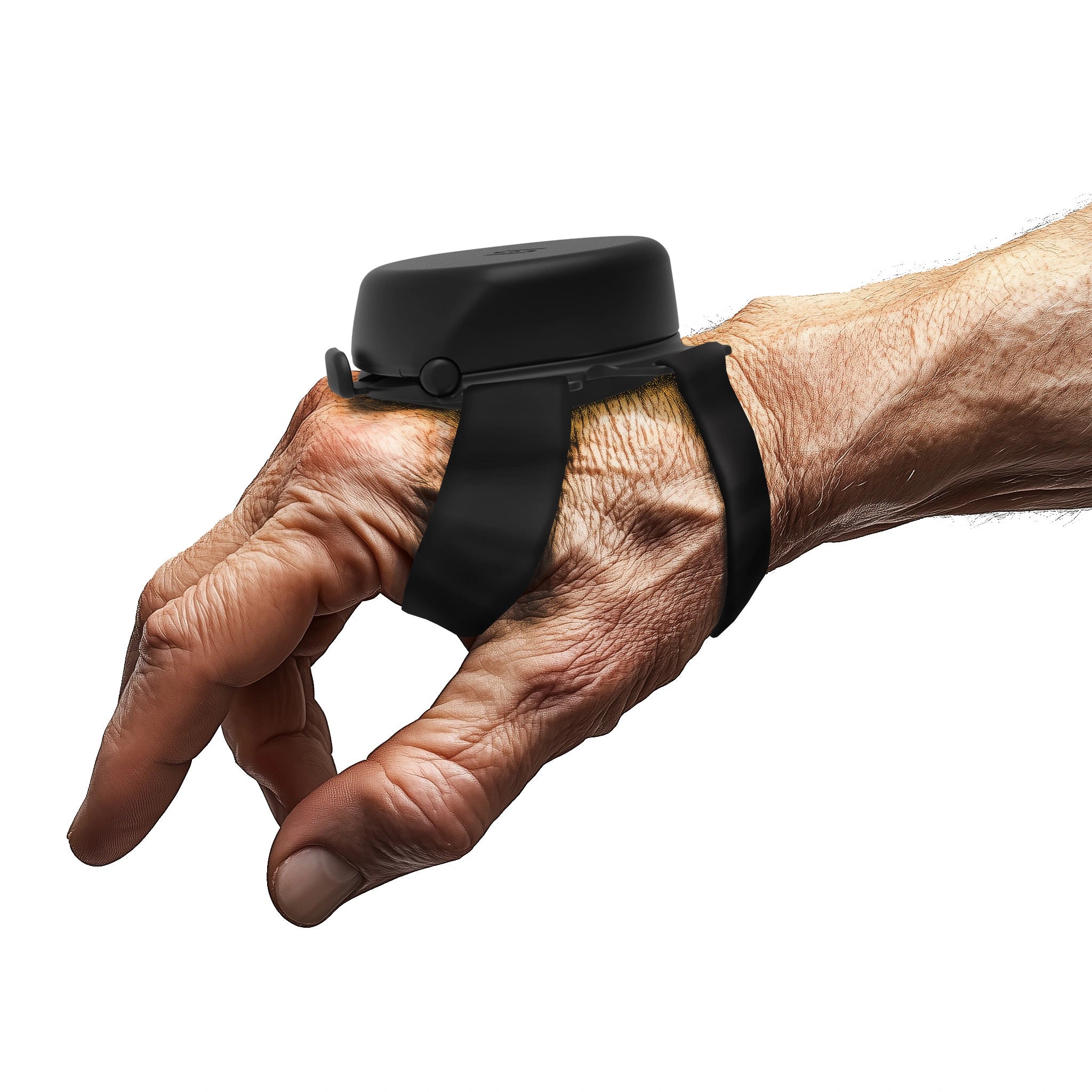
Shared meals, family gatherings, activities with grandchildren, and visits with friends all involve visible hand tremor. The Steadi-3 is an FDA-registered Class I medical device that uses passive magnetic stabilization to reduce action and postural tremors, without batteries or electronic components. In a placebo-controlled study, 84% of users experienced reduced tremor. Reduced tremor visibility in family settings lowers the unwanted attention and worry that drive withdrawal. Patients should consult a healthcare provider before adding any device. The Steadi-3 validation study provides clinical detail.
Conclusion
Essential Tremor relationships are sustained through honest, ongoing communication calibrated to each relationship type. Talking to family about Essential Tremor benefits from early, factual, forward-focused framing. Children and grandchildren need age-appropriate honesty. Friends receive disclosure at the patient's discretion. Family members benefit from awareness of ET's hereditary dimension. As ET progresses, communication updates prevent resentment and isolation. Maintaining relationships is itself a form of independence. the Steadi-3 community resource and the rebuilding relationships post provide further support.