


What Does It Mean When Your Hands Are Shaking?
Hand shaking, medically called a tremor, refers to involuntary, rhythmic muscle contractions that cause parts of the body to move repeatedly. Tremors most commonly affect the hands, but they can also appear in the arms, head, voice, or legs. Everyone experiences a mild level of tremor known as physiologic tremor. This is a normal, small movement present in healthy individuals and usually goes unnoticed. Certain factors, such as fatigue, caffeine, or stress, can temporarily amplify this normal tremor, making shaking more noticeable.

Common Causes Of Shaky Hands
Shaky hands can result from both temporary lifestyle factors and underlying medical conditions. Common everyday triggers include caffeine, stress, anxiety, lack of sleep, low blood sugar, fatigue, and muscle overuse, all of which can temporarily increase normal physiologic tremor. In some cases, alcohol withdrawal after heavy drinking may also cause shaking within 6–48 hours. These types of tremors often improve once the trigger is addressed, such as by resting, eating, or reducing caffeine intake. However, if shaking persists or worsens despite lifestyle adjustments, it is important to consult a healthcare provider for evaluation.
Essential Tremor vs. Parkinson's Disease — Understanding The Difference
Many people who experience shaky hands worry that they may have Parkinson's Disease. However, Essential Tremor is far more common and has different characteristics.
Essential Tremor typically appears as an action tremor, meaning shaking occurs when the hands are moving or performing tasks. It often affects both hands and may involve the head or voice as well. Essential Tremor frequently runs in families and is not considered life-shortening, though symptoms can progress gradually.
In contrast, Parkinson's Disease tremor is primarily a resting tremor. The shaking is most noticeable when the hands are relaxed and not being used. Parkinson's tremor usually begins on one side of the body and is accompanied by additional neurological symptoms such as muscle stiffness, slowed movement, and changes in balance.
A simple observation can sometimes help distinguish the patterns: if the tremor becomes stronger when using the hands, it may resemble Essential Tremor. If the shaking is more noticeable when the hands are resting, Parkinson's tremor may be suspected.
However, tremor patterns alone cannot provide a diagnosis. Only a neurologist or movement disorder specialist can determine the underlying cause.
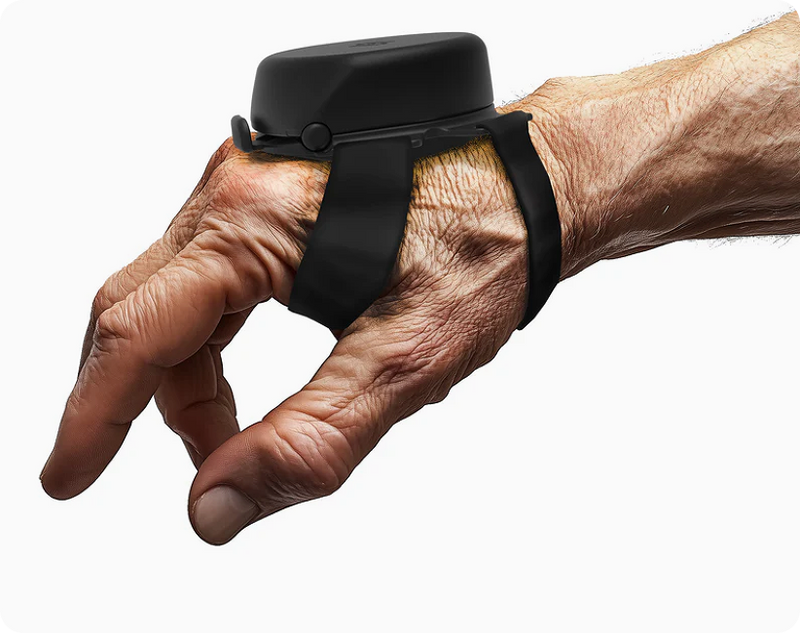
Devices such as the Steadi-3 Plus are designed to assist individuals with Essential Tremor and may also provide support for some Parkinson's-related tremors during daily activities. A healthcare provider can advise whether this type of device is appropriate.
For people asking why do my hands shake when I hold things, the answer most commonly involves postural tremor, the shaking that occurs when muscles work to hold a position against gravity rather than when the hand is at rest. This is the primary pattern in Essential Tremor and is distinct from the resting tremor of Parkinson's Disease described above. Tasks where hands shake when holding objects, including eating, drinking, writing, and pouring, require sustained grip against gravity and are most commonly affected. Neither Essential Tremor nor Parkinson's Disease currently has a cure, but both have established management options. The Steadi-3 is an FDA-registered Class I medical device that uses passive magnetic stabilization to reduce tremor motion during these tasks.
How To Manage Hand Tremors — Solutions And Support Options
Management strategies for shaky hands depend on the underlying cause. Lifestyle triggers are addressed differently from neurological tremors.
The following approaches focus on tremor management rather than cures. Individuals with persistent tremors should consult a healthcare provider.
Managing lifestyle-triggered tremors
If tremors are caused by temporary triggers, addressing those factors often reduces shaking.
Helpful strategies include:
- Gradually reducing caffeine intake
- Maintaining consistent sleep patterns (7–9 hours)
- Eating regular meals to stabilize blood sugar
- Limiting alcohol consumption
- Discussing medication side effects with a prescribing doctor
These adjustments can reduce physiologic tremor and prevent future episodes.
Wearable and adaptive tools
Occupational therapists often recommend tools that help stabilize the hands during specific tasks.
Examples include:
- Weighted utensils
- Weighted pens
- Wrist weights
- Stabilized drinking cups
The Steadi-3 Plus by Steadiwear is a wearable device designed to help manage tremors throughout the day.
The device uses passive stabilization technology that automatically adapts to the user's tremor frequency, without batteries or charging.
Key features include:
- FDA-registered Class I medical device
- Lightweight wearable design
- Battery-free operation
- Passive tremor stabilization during tasks
Controlled evaluations show an 84% reduction in tremor during everyday activities.
The device can help support daily tasks such as eating, writing, and working.
The Steadi-3 Plus may also be eligible for FSA or HSA reimbursement with a letter of medical necessity. Steadiwear offers a 30-day risk-free trial so users can determine whether the device improves tremor management.
Medical treatment options for neurological tremors
For tremors caused by neurological conditions, medical treatment may be recommended.
A neurologist or movement disorder specialist can determine the most appropriate approach.
Common options include:
- Beta-blockers (propranolol): Often prescribed as a first-line medication for Essential Tremor management.
- Anticonvulsants (primidone): Another medication is sometimes used to reduce tremor severity.
- Deep brain stimulation (DBS): A surgical procedure that implants electrodes in brain regions involved in movement.
- Focused ultrasound: An incision-free procedure that targets brain tissue involved in tremor generation.
Physical and occupational therapy may also help individuals develop strategies that improve daily function and independence.
Medical Conditions That Can Cause Your Hands to Shake
Everyday triggers like caffeine, stress, and fatigue can explain much of the short-lived shaking, but persistent hand tremors often have a medical cause worth understanding. If you've been asking yourself, "Why are my hands shaking?" and the answer doesn't seem to fit a lifestyle pattern, the next step is to know which conditions can produce tremors and what each one typically looks like.
Essential Tremor
Essential tremor is the most common cause of persistent hand shaking — more common than Parkinson's, and affecting roughly 7 to 10 million Americans. ET causes shaking during voluntary movement such as writing, lifting a cup, or using utensils, and it typically affects both hands. Symptoms can run in families and may begin at any age, though they become more common after 40.
Parkinson's Disease
Parkinson's tremors are distinct from ET in one critical way: they usually occur at rest. The hand shakes when it's relaxed in the lap or hanging at the side, and the tremor tends to lessen or stop once the person intentionally moves. Parkinson's tremor often begins on one side of the body and is accompanied by other motor symptoms — slowness, muscle stiffness, and balance changes — that are absent in ET.
Multiple Sclerosis
Hand tremors in multiple sclerosis cases are common: around 75 to 80 percent of people with MS experience some form of tremor at some point in their disease course. MS damages the myelin sheath around nerve fibers in the brain and spinal cord, disrupting the signals that coordinate smooth movement. MS tremors are most often action tremors or intention tremors — they worsen as the person reaches toward a target — and can be unpredictable in severity from day to day. If shaking appears alongside visual disturbances, numbness, weakness, or balance problems, a neurological evaluation is important.
Hyperthyroidism
When the thyroid gland produces excess hormone, metabolism accelerates across the entire body, including the nervous system and heart. Fine hand tremors, rapid heartbeat, unintended weight loss, and trouble sleeping are the classic combination. This is a treatable condition, identifiable through a simple blood test, and once thyroid hormone levels normalize, the tremors typically resolve.
Stroke and Traumatic Brain Injury
Damage to motor pathways in the brain from a stroke or head injury can produce tremors on the affected side. If shaking appears suddenly after any episode of neurological symptoms — sudden weakness, speech changes, facial drooping, or loss of balance — this is a medical emergency, and prompt evaluation is essential.
Peripheral Neuropathy
Injury, disease, or dysfunction of the peripheral nervous system can also cause shaking of the hands and feet. Common causes include diabetes, vitamin B12 deficiency, and other conditions that affect nerve health over time.
Liver Disorders Including Wilson's Disease
Wilson's disease is a treatable genetic condition in which copper builds up in the brain and liver, causing tremors, fatigue, and jaundice. Other liver conditions can also impair neuromuscular function and produce shaky hands, which might not be obvious on the surface. A liver panel is often part of the standard workup when someone presents with unexplained tremor.
When should I see a doctor about shaking hands?
Occasional mild tremors that resolve quickly and do not interfere with daily tasks are usually not urgent.
However, a healthcare provider should be consulted if:
- Tremors are new or persistent
- Shaking worsens over time
- Tremors begin affecting daily activities such as eating or writing
- Tremors occur alongside symptoms like fatigue, weight loss, or heart palpitations
Medical attention is required immediately if there are tremors:
- Begin suddenly
- Occur after a head injury
- Appear with weakness, vision changes, balance problems, or speech changes
A neurologist or movement disorder specialist can evaluate tremors and determine the underlying cause.
Nothing on this page replaces a professional medical diagnosis.
Frequently Asked Questions
Hands shaking during holding or movement but not at rest is the pattern of action tremor, most commonly postural tremor. Postural tremor occurs when muscles sustain a position against gravity, such as holding a cup or extending the arm. This is the predominant pattern in Essential Tremor. Parkinson's Disease tremor, by contrast, typically occurs when the hands are relaxed (Mayo Clinic, mayoclinic.org). Shaking only when holding things is therefore more likely to reflect Essential Tremor than Parkinson's Disease, though consulting a neurologist is the only way to confirm the cause.
Tremors when holding things most commonly affect tasks requiring sustained grip against gravity: eating with a fork or spoon, drinking from a cup or glass, holding a smartphone, writing, pouring liquids, and grooming tasks such as shaving. All require muscles to maintain a fixed position or guide a fine movement, the exact conditions that activate postural and kinetic tremors. Managing these challenges typically requires clinical evaluation and practical support strategies tailored to the individual.
Certain nutritional deficiencies can affect nerve and muscle function and may contribute to tremor symptoms in some individuals. Vitamin B12 deficiency is among the most common because B12 is important for maintaining healthy nerve cells and neurological function. Low levels of magnesium, potassium, or calcium can also influence muscle activity and may contribute to shaking in some situations. In addition, severe malnutrition or electrolyte imbalances may affect the nervous system, causing tremor-like symptoms. Because tremors can have many different causes, a healthcare provider may recommend blood tests to check vitamin levels, electrolyte balance, and thyroid function when evaluating persistent shaking.
Essential Tremor and Parkinson's Disease tremors differ primarily in when the shaking occurs and how it develops. Essential Tremor is typically an action tremor, meaning the shaking becomes more noticeable when the hands are actively being used for tasks such as writing, eating, or holding objects. It often affects both hands and may run in families. In contrast, a Parkinson's Disease tremor is usually a resting tremor, meaning it appears when the hands are relaxed and decreases during movement. Parkinson's tremor also often begins on one side of the body and may be accompanied by symptoms such as slowness of movement or muscle rigidity. A neurologist is required to properly diagnose and distinguish between these conditions.
Sudden shaking in the hands can occur for several temporary reasons. Common triggers include caffeine consumption, stress, anxiety, fatigue, dehydration, or low blood sugar. Certain medications, including stimulants, asthma medications, or antidepressants, may also cause tremor as a side effect. In many cases, these tremors improve once the underlying trigger is resolved, such as eating a meal, resting, or reducing caffeine intake. However, if hand tremors suddenly appear and persist for several days or weeks, or if they are accompanied by other neurological symptoms, it is important to seek medical advice. A healthcare provider can evaluate potential causes and determine whether further testing is needed.
The Steadi-3 Plus anti-tremor glove by Steadiwear is designed to help manage hand tremors during everyday activities such as eating, writing, and working. It is a battery-free, FDA-registered Class I medical device that uses magnetic vibration-absorber technology to reduce tremor amplitude by stabilizing hand movements in real time. The device operates passively, meaning it does not require electronics, charging, or calibration before use. Instead, it automatically responds to the user’s tremor frequency while allowing normal voluntary hand movement. The Steadi-3 Plus is intended to support tremor management during daily tasks and may be used alongside other treatment approaches recommended by a healthcare provider. It is not intended to cure the underlying condition causing tremors.
Yes — hand tremors in multiple sclerosis cases account for a significant proportion of tremor patients overall. Around 75 to 80 percent of people with MS experience some form of tremor during their disease, making it one of the more common motor symptoms of the condition. MS damages the myelin sheath around nerve fibers in the brain and spinal cord, disrupting the coordination signals that control fine motor movement. Among the types of hand tremors, MS-related shaking is most often an action tremor or intention tremor — it tends to worsen as the person reaches toward a specific target. If hand tremors occur alongside other symptoms such as visual disturbances, numbness or tingling, weakness, or balance problems, a neurological evaluation to consider MS and other conditions is important. If you've been wondering why my hands are shaking, and you have any of these other symptoms, don't wait to get it assessed.