

Understanding different tremor patterns
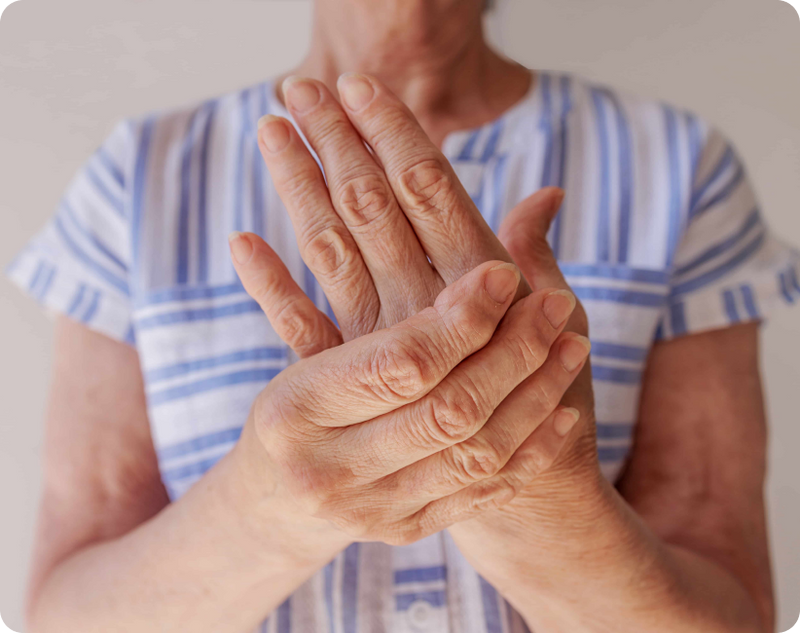
Hand tremors can occur at rest, while holding a position (postural), or during movement (action). Recognizing your tremor pattern can help identify the underlying cause, such as Essential Tremor or Parkinson's Disease. In older adults, Essential Tremor becomes more common after age 65, while Parkinson's Disease typically begins after 60. Medication-induced tremor is also common due to multiple prescriptions. Evaluating what causes tremors in elderly people early helps distinguish age-related changes from progressive neurological disease. Although Essential Tremor and Parkinson's Disease have no cure, both have effective management options.
Common daily tasks impacted by hand tremors
When your hands shake, even simple tasks can become challenging. Writing, eating, holding a cup, buttoning clothing, or using a phone may require extra effort and lead to frequent spills or interruptions. These everyday frustrations often prompt individuals to look for practical ways to manage tremors beyond medication, seeking tools that support greater control and independence during routine activities.
The main types of tremors
The different types of tremor are classified using two primary axes. The first is activation: rest tremors occur when the hand is relaxed and are most commonly associated with Parkinson's Disease, while action tremors occur during movement or while holding a position and are most commonly associated with Essential Tremor. Action tremors include postural, kinetic, isometric, task-specific, and intention tremors. The second axis is the underlying condition causing the tremor. Identifying both the tremor type and its cause helps guide appropriate management, even though neither Essential Tremor nor Parkinson's Disease currently has a cure.

Rest tremor
Action tremor
Postural tremor
Kinetic tremor

Isometric tremor
Physiological tremor
Task-specific tremor
How Steadi-3 Plus supports different tremor patterns
Support for rest tremor
For rest tremor, often associated with Parkinsonian tremor patterns, Steadi-3 Plus helps stabilize the hand during daily tasks. Among the different types of tremors, rest tremor behaves differently from Essential Tremor or cerebellar tremor. Steadi-3 Plus offers supportive stability to assist smoother transitions into movement and daily tasks.
Support for action & postural tremors
For action tremor and postural tremor—which are common types of tremors seen in Essential Tremor—Steadi-3 Plus provides structured support to help steady the hand during position-holding or movement. This can be helpful for task-specific tremor as well, offering assistance during activities that require more consistent control without influencing the underlying neurological condition.
Support for intention-based tremors
Intention tremor, often linked to cerebellar tremor, becomes more noticeable as the hand approaches a target. Steadi-3 Plus may help by reducing disruptive motion and supporting smoother goal-directed movement. Unlike functional tremor or physiological tremor, intention tremor requires targeted assistance, and Steadi-3 Plus provides supportive control during targeted movements.
Works with other tremor-management methods
Steadi-3 Plus is designed to complement clinical guidance for different types of tremors, including Essential Tremor and Parkinsonian tremor. It works alongside medical treatment, professional evaluation, and daily management strategies recommended by healthcare providers, helping individuals maintain better control and independence through supportive, non-invasive assistance.


How Steadi-3 Plus Can Be an Effective Parkinson's Disease Artist Solution

Testimonials
From Spills to Stability“Essential Tremor affects my daily life—writing, eating, even drinking. With Steadi-3 Plus, I feel more confident, in control, and no more spills on my shirt! I’d 100% urge anyone with Essential Tremor to give this a try.”

Simple support for hand tremors
The hand tremor support you’re looking for doesn’t have to be overly complex. With the Steadi-3 Plus, the aim is to support steadier hand movement during daily tasks, reduce the interference of the tremor, and support your independence in meaningful ways — while you continue to work with your healthcare provider on the bigger picture of condition management.
Frequently Asked Questions
Essential Tremor is the most common cause of tremors in the elderly, affecting an estimated 10 to 20 percent of adults over 65 (IETF, essentialtremor.org). It produces an action tremor, most noticeable when holding the hands out or performing tasks, rather than a resting tremor. Parkinson's Disease is the second most clinically significant cause and produces a resting tremor most visible when the hands are still. Medication side effects are also a frequent and often overlooked cause. A movement disorder specialist can identify which cause applies.
Some mild increase in physiologic tremor is a natural part of aging, but visible or disruptive tremors are not simply an inevitable consequence of growing older. New or worsening tremors in older adults often have identifiable causes, including Essential Tremor, Parkinson's Disease, medication side effects, thyroid dysfunction, or vitamin B12 deficiency, many of which respond to treatment. Neither Essential Tremor nor Parkinson's Disease currently has a cure, but both have established management options that can reduce tremor severity and preserve daily function. Older adults who develop noticeable tremors should consult a healthcare provider rather than assuming shaking is unavoidable.
Cerebellar tremor is a slow, high-amplitude tremor that typically affects the arms, hands, legs, or feet and worsens at the end of a purposeful movement, such as when reaching to press a button or touch a target. It is caused by damage to the cerebellum or its pathways, most commonly from a stroke, brain tumor, Multiple Sclerosis, or long-term alcohol use disorder (Mayo Clinic, mayoclinic.org). Unlike Essential Tremor, cerebellar tremor worsens as the hand nears its target rather than during sustained posture. A neurologist should evaluate any new intention tremor.
Dystonic tremor occurs in people affected by dystonia, a movement disorder in which muscles contract involuntarily, causing twisting or repetitive movements. Unlike Essential Tremor, dystonic tremor is typically irregular and jerky rather than rhythmically consistent. It can affect any muscle group but most commonly involves the neck, vocal cords, or limbs. A characteristic feature is that certain hand or arm positions can temporarily stop or reduce the tremor. Dystonic tremor is generally associated with changes in the basal ganglia, the brain region involved in movement control (NIH, nih.gov). Neurological evaluation is recommended.
A healthcare provider should be consulted whenever hand tremors interfere with daily tasks, appear suddenly, occur on one side more than the other, or are accompanied by other neurological symptoms such as changes in walking, coordination, speech, or balance. Medical evaluation is also important when tremors worsen over time, begin to affect new activities, or present in ways that differ from physiological tremor (the normal, low-amplitude tremor present in everyone). Early assessment helps identify potential causes such as Essential Tremor, Parkinson’s Disease, or other neurological conditions. Timely guidance supports appropriate management and ongoing monitoring.
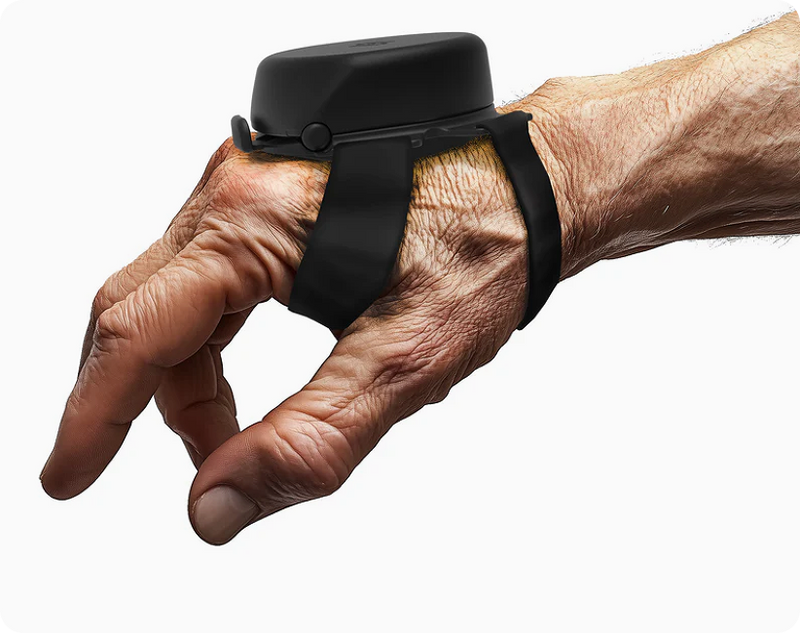
Steadi-3 Plus is an FDA-registered Class I medical device created to support hand tremor management by helping stabilize the hand during everyday activities. While it does not cure Essential Tremor, tremor related to Parkinson’s Disease, or other underlying conditions, it provides supportive assistance aimed at improving hand stability during tasks such as writing, eating, and holding objects. The device is non-invasive, battery-free, and designed to complement medical guidance and broader tremor-management plans. Individuals should use Steadi-3 Plus in consultation with their healthcare provider to ensure it fits appropriately into their personal care approach and daily routines.