Tremors and Social Withdrawal: When Shaking Changes Your Social Life
Tremors and social withdrawal are clinically linked for both Essential Tremor and Parkinson's Disease patients. Many people reduce social activity not because tremors prevent it, but from fear of judgment and loss of control in public settings. This page explains why and how to restore participation.

Why Tremors Lead to Social Avoidance
Visible tremors draw social attention in ways patients cannot control. Research published by the International Essential Tremor Foundation shows that 74% of Essential Tremor patients report feeling embarrassed, and 65% acknowledge avoiding social situations as a result. Embarrassment is formally recognized as a non-motor symptom of Essential Tremor, not a personality trait or weakness. Avoidance behavior typically escalates, starting with eating in public, then gatherings, then close relationships. Parkinson's Disease patients face the same pattern. The reaction is documented, common, and addressable, not inevitable.
The Anxiety-Tremor Loop: How Stress Makes Withdrawal Worse
Social situations create anticipatory anxiety that activates the body's stress response, worsening tremor. Worsened tremor increases embarrassment, which creates more anxiety, a compounding feedback loop. This is why patients who take medication still report social avoidance. The psychological pattern becomes fixed even when physical symptoms are partially controlled. For Essential Tremor and Parkinson's Disease patients, breaking this loop requires both physical tremor management and targeted social coping strategies. Healthcare providers are encouraged to address both dimensions.

Tremor Stigma: When Others Misread the Shake
Essential Tremor is not well understood by the public. Visible tremors are frequently misread as nervousness, alcohol use, or frailty. A 2023 study published in Tremor and Other Hyperkinetic Movements found that 33.8% of Essential Tremor patients met criteria for social dysfunction from stigma. Younger patients and those with vocal tremor face a higher stigma burden. Common responses include keeping a low profile in groups, avoiding volunteering publicly, or withdrawing from recreational activities. Acknowledging stigma is the first step, and healthcare providers are encouraged to assess and address it proactively.
How Parkinson's Disease Affects Social Participation
Parkinson's Disease patients experience social withdrawal driven by both visible tremor and a range of non-motor symptoms, including apathy, depression, and fatigue. Tremor in Parkinson's Disease is often a resting tremor, visible even when the hand is still, making it harder to conceal in social situations. A scoping review found that patients reduce social activities both voluntarily and involuntarily. Social isolation in Parkinson's Disease is associated with worsened disease severity, increased depression risk, and reduced quality of life. Consulting a movement disorder specialist is recommended for all patients experiencing social withdrawal.

The Impact on Relationships, Work, and Daily Activities
Tremor-driven avoidance commonly begins with visible activities: eating in restaurants, signing documents, handling objects in front of others. Patients often report withdrawing from workplace interactions, declining handshakes, or avoiding presentations and meetings. Family events, where motor performance is observed by loved ones, become particularly stressful. A systematic review found that the inability to perform hand-based tasks in public is a central source of restriction for patients with Essential Tremor. Both patients and caregivers are affected, as caregiver burden increases when patients withdraw from shared activities.
Management Strategies That Support Social Re-engagement
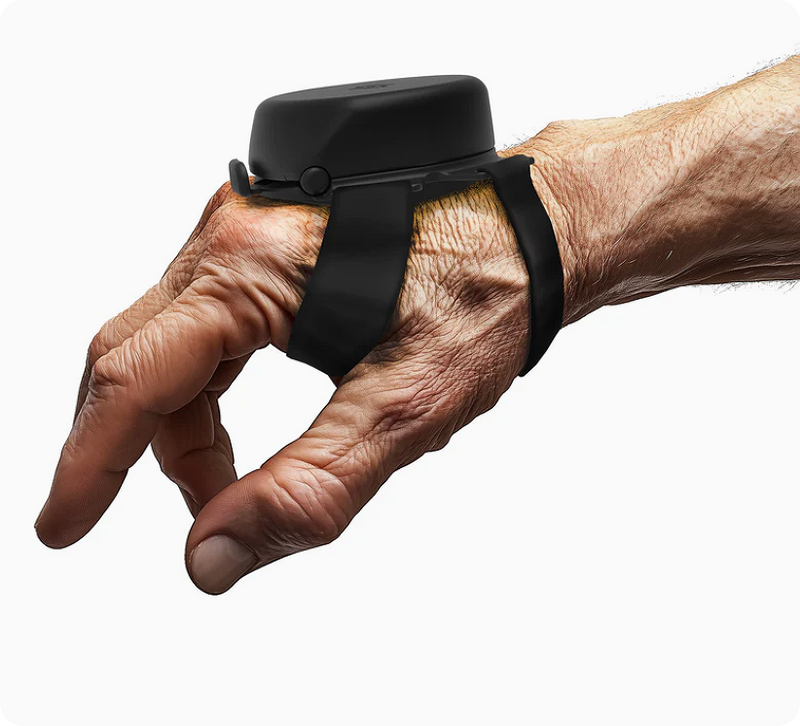
Addressing tremor-driven social withdrawal requires both symptom management and targeted coping strategies. There is currently no cure for Essential Tremor or Parkinson's Disease, but cognitive behavioral therapy is documented as an effective approach for Essential Tremor-related social anxiety, and a neurologist or psychologist can provide a referral. Assistive devices that reduce tremor visibility during activities most associated with loss of control, such as dining and writing, directly lower the trigger for avoidance. The Steadi-3 is an FDA-registered Class I medical device that uses passive magnetic stabilization to reduce hand tremor, validated in a placebo-controlled study showing improvement in 84% of users. Occupational therapy and support groups are additional resources.
Supporting a Loved One Who Is Withdrawing Due to Tremors
When a person with Essential Tremor or Parkinson's Disease begins withdrawing socially, family members and caregivers are often the first to notice. A 2017 study published in Parkinsonism and Related Disorders found that tremor-related social avoidance directly increases caregiver burden. Effective caregiver support involves reducing performance pressure in social settings, not insisting on participation before the patient is ready. Encouraging a movement disorder specialist assessment and asking about tremor management tools, including assistive devices, are concrete next steps. Consulting a healthcare provider before selecting a device is always recommended.
Frequently Asked Questions
Is social anxiety a recognized symptom of Essential Tremor?
Social anxiety is clinically recognized as a non-motor symptom of Essential Tremor. Research cited by the International Essential Tremor Foundation shows the prevalence of social anxiety in ET patients is approximately 50%, significantly higher than the general population rate of around 20%. The link between tremor severity and social anxiety is documented, though social anxiety can persist even when tremor is partially controlled by medication. Patients experiencing social anxiety alongside Essential Tremor are encouraged to discuss this with their neurologist, as it affects treatment decisions. There is currently no cure for Essential Tremor; management addresses both physical and psychosocial dimensions.
Why do tremors get worse in social situations?
Social situations activate the body's stress response, releasing adrenaline and other stress hormones that increase muscle activity and tremor intensity. This is why Essential Tremor and Parkinson's Disease symptoms often appear worse at a restaurant, in a meeting, or at a family gathering than at home. The anticipation of a tremor being noticed can trigger anxiety before the social event even begins, amplifying the effect. This feedback loop makes gradual social withdrawal feel protective to the patient, even as it reduces quality of life over time. A healthcare provider can help develop strategies to interrupt this cycle.
Can the Steadi-3 help with tremor in social settings?
The Steadi-3 is an FDA-registered Class I medical device that uses passive magnetic stabilization to reduce hand tremor during intentional movement, precisely the kind of movement that becomes visible in social settings such as dining, handshaking, or writing. It is battery-free, lightweight, and requires no prescription. In a placebo-controlled clinical study, the Steadi-3 demonstrated improvement in 84% of users. It does not cure Essential Tremor or Parkinson's Disease but is designed to reduce the functional and visible impact of tremor in daily activities. Consulting a healthcare provider before use is recommended.
How can I explain my tremor to others to reduce embarrassment?
Explaining Essential Tremor or Parkinson's Disease to others is a personal decision, but preparation supports greater independence in social encounters. A simple, factual explanation is often most effective: stating that the condition is neurological, unrelated to nervousness, and noncontagious quickly dispels common misconceptions. Rehearsing a one-sentence explanation in a low-pressure setting can reduce the cognitive burden in social situations. Patient organizations provide education resources that can be shared with family, friends, and coworkers. Speaking with an occupational therapist about social communication strategies is also a constructive step.
When should someone with tremors seek support for social withdrawal?
Social withdrawal related to tremor warrants professional attention when it begins affecting relationships, work performance, or the ability to participate in valued daily activities. Signs that support may be needed include consistently declining social invitations, avoiding previously enjoyed activities, or increasing feelings of isolation. A movement disorder specialist or neurologist should be the first point of contact, as they can assess both the physical and psychosocial dimensions of tremor management. Tremor-focused support groups offer peer connection alongside clinical care. There is no cure for Essential Tremor or Parkinson's Disease, but social withdrawal is a manageable aspect of these conditions with the right support.