
Parkinson's Disease Daily Routines: Strategies for Independence
Parkinson's Disease daily routines require thoughtful adjustment as symptoms change over time. Structured routines support independence, conserve energy, and reduce risk at every stage. This page covers practical strategies for building routines that work — not a cure, but a path toward sustained daily function.

How Parkinson's Disease Affects Activities of Daily Living
Parkinson's Disease affects activities of daily living including bathing, dressing, eating, writing, and mobility. Motor symptoms such as tremor, rigidity, bradykinesia, and postural instability reduce speed, coordination, and strength for everyday tasks, while nonmotor symptoms including fatigue, cognitive changes, and sleep disruption also affect functioning. Impact varies by individual and disease stage; early-stage Parkinson's Disease often allows full independence with minor adjustments. There is currently no cure for Parkinson's Disease; management aims to preserve independence over time.
Building a Structured Morning Routine With Parkinson's Disease
Many people with Parkinson's Disease experience their best motor function in the morning, before medication begins to wear off. Scheduling demanding tasks like bathing, dressing, and meal preparation during peak medication windows supports safer, more independent completion. Building in extra time reduces stress and fall risk. Off periods, when medication effectiveness decreases, often arrive by late morning; lighter tasks fit better there. An occupational therapist can help design a personalized morning routine.

Adaptive Tools and Assistive Equipment for Parkinson's Disease Daily Living
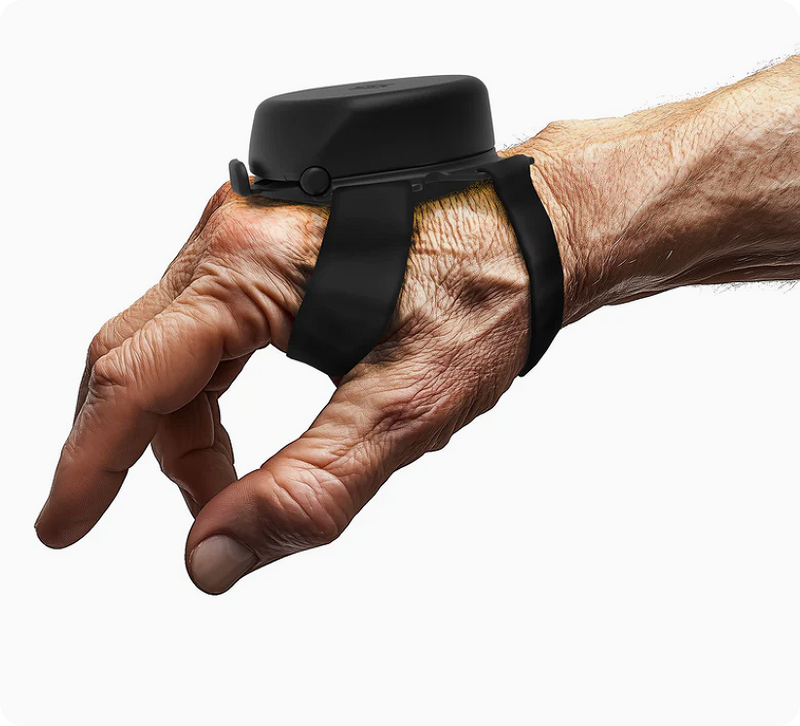
Adaptive tools and assistive equipment for Parkinson's Disease daily living can extend independence across a range of tasks. Common categories include weighted or adapted utensils, button hooks, grab bars, non-slip mats, voice-activated devices, and tremor-stabilizing wearables. For hand tremor specifically, the Steadi-3 is an FDA-registered Class I medical device that uses passive magnetic stabilization, is battery-free and prescription-free, and can be worn during eating, writing, and other fine motor tasks. In a placebo-controlled study, it was validated to reduce tremor in 84% of users.
Home Safety Modifications for Daily Living With Parkinson's Disease
Home modifications are among the most effective strategies for extending independence in daily living with Parkinson's Disease. Key changes include removing loose rugs and floor clutter, installing bathroom grab bars, improving lighting, and widening pathways for mobility aids. Freezing of gait, a common symptom, can be managed with visual or auditory cues such as floor tape lines. Raised toilet seats and shower chairs reduce fall risk during personal care. An occupational therapy home safety assessment can identify hazards; the Parkinson's Foundation Helpline connects people with local occupational therapists.
Managing Fatigue and Energy Conservation in Daily Routines
Fatigue is one of the most common nonmotor symptoms of Parkinson's Disease and significantly affects the ability to complete daily routines. Energy conservation strategies involve prioritizing essential tasks, spacing activities throughout the day, and building in planned rest periods. Combining demanding activities like bathing and dressing in one block without rest can accelerate fatigue and raise fall risk. Sitting during tasks such as meal preparation or grooming reduces energy expenditure. An occupational therapist can conduct a formal energy conservation assessment tailored to daily routines.
Eating and Mealtime Independence With Parkinson's Disease
Eating is one of the activities of daily living most affected by Parkinson's Disease, with hand tremor, rigidity, and swallowing difficulties each presenting distinct challenges. Adaptive utensils with weighted or wide-grip handles can reduce spilling and improve control. For hand tremor, wearable tremor stabilization devices such as the Steadi-3, which uses passive magnetic stabilization, support mealtime independence. Dysphagia, or difficulty swallowing, is a separate symptom requiring evaluation by a speech-language pathologist; adaptive utensils do not address it. Sitting squarely at a table of the correct height also improves control during meals.
Supporting Independence as Parkinson's Disease Progresses
Parkinson's Disease is a progressive condition; daily living strategies that work early on will need revisiting as symptoms change. Proactive adaptation, adjusting routines and tools before a crisis rather than after a fall, is the most effective approach. An interprofessional care team, including a movement disorder specialist, occupational therapist, physical therapist, and speech-language pathologist when needed, supports ADL independence across disease stages. Caregiver involvement grows more important later on. There is currently no cure for Parkinson's Disease; management focuses on preserving independence and quality of life at every stage.
Frequently Asked Questions
How does Parkinson's Disease affect activities of daily living?
Parkinson's Disease affects ADLs through motor symptoms such as tremor, rigidity, bradykinesia, and postural instability, and nonmotor symptoms including fatigue, cognitive changes, and sleep disruption. Impact varies by individual and disease stage; early-stage Parkinson's Disease often allows full independence. Adaptive tools, home modifications, and occupational therapy can maintain ADL independence across multiple stages. There is currently no cure for Parkinson's Disease; management focuses on preserving function as long as possible.
Can people with Parkinson's Disease live independently at home?
Many people with Parkinson's Disease live independently at home, particularly in the early and middle stages. Independence depends on how effectively symptoms such as tremor, balance problems, and cognitive changes are managed. Home modifications, adaptive equipment, consistent medication management, and support from an occupational therapist all extend independent living. As Parkinson's Disease progresses, increased caregiver involvement or professional home care may become appropriate.
What adaptive tools help with daily routines for Parkinson's Disease?
Adaptive tools for Parkinson's Disease include weighted utensils, button hooks, grab bars, non-slip mats, voice-activated devices, and wearable tremor stabilizers. For hand tremor specifically, the Steadi-3 is an FDA-registered Class I medical device using passive magnetic stabilization, battery-free and prescription-free. An occupational therapist can conduct a formal assessment and recommend tools matched to individual symptom severity and daily task needs. Tools should be reassessed as symptoms change over time.
How do daily routines help manage Parkinson's Disease symptoms?
Consistent daily routines reduce cognitive load, conserve energy, and align demanding tasks with peak medication effectiveness windows. Scheduling high-effort activities during morning on periods, when tremor and stiffness are typically reduced, supports safer, more independent task completion. Routine stability also supports medication scheduling, which is critical for symptom control throughout the day. An occupational therapist can help design a daily schedule tailored to individual symptom patterns.
What role does occupational therapy play in Parkinson's Disease daily living?
Occupational therapists assess how Parkinson's Disease symptoms affect a person's ability to complete daily tasks and recommend targeted adaptations. Services include home safety evaluations, adaptive equipment recommendations, energy conservation training, and daily routine planning. Occupational therapy is most effective when introduced early, before significant functional decline, so strategies can be built into existing routines proactively. A movement disorder specialist can provide a referral, and the Parkinson's Foundation Helpline can help locate occupational therapists by region.