

Overview — The 4 Main Hand Tremor Treatment Categories
Treatment depends on the severity of the tremor and its impact on daily life. Medications such as beta-blockers and anticonvulsants are common first-line options that reduce tremor signals. Wrist- or hand-worn devices provide stabilization during activities. In severe cases, procedures like deep-brain stimulation or focused ultrasound may help.

Treatment Comparison At A Glance
Several treatments are used to manage hand tremors, and the best option depends on tremor type, severity, and overall health. Medications like propranolol or primidone are common first-line treatments for Essential Tremor. Botox injections may help target specific muscles but require repeat treatments. Wearable devices such as the Steadi-3 Plus provide daily hand stabilization during tasks. Wrist weights offer simple support for mild tremors. For severe cases, deep brain stimulation or focused ultrasound may be considered under specialist guidance.
Medications For Hand Tremor Management
Medications are often the first-line treatment for hand tremors, especially for Essential Tremor. While they may reduce tremor amplitude, they do not cure the underlying neurological condition, and results vary between individuals.
Beta-Blockers — Propranolol
Propranolol is one of the most commonly prescribed medications for Essential Tremor. It works by blocking adrenergic receptors involved in the body’s stress response and may reduce tremor severity by about 50–60%. Possible side effects include fatigue, low blood pressure, slower heart rate, and exercise intolerance.
Anticonvulsants — Primidone
Primidone, originally developed for seizures, can also help reduce tremor activity. It may be used alone or with propranolol, though some people experience temporary dizziness or drowsiness.
Botulinum Toxin (Botox) Injections
Botox injections target specific muscles that cause tremor and typically last about 3 months.
Parkinson's Disease Medications
Treatments such as carbidopa-levodopa help restore dopamine levels and are managed by a neurologist.
Emerging and Investigational Treatments for Essential Tremor
Any comprehensive guide to Essential Tremor treatment options has to go beyond what's already approved and consider what's coming next. The treatment landscape is evolving faster than it has in decades, with new medications in late-stage trials, advances in focused ultrasound, smarter deep brain stimulation systems, and wrist-worn neuromodulation devices that didn't exist a few years ago. For patients weighing long-term plans — or considering whether to enroll in a clinical trial — understanding these new treatments for Essential Tremor can meaningfully shape the conversation with a neurologist.
New Medications in Clinical Development
The pharmacological mainstay of ET care has not meaningfully changed over the past decades. Propranolol and primidone have been first-line drugs since the 1980s, and current Essential Tremor treatment guidelines continue to recommend them — largely because no new agent has yet proven consistently superior. That may be starting to change. Several newer compounds are moving through late-stage trials:
- CX-8998, a T-type calcium channel blocker developed by Jazz Pharmaceuticals, has shown early promise in clinical trials for improving motor performance in ET patients. It works through a different neural pathway than existing drugs, and additional studies are ongoing.
- PRAX-944, another T-type calcium channel blocker in development, targets the thalamic oscillations that drive tremor through a different receptor class than beta-blockers.
If approved, these agents could offer meaningful options for the estimated 30 to 50 percent of ET patients who don't respond adequately to propranolol or primidone, one of the most persistent gaps in current pharmacological care.
Advances in Focused Ultrasound
MR-guided focused ultrasound (MRgFUS) is currently FDA-approved for unilateral treatment — one side of the brain in a single session. Recent research, including work from the University of North Carolina at Chapel Hill, has investigated bilateral focused ultrasound, treating both sides of the brain in two separate sessions. Patients have reported dramatic improvements and a return to activities such as music, sports, and other pursuits that had become unmanageable due to bilateral tremor. If bilateral MRgFUS moves toward broader approval, it could meaningfully change the calculus for patients who previously had to consider deep-brain stimulation simply because both sides were affected.
Next-Generation Deep Brain Stimulation
Closed-loop DBS systems are under active development and represent one of the most promising shifts in surgical treatment. Instead of delivering constant, preset electrical pulses, closed-loop systems detect the brain's tremor signals in real time and automatically adjust stimulation parameters in response. Early studies suggest this approach may achieve better tremor control with fewer side effects and longer battery life between replacements. Alongside these algorithmic advances, improvements in imaging guidance and programming tools are also making conventional DBS more precise, with fewer complications and more tailored outcomes.
Peripheral Neuromodulation Devices
A separate category, situated between lifestyle management and surgery, is peripheral neuromodulation. Wrist-worn devices such as the Cala kIQ use calibrated electrical stimulation of sensory nerves in the wrist to disrupt the neural circuits that drive tremor. Clinical studies have shown measurable reductions in tremor amplitude and functional improvements in selected ET patients. Insurance coverage is available through prescription. This hand tremor treatment category represents a non-pharmacological, non-invasive option that has genuinely expanded the choices available between medication and brain surgery.
How to Access Emerging Treatments
Patients interested in accessing experimental treatments — or contributing to the research that shapes the next generation of care — can search ClinicalTrials.gov for active ET studies. A neurologist or movement disorder specialist can review your specific situation and advise whether a clinical trial is a reasonable option. As the list of emerging treatments for Essential Tremor candidates continues to grow, staying in regular contact with a specialist is the most reliable way to hear about new options as they become available.
In any hand tremor treatment comparison, the right approach depends on tremor severity, individual response to medication, and daily lifestyle demands. No single option works for every patient. Wearable devices for hand tremors occupy a distinct position in this spectrum: they can be used at any stage of the treatment journey, including alongside existing medications, not only after other options have been exhausted. Unlike surgical routes, non-invasive options such as the Steadi-3 require no prescription or recovery period and fit naturally into a broader set of Essential Tremor treatment options.
Wearable Devices For Hand Tremor Management
Wearable devices are an emerging option for managing hand tremors. Worn on the hand or wrist, they provide stabilization during daily activities such as eating or writing. Unlike medications, they do not cause systemic side effects or interact with other treatments and can be used alongside medical therapies.
- Wrist weights are a simple option that adds resistance to movement and may reduce tremor amplitude in mild cases. They are inexpensive and easy to use, but may cause fatigue with long-term wear.
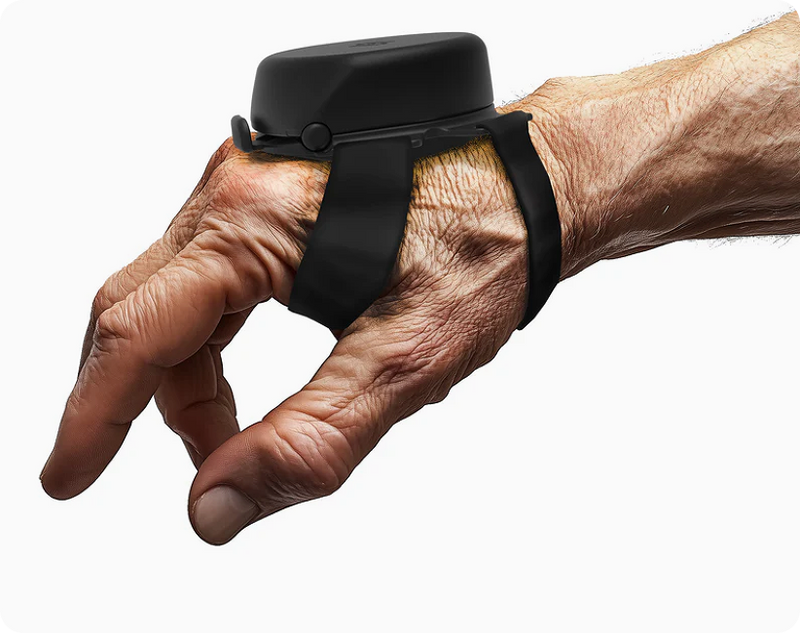
- Anti-tremor gloves, such as the Steadi-3 Plus by Steadiwear, provide targeted stabilization. The battery-free device uses magnetic vibration absorber technology to reduce tremor amplitude in real time. It automatically adapts to tremor frequency and works immediately when worn. Clinical evaluations show up to an 84% improvement in functional tasks like eating and writing, supporting daily activities.
For a significant proportion of people managing hand tremor treatment, first-line medications either do not provide adequate relief or cause side effects that lead to discontinuation. These patients often fall into a treatment gap: symptoms are not severe enough to meet the threshold for surgical intervention, yet medication alone is insufficient. Non-invasive tremor treatment options, such as wearable stabilization devices, directly address this gap. The Steadi-3 Plus, an FDA-registered Class I medical device, can be used on its own or alongside existing Essential Tremor treatment options, without systemic side effects.
Surgical And Advanced Procedures For Hand Tremors
When tremors become severe and do not respond to medication, advanced procedures may be considered. These treatments are typically reserved for individuals whose tremors significantly interfere with daily activities and are evaluated by a neurologist or movement disorder specialist.
- Deep Brain Stimulation (DBS) is a well-established surgical treatment. Electrodes are implanted in the thalamus and connected to a pulse generator that sends electrical signals to reduce tremor activity. DBS can reduce tremor symptoms in many patients but requires surgery and ongoing device adjustments.
- Focused Ultrasound is a newer, incision-free procedure that uses targeted sound waves to treat brain areas associated with tremor. Many patients experience immediate tremor reduction, though it is usually performed on only one side of the brain.
- Thalamotomy is an older surgical approach that permanently destroys a small brain area involved in tremor and is now rarely used.
Lifestyle modifications and adaptive strategies
Certain lifestyle changes and practical adaptations can help reduce the impact of hand tremors, particularly for individuals with mild symptoms or those seeking additional support alongside medical treatment.
Reducing known triggers is often the first step. Caffeine reduction may help limit stimulation of the nervous system that can amplify tremor. Maintaining consistent sleep hygiene, including regular sleep schedules and adequate rest, can also reduce fatigue-related tremor worsening. Eating regular meals is equally important, as stable blood sugar levels may prevent tremor episodes associated with low blood sugar.
For individuals whose tremors begin to interfere with daily activities, occupational therapy can provide valuable guidance. Occupational therapists specialize in assessing how tremors affect everyday tasks such as eating, writing, or using tools. They may recommend specific techniques, hand positioning strategies, or home modifications that improve stability and safety. This type of assessment is often recommended for patients whose tremors begin affecting functional independence.
A wide range of adaptive tools are also available to support daily activities. These include weighted utensils, specialized plates and cups designed to reduce spills, and larger-grip or weighted pens that improve control during writing tasks. These tools help reduce the visible effects of tremor during specific activities and may complement wearable stabilization devices used throughout the day.
Lifestyle adjustments and adaptive tools are often most effective for mild tremors or as supportive strategies alongside medication or assistive devices. However, when tremors become moderate to severe or begin interfering with daily tasks, lifestyle modifications alone are rarely sufficient, and medical advice from a healthcare provider is recommended.
How to choose the right treatment for your hand tremors
Choosing the best treatment for hand tremors depends on understanding the underlying cause, the severity of symptoms, and your goals for daily function. A structured approach can help guide treatment decisions.
Step 1: Get a medical diagnosis
Before choosing any treatment, it is important to understand what type of tremor you have. A neurologist or movement disorder specialist can evaluate symptoms and determine whether tremors are caused by Essential Tremor, Parkinson’s Disease, medication effects, or another neurological condition. Accurate diagnosis is the foundation of effective Essential Tremor management and other tremor treatments.
Step 2: Assess how much the tremor affects daily life
Some tremors are mild and do not significantly interfere with daily tasks. In these cases, observation, lifestyle adjustments, and adaptive tools may be sufficient. However, when tremors begin affecting activities such as eating, writing, working, or drinking from a cup, active management strategies may be needed.
Step 3: Match the treatment to your goals
Different treatments address tremors in different ways:
- Medication options: Medications such as propranolol or primidone may help reduce tremor amplitude by affecting nerve signals. These treatments must be prescribed and monitored by a healthcare provider.
- Non-invasive daily stabilization: Wearable assistive devices like the Steadi-3 Plus anti-tremor glove provide real-time stabilization during tasks such as eating, writing, or working. The battery-free device uses magnetic vibration absorber technology to damp tremor while allowing intentional movement. It can also be used alongside medication or therapy.
- Advanced interventions: For severe tremors that do not respond to medication, neurologists may recommend options such as deep brain stimulation (DBS) or focused ultrasound.
- Supportive strategies: Wrist weights, occupational therapy, and adaptive tools can provide additional support for daily activities.
In many cases, treatments are combined. For example, some individuals use medication while also wearing a stabilization device or working with an occupational therapist.
Steadiwear offers a 30-day risk-free trial of the Steadi-3 Plus, allowing users to evaluate whether it helps support daily tasks.
Regardless of the treatment path, the most important first step is consulting a neurologist or healthcare provider. A stabilization device such as the Steadi-3 Plus may also be used while waiting for a specialist appointment or as part of a broader tremor management plan.
Frequently Asked Questions
The most effective treatment for hand tremors depends on the underlying cause, severity, and the extent to which the tremor affects daily activities. For many people with Essential Tremor, medications are typically the first-line treatment. Commonly prescribed options include propranolol, a beta-blocker that can reduce tremor amplitude, and primidone, an anticonvulsant medication that may also help control tremor symptoms. If medications do not provide sufficient relief and tremors are severe, doctors may consider advanced procedures such as deep-brain stimulation (DBS) or focused ultrasound. In addition to medical treatments, wearable stabilization devices and adaptive tools can help manage tremors during tasks like eating, writing, or working by improving hand stability.
At present, there is no cure for most neurological tremors, including those caused by Essential Tremor or Parkinson's Disease. Instead, treatment focuses on managing symptoms and improving daily function. Many people successfully manage tremors through a combination of strategies tailored to their specific needs. These may include medications prescribed by a neurologist, occupational therapy strategies, adaptive tools designed for daily tasks, and wearable devices that help stabilize the hand during activities. In more severe cases, surgical procedures may be considered to help reduce tremor intensity. Because tremors can have many different causes, an individualized treatment plan created with a healthcare provider is the most effective way to manage symptoms over time.
Yes. Most non-invasive wearable devices for hand tremors, including FDA-registered assistive devices such as the Steadi-3, can be used alongside prescribed medications. Because these devices work mechanically rather than pharmacologically, there is no concern about drug interactions. Many patients incorporate a wearable device into their Essential Tremor treatment options alongside beta-blockers or other prescribed therapies as part of an overall management plan. The decision to combine approaches should be made with a healthcare provider who can assess individual circumstances and recommend the most appropriate strategy.
There is currently no cure for Essential Tremor, but several non-invasive options can help manage symptoms. Oral medications such as propranolol or primidone are typically the first clinical step, though they carry side effects and do not provide adequate relief for all patients. Wearable assistive devices require no surgery, no prescription, and no recovery period, making them accessible at any stage of hand tremor treatment. Surgical options such as deep-brain stimulation and focused ultrasound are generally reserved for severe or medication-refractory cases. A healthcare provider should guide the decision based on the individual's health profile and tremor severity.
Deep-brain stimulation and focused ultrasound for Essential Tremor are generally reserved for patients whose tremors are severe, significantly interfere with daily activities, and have not responded adequately to medication. A neurologist or movement disorder specialist evaluates candidacy based on tremor severity, overall health, and prior treatment history. Not everyone with Essential Tremor will qualify for or require Essential Tremor surgery. Patients who are not surgical candidates may benefit from non-invasive alternatives, such as wearable stabilization devices, to support daily functioning. Consulting a healthcare provider is the recommended first step.
Yes. Wearable devices for hand tremors are designed to complement medical treatment rather than replace it. They act directly on the hand to improve stability during specific activities such as eating, writing, or working, without affecting how medications function in the body. Many people use a wearable device alongside prescribed medication, occupational therapy, or both as part of their broader treatment options for Essential Tremor. The Steadi-3 Plus is battery-free, requires no prescription, and can be integrated into an existing treatment plan. A healthcare provider can advise on the most appropriate combination for your situation.