Parkinson's Facial Masking and Face Droop: Understanding Hypomimia

Key takeaways

  • Facial masking (hypomimia, or "masked facies") is a reduced ability to show facial expression — a common, non-tremor symptom of Parkinson's. The person's emotions are fully intact; only the outward expression is muted (NINDS, Parkinson's Disease).
  • It comes from the same dopamine loss behind other Parkinson's symptoms, which slows and stiffens the small facial muscles (bradykinesia and rigidity of the face).
  • It can't be permanently reversed, but it's partially managed — optimising Parkinson's medication, speech-language therapy (such as LSVT LOUD), targeted facial exercises, and emotional-awareness strategies.
  • It's a facial symptom, so a hand-tremor glove doesn't change it — but many people with Parkinson's also have a hand tremor, which a stabilizing glove can help with.

For many people living with Parkinson's Disease, one of the lesser-known symptoms is facial masking — a reduced ability to make the small, automatic facial movements that show emotion. It's easily misread by others as disinterest or low mood, when in fact the person's feelings are entirely intact. This guide explains what facial masking is, why it happens, and how it's managed.

What is facial masking?

Facial masking — medically hypomimia, sometimes called "masked facies" — is a flattening of facial expression, so a smile, a frown, or a flash of surprise doesn't appear as readily as before. It's one of the most common non-tremor features of Parkinson's (NINDS, Parkinson's Disease). The crucial point for families: the expression is muted, not the emotion. Someone with facial masking feels joy, interest, and sadness fully — their face just shows less of it.

What causes it?

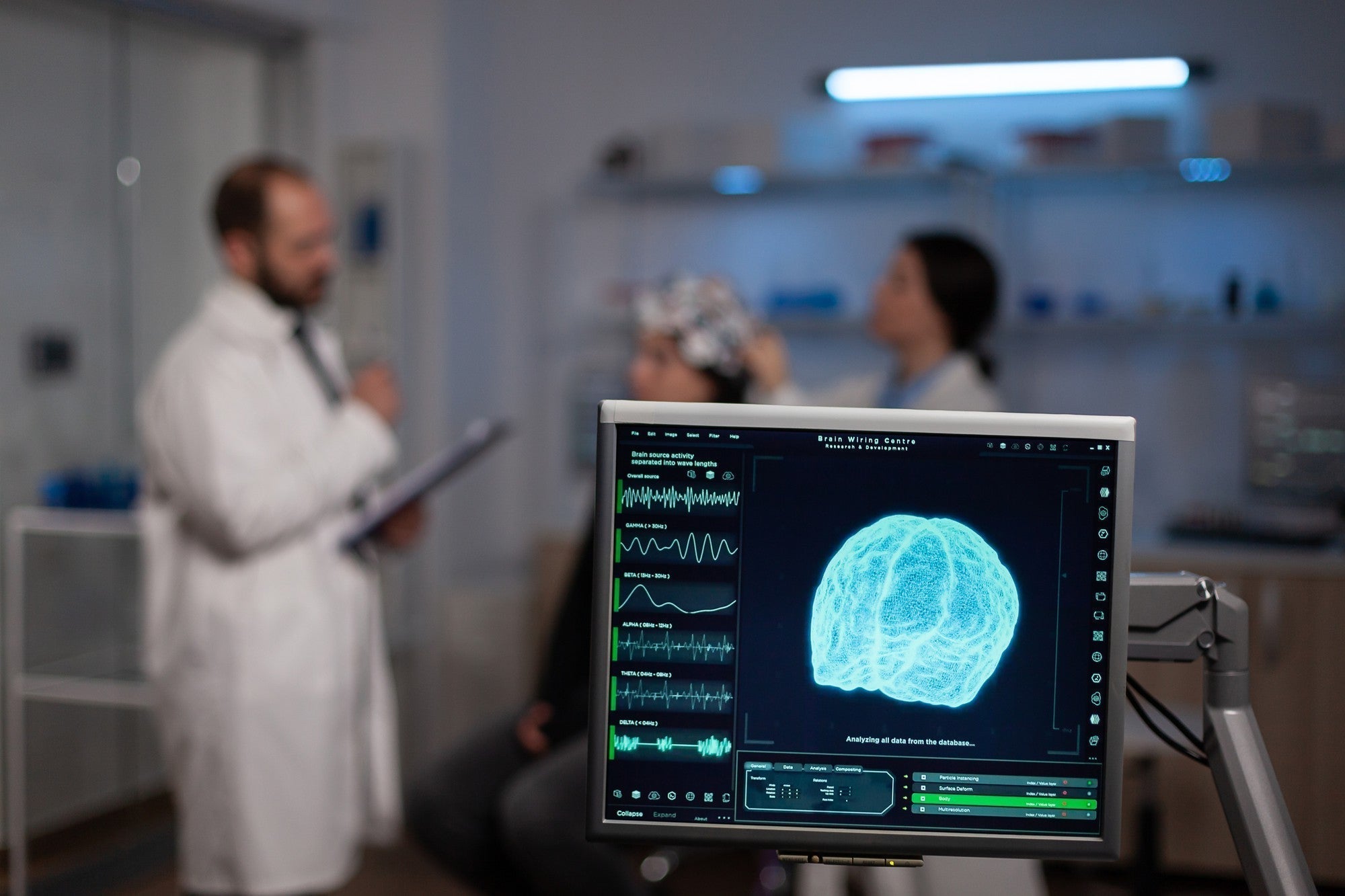
Facial masking stems from the same process behind Parkinson's other motor symptoms: the loss of dopamine-producing neurons in a brain region called the substantia nigra. Dopamine helps the brain send smooth, automatic movement signals, and when it's depleted, the small muscles of the face become slow (bradykinesia) and stiff (rigidity) — just as the limbs do. The result is fewer of the micro-movements that normally animate a face (Parkinson's Foundation, Understanding Parkinson's).

How it affects communication and social life

Because so much of human communication is non-verbal, facial masking can lead to real misunderstandings — others may read a neutral expression as boredom or unhappiness, which can strain conversations and relationships. Naming it openly ("my face doesn't always show what I'm feeling") removes much of that friction, and it helps for family and friends to listen to tone and words rather than reading the face alone.

Managing facial masking

It can't be permanently reversed, but several approaches genuinely help:

  • Medication optimisation — because masking tracks dopamine levels, fine-tuning Parkinson's medication with your neurologist can improve facial mobility.
  • Speech-language therapy — programmes like LSVT LOUD target the facial and vocal muscles and can increase expressiveness.
  • Facial exercises — deliberate practice (smiling, brow raises, eye blinks, lip pursing, around ten repetitions a couple of times a day) keeps the muscles active.
  • Emotional-awareness strategies — consciously "over-expressing" and using voice and gesture to convey feeling that the face may not.

When to see a doctor

If facial masking is new, worsening, or affecting your relationships or mood, raise it with your neurologist — it's a recognised Parkinson's symptom, and a medication review or referral to speech therapy can make a real difference. Sudden one-sided facial drooping, on the other hand, is different and a medical emergency, as it can signal a stroke.

If a hand tremor comes with it: a steadying glove

A note on scope: facial masking is a facial symptom, and a hand-tremor glove does nothing for it — that side is managed with the medication, speech therapy, and facial exercises above. But Parkinson's often brings a hand tremor too, and for that a wearable can help. The Steadi-3 Plus is an FDA-registered Class I medical device that steadies the hand with a passive magnetic vibration absorber (tuned mass damping), with no electronics or batteries. For that hand tremor, the device's evidence is direct: in a placebo-controlled study, the glove helped 84% of wearers do better than with no device, and 70% do better than with a placebo glove (Steadiwear, Steadi-3 Plus validation study). It doesn't treat Parkinson's or affect facial masking — it steadies the hand for tasks like eating and writing.

If a hand tremor is part of your Parkinson's, a tremor-stabilizing glove can help with daily tasks, alongside the care that addresses facial masking.

Foire aux questions

Les personnes atteintes de la maladie de Parkinson développent souvent ce que l'on appelle un « visage figé » ou une amimie, où leurs expressions faciales deviennent moins animées. Cela se produit parce que l'affaissement du visage lié à Parkinson résulte d'un manque de dopamine, une substance chimique qui aide à contrôler les mouvements musculaires. Lorsque les niveaux de dopamine chutent, les muscles faciaux se raidissent et bougent plus lentement, limitant la capacité à sourire ou à montrer des émotions. Même si les sentiments restent inchangés, l'amimie faciale dans la maladie de Parkinson rend plus difficile pour les autres l'interprétation des expressions. Il s'agit d'un symptôme courant des troubles moteurs provoqués par Parkinson.

Oui. La maladie de Parkinson affecte directement les muscles faciaux par les mêmes mécanismes qui causent la rigidité et la lenteur des membres. Cette pathologie réduit les niveaux de dopamine, ce qui nuit à la capacité du cerveau à envoyer des signaux de mouvement fluides aux muscles, y compris ceux du visage. Par conséquent, les personnes peuvent constater un affaissement du visage, une diminution du clignement des yeux et une expressivité réduite. Cet état, souvent appelé « masque parkinsonien », n'est pas lié aux émotions, mais au mouvement. Ces changements moteurs créent ce que l'on appelle médicalement l'amyotaxie faciale, une caractéristique de la progression de la maladie de Parkinson.

Pour améliorer l'expression faciale dans la maladie de Parkinson, les patients peuvent combiner la gestion médicamenteuse, l'orthophonie et des exercices faciaux ciblés. Collaborer avec un orthophoniste peut améliorer la communication et le contrôle musculaire grâce à des programmes comme LSVT LOUD®. La pratique quotidienne de mouvements du visage — tels que sourire, cligner des yeux et pincer les lèvres — aide à renforcer les muscles faciaux. Bien que l'amimie parkinsonienne puisse être difficile, un entraînement régulier peut améliorer la réactivité musculaire. L'optimisation des médicaments dopaminergiques et l'accent mis sur la kinésithérapie sont des moyens essentiels pour traiter le masque parkinsonien, aidant les patients à retrouver une expression naturelle et une confiance sociale au fil du temps.

Le masque facial dans la maladie de Parkinson, également appelé amimie, peut souvent être pris en charge mais pas totalement inversé. Comme ce symptôme résulte d'une perte de dopamine et d'une rigidité motrice, le traitement vise à l'améliorer plutôt qu'à le guérir. L'ajustement du traitement dopaminergique, la pratique d'exercices faciaux et le travail avec un thérapeute peuvent aider à restaurer une certaine expressivité. De nombreuses personnes constatent une amélioration partielle de l'affaissement du visage lié à Parkinson grâce à une thérapie régulière et une prise de conscience. Bien que la maladie puisse progresser, une prise en charge proactive améliore considérablement la communication quotidienne, permettant aux patients d'exprimer leurs émotions plus efficacement et de réduire les répercussions sociales du masque facial.

Le Steadi-3 Plus de Steadiwear est un dispositif médical de classe I conçu pour aider les personnes atteintes de la maladie de Parkinson et de tremblements essentiels à gérer les secousses involontaires. Bien qu’il ne traite pas l’amimie faciale liée à la maladie de Parkinson, il permet de relever les défis liés aux tremblements qui accompagnent souvent l’affaissement du visage et d’autres symptômes moteurs associés à cette maladie. Grâce à une stabilisation passive adaptative, le Steadi-3 Plus aide les utilisateurs à maintenir des mouvements de la main plus fluides, sans pile ni électricité. En réduisant les tremblements, les individus gagnent en contrôle et en autonomie, ce qui améliore la réalisation des activités quotidiennes comme manger ou écrire, renforçant ainsi leur confiance en soi et leur qualité de vie, en complément d'autres stratégies de prise en charge de la maladie de Parkinson.

Références

  1. NINDS. Parkinson's Disease. National Institute of Neurological Disorders and Stroke. NINDS: Parkinson's Disease.
  2. Parkinson's Foundation. Understanding Parkinson's. Parkinson's Foundation: Understanding Parkinson's.
  3. Steadiwear. Steadi-3 Plus validation study. Steadiwear: Steadi-3 Plus validation study.