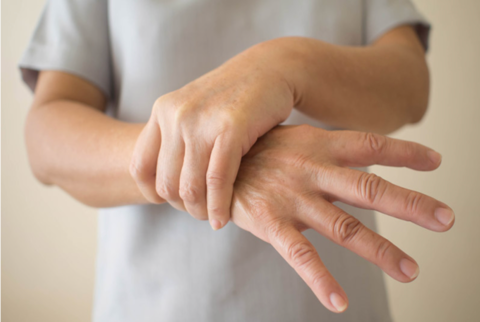
How do I stop shaky hands with exercise?
Exercises that build hand strength and stability — squeezing a stress ball, using hand grips, wrist curls — can reduce shaking during tasks, and relaxation practices like deep breathing help by calming the stress and anxiety that often make tremor worse.
What is the best exercise for hand tremors?
There's no single best move. Exercises that target hand strength, coordination, and fine motor control help most, and practising precise activities like painting or playing an instrument can support control over time. Consistency matters more than any one exercise.
Exercise doesn't repair the neurological cause of tremor. What it does is build a more stable mechanical "envelope" around the joint: stronger muscles limit how far an involuntary tremor signal moves the hand, which reduces the tremor's visible amplitude and improves control during tasks. Regular activity also lowers stress, which is a common tremor aggravator.
General fitness matters too. The U.S. Physical Activity Guidelines recommend 150–300 minutes of moderate-to-vigorous activity a week (HHS, Physical Activity Guidelines) — walking, jogging, the gym, yoga, whatever keeps you moving consistently. Because stress worsens tremor and exercise reduces stress, a regular routine helps on two fronts.
A physiotherapist can tailor a program to you, but these are the exercises most commonly used for shaky hands (NHS Inform, Hand and wrist exercises):
- Finger taps — tap each finger to the tip of your thumb in turn, on both hands, then reverse. Builds control over finger movement.
- Finger bends — bend your fingers on a flat surface until you feel a stretch, or curl them to the base of the palm.
- Wrist flexion and supination — bend the wrist and rotate the palm upward; adding light resistance improves forearm strength and coordination.
- Thumb bend and extension — bend the thumb across the palm and hold; then use a rubber band around the fingers to extend the thumb outward.
- Supination and pronation — rotate the forearm so the palm turns up, then down, to build range of motion.
- Tight fist / stress ball — clench and release, which improves muscle tone and stimulates motor-control pathways.
- Rubber ball squeeze — strengthens grip and fine motor control; good for mild-to-moderate tremor.
- Hand dumbbell exercise — with a 1–3 lb weight and your wrist over a table edge, move the wrist slowly up and down, about 20 repetitions.
A licensed physiotherapist may also use biceps curls, shoulder shrugs, and hydrotherapy as part of a program.
Weight-bearing exercises and adaptive tools
Weight-bearing moves — planks, push-ups, shoulder lifts, biceps curls — strengthen the upper limb and improve steadiness. Adaptive tools help too: weighted or wider-grip utensils and pens for stability, elastic shoelaces, long-handled combs, and automatic jar openers. A physical therapist can match the right tools to your tremor's severity.
I was having a real problem doing my hair, so I bought a weighted glove. Helped me tremendously.
— Member of an Essential Tremor support group, Facebook
About this quote: a real post shared in a public Essential Tremor support group on Facebook, where people with tremor compare tools and coping strategies.
People are often told "strength training can help" without being shown why. Here's what the research suggests.
A six-week dumbbell program improved strength and dexterity
In a 2016 study, older adults with Essential Tremor completed six weeks of upper-limb resistance training — bicep curls, wrist flexion, and wrist extension. By the end, participants showed significant strength gains and improved manual dexterity, with the biggest improvements in the most-affected hand (Kavanagh et al., Journal of Motor Behavior, 2016). Dexterity is exactly what daily tasks like writing, buttoning a shirt, or holding utensils depend on.
Training intensity seems to matter
Research comparing training intensities suggests that heavier-load resistance training can produce a measurable drop in tremor magnitude, while very light loads mainly support general mobility and health. In practice, meaningful strength gains usually require progressive resistance done under proper supervision.
Why strength training can reduce tremor amplitude
To be clear, resistance training does not cure the neurological cause of tremor. But stronger muscles create a steadier mechanical envelope around the joint, so when an involuntary tremor signal occurs, the hand deviates less — reducing the tremor's visible amplitude. That's why structured work on wrist flexion, extension, supination, pronation, and dumbbell exercises can reduce functional impairment over time.
Practical takeaways
Structured resistance training may improve strength and dexterity; heavier loads (when safe and supervised) may reduce tremor more than very light resistance; and consistency over several weeks is key. Before starting any new program — especially with Parkinson's Disease, Essential Tremor, or joint conditions — check with a physician or physical therapist (Mayo Clinic, Essential tremor) on appropriate load and progression.
Strength gains take weeks to show up, so the hardest stretch is the beginning — when you're putting in the reps but your hands aren't steadier yet. That's the gap a wearable can fill. The Steadi-3 Plus is a battery-free, FDA-registered Class I medical device that uses a passive magnetic vibration absorber (tuned mass damping) to reduce hand tremor in real time, with no electronics and nothing to charge. While strength builds, the hardware already has a track record: against no device 84% of wearers were steadier, and against a placebo glove 70% were (Steadiwear, Steadi-3 Plus validation study). It doesn't replace exercise or cure tremor — it steadies the hand for tasks like writing, buttoning a shirt, or holding utensils while your training builds over time.
Worn during exercise or everyday tasks, a lightweight glove for hand tremors lets you focus on your routine instead of fighting uncontrolled movement — a practical complement to resistance training and physical therapy, not a substitute for them. Steadiwear's aim is simple: instant stability now, while the long-term work of exercise does its job.