Intention Tremor vs Essential Tremor

What is essential tremor?

Essential tremor (ET) is a neurological condition causing involuntary, rhythmic shaking — usually of the hands — during movement, so eating, writing and dressing can be harder. It's an action/postural tremor: it shows up when you use or hold the hand, not at rest (Bhatia et al., Movement Disorders, 2018). The exact cause isn't known, but ET often runs in families, and brain circuits controlling movement (including the cerebellum) are involved.

What is intention tremor?

Intention tremor is shaking that gets worse as you reach a target — for example, trembling that intensifies as your finger approaches your nose or a button. It's typically linked to the cerebellum, the part of the brain that coordinates movement. Because it's tied to targeted, goal-directed action, it interferes especially with precise tasks. Intention tremor can point to an underlying cerebellar problem, which is one reason it needs a careful neurological assessment.

Resting tremor: a separate category

It's also worth separating tremor that appears at rest — when the hands sit still in your lap — which is most associated with Parkinson's disease. So the simple framing is: resting tremor (at rest), essential tremor (during movement and posture), and intention tremor (worsening toward a target).

What causes intention tremor?

Intention tremor usually stems from the cerebellum or its connections. Causes can include multiple sclerosis, stroke or injury affecting the cerebellum, tumours, or inherited conditions such as spinocerebellar ataxia. Because an intention tremor can be a sign of an underlying condition, identifying the cause — often with imaging — is an important part of the work-up (Bhatia et al., Movement Disorders, 2018).

Steadying the hand for daily tasks

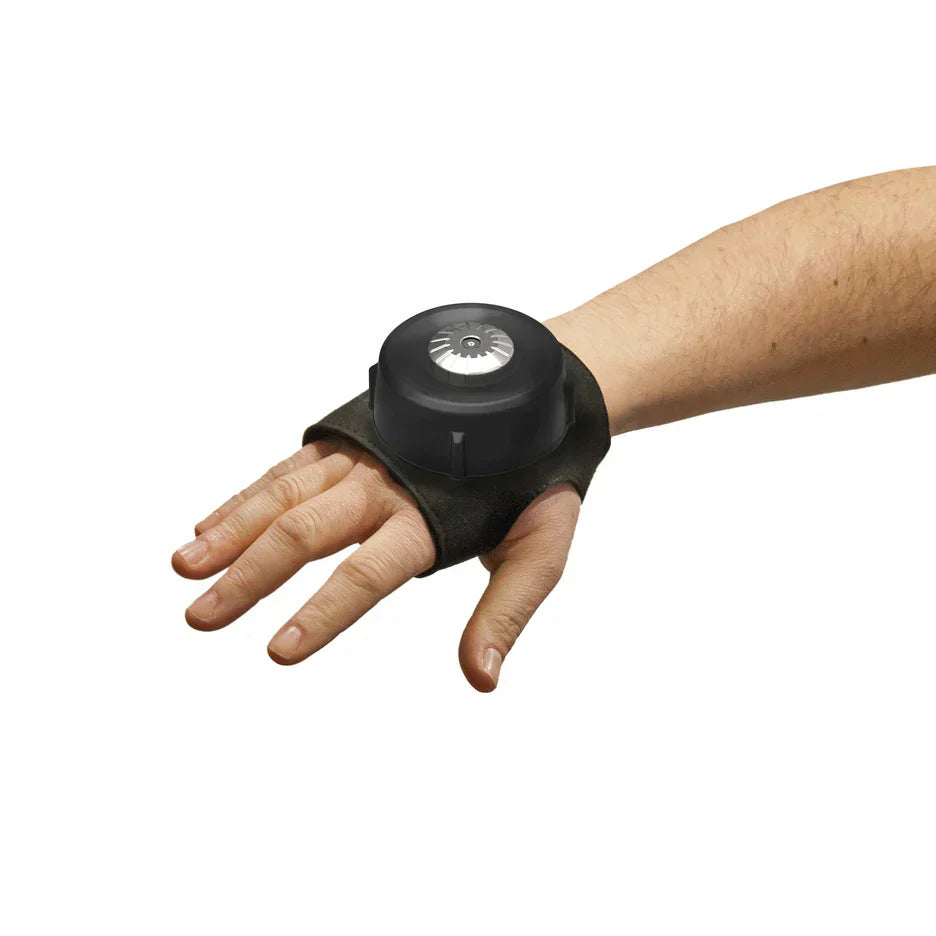
Whichever tremor type is involved, a hand that won't stay still makes ordinary tasks frustrating — and a tool that steadies it can help with those tasks. The Steadi-3 Plus is an FDA-registered Class I medical device built around a tuned mass damper: magnets suspend a weighted element that pushes back against the hand's shaking, with no motors, sensors or battery to manage. As a drug-free tremor-stabilizing glove, it's aimed at everyday tasks like eating and writing.

In a small blinded, placebo-controlled study (9 people), 80% of participants showed improved tremor control with the device compared with no device; 70% showed improvement compared with a weighted placebo device (Steadiwear, Steadi-3 Plus validation study). It doesn't treat or cure a tremor, and it doesn't replace treating an underlying cause — it steadies the hand for specific tasks, alongside medical care.

How essential and intention tremor differ

FeatureEssential tremorIntention tremor
When it appearsDuring movement and posture (writing, holding a cup)Worsens as the limb approaches a target
Usual linkOften familial; movement circuits incl. cerebellumCerebellar dysfunction or damage
Typical focus of careMedications (beta-blockers, anticonvulsants), therapy, devices; sometimes botulinum toxin or DBSTreating the underlying condition; physical/occupational therapy; stabilizing tools

Managing involuntary movements

Both types are managed with a mix of approaches, tailored by a clinician:

  • Medical treatment — for ET, medications such as beta-blockers or anticonvulsants, and in some cases botulinum toxin or deep brain stimulation for severe, treatment-resistant tremor. For intention tremor, the priority is treating any identified underlying cause. All prescribing and dosing is decided by your doctor.
  • Physical and occupational therapy — helps motor control and coordination for both.
  • Adaptive tools and devices — weighted utensils, writing aids and stabilizing gloves can ease daily tasks.
  • Lifestyle — limiting caffeine and alcohol, exercise and stress management can lessen symptom severity.

Involving family and friends in the plan helps too — practical and emotional support makes managing a tremor feel less isolating.

Quick recap

  • Essential tremor is an action/postural tremor that often runs in families; intention tremor worsens as you reach a target and points to the cerebellum (Bhatia et al., Movement Disorders, 2018).
  • Resting tremor (at rest) is a separate category, most linked to Parkinson's.
  • Intention tremor can signal an underlying condition, so it needs a careful neurological work-up — only a clinician can diagnose which tremor you have.
  • Both are managed with medication, therapy, devices and lifestyle changes, tailored to the person.

Foire aux questions

Le tremblement essentiel se caractérise par des secousses involontaires qui surviennent généralement lors de mouvements volontaires comme écrire ou tenir une tasse. Il peut affecter diverses parties du corps, mais s'observe le plus souvent au niveau des mains. Le tremblement intentionnel, en revanche, devient plus prononcé à mesure qu'une personne termine une action ciblée, telle que toucher le bout du nez, et est souvent associé à un dysfonctionnement cérébelleux.

Bien que certains traitements puissent se recouper, l'approche de la prise en charge du tremblement essentiel et du tremblement intentionnel peut différer considérablement. Des médicaments tels que les bêta-bloquants et les anticonvulsivants sont couramment utilisés pour le tremblement essentiel, tandis que le traitement du tremblement intentionnel peut se concentrer sur la prise en charge de l'affection sous-jacente touchant le cervelet. La physiothérapie et l'ergothérapie sont bénéfiques pour les deux types de tremblements.

Oui, des changements de mode de vie peuvent être bénéfiques. Éviter la caféine et l'alcool, faire de l'exercice régulièrement et pratiquer des techniques de réduction du stress comme la méditation peuvent aider à gérer les symptômes du tremblement essentiel et du tremblement intentionnel. De plus, l'utilisation d'outils adaptés peut faciliter les tâches quotidiennes.

La chirurgie peut être envisagée pour les cas sévères de tremblement essentiel qui ne répondent pas aux médicaments. La stimulation cérébrale profonde (SCP) est l'intervention chirurgicale la plus courante pour le TE. Pour le tremblement intentionnel, la chirurgie n'est généralement pas une option thérapeutique de première intention et dépendrait de la cause sous-jacente.

Une évaluation médicale approfondie est nécessaire pour diagnostiquer le type de tremblement. Le tremblement essentiel est diagnostiqué sur la base de son aspect caractéristique pendant le mouvement et de l'absence d'autres signes neurologiques. Le tremblement intentionnel nécessite généralement une évaluation neurologique plus approfondie et une imagerie pour diagnostiquer l'affection sous-jacente touchant le cervelet.

Références

  1. Bhatia KP, Bain P, Bajaj N, et al. Consensus Statement on the classification of tremors, from the task force on tremor of the International Parkinson and Movement Disorder Society. Movement Disorders. 2018;33(1):75–87. PMID 29193359.
  2. Welton T, Cardoso F, Carr JA, et al. Essential tremor. Nature Reviews Disease Primers. 2021;7(1):83. PMID 34764283.
  3. Steadiwear. Steadi-3 Plus validation study. Steadiwear: Steadi-3 Plus validation study.